

Summary and Key Points – The F-5E Tiger II succeeded by doing the opposite of most modern fighters: it prioritized affordability, reliability, and ease of maintenance over cutting-edge complexity.
-Built for allies without deep logistics infrastructure, it delivered a compact, twin-engine, highly maneuverable jet optimized for close-in combat and pilot skill.
-Operated by more than 30 countries, the fighter proved adaptable across air-to-air and ground-attack roles, even with limits in range and payload.
-In U.S. service, it became an iconic aggressor aircraft for TOPGUN and Red Flag, teaching that numbers, tactics, and training can rival technology.
The F-5E Tiger II Proved 1 Thing About Airpower: Simple Scales
The F-5E Tiger II is often overshadowed by its contemporaries, the F-4s, F-15s, and F-16s. Yet the F-5E remains one of the most successful fighters ever built. Not because it was cutting-edge but because it was affordable, reliable, and exportable.
The F-5 runs counter to the prevailing narrative about combat aircraft, suggesting that not everything is about complexity; sometimes it pays to keep things simple.
Origins of the F-5E
The F-5 was developed during the Cold War, when the US needed a fighter that allies could afford and maintain. Many partner nations lacked the infrastructure for high-end jets. So, Northrop proposed a lightweight, simple, Mach-capable fighter.
The original F-5A/B emerged as a low-cost solution; the success of early versions led to the improved F-5E Tiger II, an aircraft that wasn’t designed to dominate the skies, but rather to multiply allied air power.
What is the F-5E
The F-5E is a single-seat, twin-engine lightweight fighter with two small turbojet engines. The airframe was compact, with a small radar cross-section (RCS) and excellent visibility. The design concept centered around ease of maintenance and low operating costs.
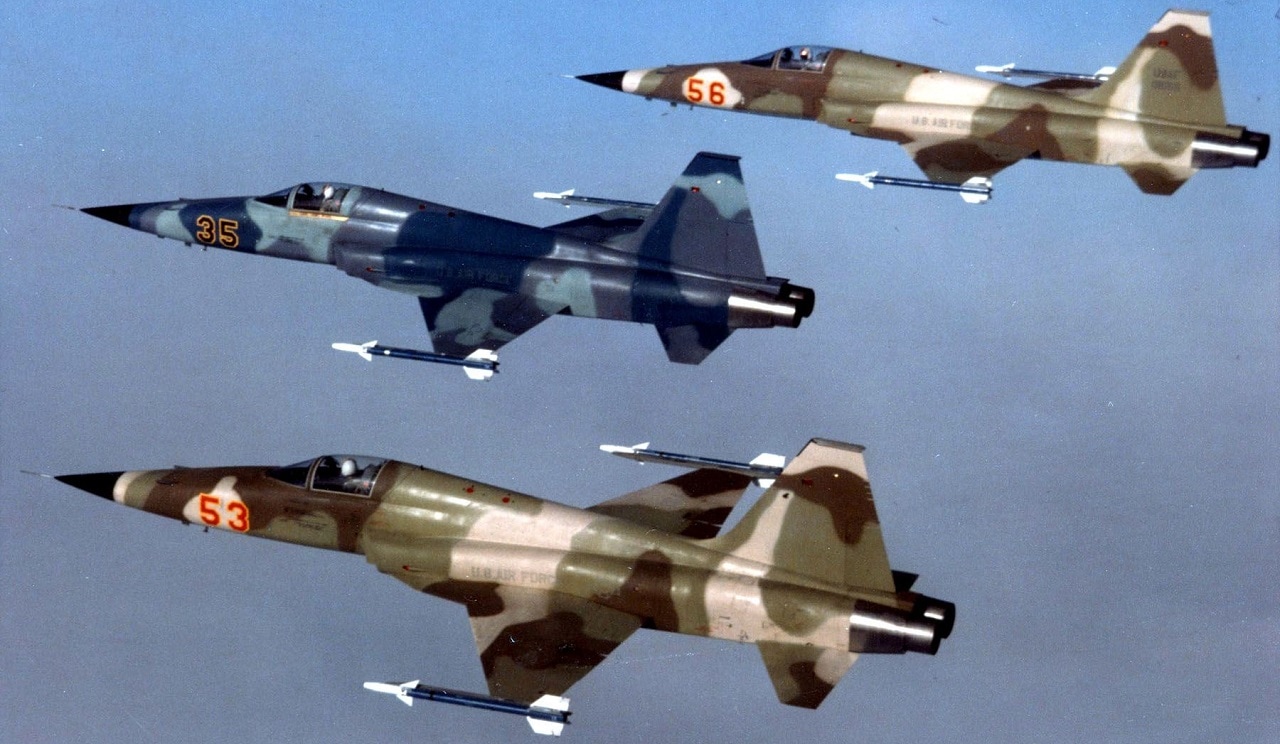
F-5. Image Credit: Creative Commons.
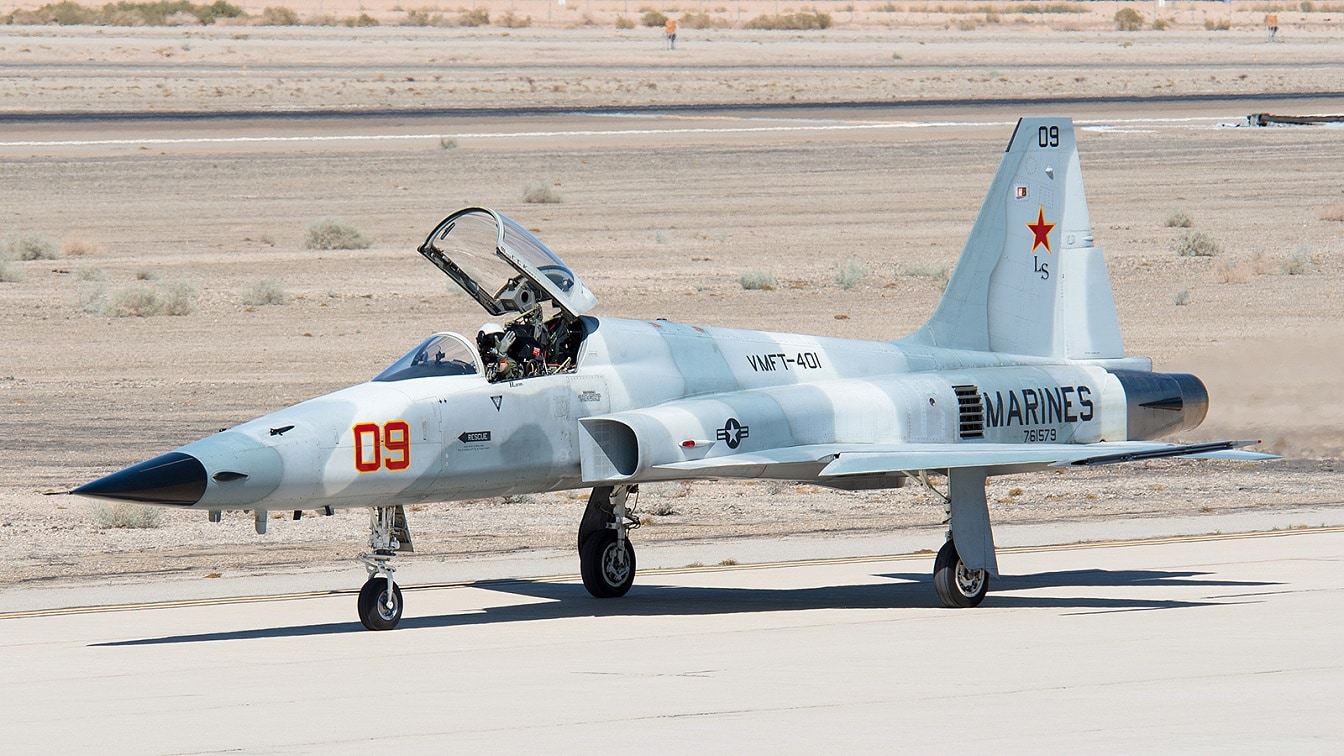
MiG-28 or What Is Really an F-5. Image Credit: Creative Commons.
By modern standards, the F-5E had minimal avionics. Instead, the emphasis was on WVR combat and pilot skill. So, the F-5E was not technologically advanced, but it was aerodynamically reliable and forgiving.
Design Philosophy of the F-5E Tiger II
The lightweight design featured low wing loading and high agility. The jet was simple, devoid of modern amenities like fly-by-wire and many everyday electronics.
The plane was straightforward to repair and easy to operate. With basic tools in austere environments, the F-5E could be maintained adequately, making the aircraft ideal for export to developing air forces or nations without deep logistics tails. In effect, the F-5E proved that performance doesn’t require complexity; it rewarded pilot proficiency over computer automation, a throwback of sorts.
Global Service of the F-5E
Over 30 countries operated the fighter and saw combat in Vietnam (through limited US use), the Middle East, Africa, and Latin America. The jet was used in air-to-air combat and ground attack, proving reliable and maneuverable. The F-5E was, however, limited with respect to range and payload. But the simple aircraft could outperform expectations with the right pilot at the controls; combat outcomes depended heavily on pilot training and the tactics employed, not just on technology alone.
Adversary Employment
The F-5E became famous in US service as an aggressor aircraft, used at TOPGUN and Red Flag. It worked because of its small size, high maneuverability, and similar performance characteristics to Soviet fighters.
This arrangement taught US pilots that numbers matter and that simple jets can be dangerous; the F-5E prepared US pilots for dissimilar air combat, useful against MiG-style threats. Actually, the F-5 is even used as the fictional “MiG-28” in Top Gun. That’s right, the enemy fighter, dressed in a black livery, with red star roundels, is the F-5. Indeed, the F-5E’s training legacy may surpass its combat legacy.
Strategic Implications of the F-5E
The F-5E enabled allied self-defense and regional deterrence, allowing the US to strengthen partners without exporting top-tier technology. The low cost of the F-5 meant larger fleets and higher availability.
Strategically, as the F-5E demonstrated, sometimes quantity mattered more than quality. The F-5E demonstrated that affordable fighters can shape the balance of fighters, especially in regional conflicts.
Legacy of the F-5E
Many of these fighters still fly today, in training and light combat roles. The F-5E even inspired a successor, the F-20 Tigershark, as well as other light fighter concepts. The jet’s DNA lives on in aggressor training and export fighter philosophy.
The F-5E’s relevance isn’t just about nostalgia; it’s a reminder that air power doesn’t always need to be complex, it just needs to be available.
The F-5E Tiger II was never meant to be iconic or groundbreaking. But it became an essential facet of Western air power; it proved that simplicity scales, training matters, and cost are a capability.
In an age obsessed with fifth-generation platforms, the F-5E remains a case study in practical air power, a fighter jet that was built to be used, as widely as possible, rather than be admired for its technical prowess.
About the Author: Harrison Kass
Harrison Kass is an attorney and journalist covering national security, technology, and politics. Previously, he was a political staffer and candidate, and a US Air Force pilot selectee. He holds a JD from the University of Oregon and a master’s in global journalism and international relations from NYU.