
The Fog of War Lingers: The Next Round of US-Iran Negotiations Still Undecided, Iran's Two "Red Lines" Become Clearer
It has been three days since the first round of nuclear talks between the United States and Iran concluded in Oman on the 6th. As of now, the date and location for the second round of negotiations remain unclear.
However, on the 9th, the head of the Iranian Atomic Energy Organization, Eslami, provided further clarification regarding one of the two core "red lines" announced by Iran, which is the right to enrich uranium.
As for Israel, a key variable in the current US-Iran negotiations, Prime Minister Netanyahu is reported to be visiting the United States on the 10th, where he is expected to pressure the US to limit Iran's missile capabilities. Iran's Supreme Leader's advisor, Larijani, is also expected to visit Oman on the same day.
More details on Iran's two core negotiation "red lines" revealed
After the first round of talks on the 6th, Iranian Foreign Minister Zarif was the first to disclose the two core "red lines" for Iran in negotiations with the US, which are:
The right to enrich uranium cannot be deprived;
The missile program cannot be negotiated.
On the 9th, Eslami further elaborated on the issue of uranium enrichment and provided more details. Eslami stated for the first time that Iran can dilute enriched uranium, but only if all sanctions against Iran are lifted.
Enriched uranium can be diluted, but all sanctions against Iran must be lifted
It is understood that on that day, when asked whether it is possible to dilute uranium enriched to 60% purity, Eslami stated that it depends on whether the other side "is willing to lift all sanctions as a condition for exchange."
Transporting enriched uranium out of Iran is not on the negotiation agenda
In addition, Eslami responded to the possibility of "transporting enriched uranium out of Iran." He clearly stated that this issue is not on the negotiation agenda.
He indicated that such claims mainly come from other parties and forces pressuring Iran, and this issue is fundamentally not on the negotiation agenda; even if some individuals or countries have proposed so-called "suggestions," believing they can provide assistance, it has not been discussed in formal negotiations.
Turkish Foreign Minister: The US and Iran are both in "sincere negotiations" and "buying time"
Regarding the content of the US-Iran talks on the 6th, aside from Iran emphasizing its two major negotiation "red lines" and the US's insistence on "zero nuclear capability for Iran," both sides have released relatively limited information regarding the negotiation content. However, Turkish Foreign Minister Cavusoglu revealed information he encountered while mediating between the US and Iran after a phone call with Iranian Foreign Minister Zarif on the 9th.
Cavusoglu stated that both the US and Iran currently show a willingness to continue negotiations, and there is currently no immediate threat of war. When asked whether both sides are in "sincere negotiations" or "buying time," Cavusoglu bluntly stated "both are true." He believes that in this level of game, negotiations and preparations for war often proceed simultaneously. Cavusoglu highly praised the decision to initiate negotiations starting with the "nuclear issue," considering it the core contradiction of regional security.
Israel refuses to accept Iran's negotiation "red lines" as senior officials from both sides visit today
As Iran has made its negotiation "red lines" clear, Israel, which is currently the biggest uncertain variable in the US-Iran negotiations, has shown a stance of non-acceptance.
Recent Israeli defense officials have revealed to US officials that Iran's ballistic missile program poses a "life-and-death" threat to Israel, and if Iran crosses the red lines set by Israel regarding ballistic missiles, Israel will take unilateral action.
According to reports from the Central Station's correspondent, it is indicated that Israeli Prime Minister Netanyahu will visit Washington, D.C. on the 10th and meet with US President Trump on the 11th. Netanyahu's visit is expected to discuss the Iran issue and demand that the US push for the transfer of Iran's enriched uranium out of the country and limit Iran's ballistic missile capabilities.
In addition to Prime Minister Netanyahu's scheduled visit to the US on the 10th, Iran's Supreme National Security Council Secretary and Supreme Leader's advisor Larijani is also expected to lead a delegation to Oman on the 10th. During the visit, Larijani will meet with senior officials in the Omani capital, Muscat, to discuss the latest regional and international situations and cooperation at various levels.
The "important bargaining chip" in Iran-US negotiations—missile capabilities
Due to years of US sanctions and ongoing military threats from Israel, along with the influence of domestic political and economic factors, Iran has always regarded missile capabilities as a core pillar of its defense strategy, which is also one of the reasons why Iran refuses to bring its missile program to the negotiating table.
Iran possesses the largest ballistic missile stockpile in the Middle East
Current information disclosed by various parties shows:
Iran possesses the largest ballistic missile stockpile in the Middle East, including about 2,000 medium-range missiles that can reach Israel;
Iran has built at least five underground "missile cities";
The latest missile model announced by Iran has a range of about 2,000 kilometers and an accuracy of up to 30 meters;
Iran has a large number of short-range ballistic missiles that can cover US military bases in the Persian Gulf region and US naval vessels currently deployed in the Strait of Hormuz.
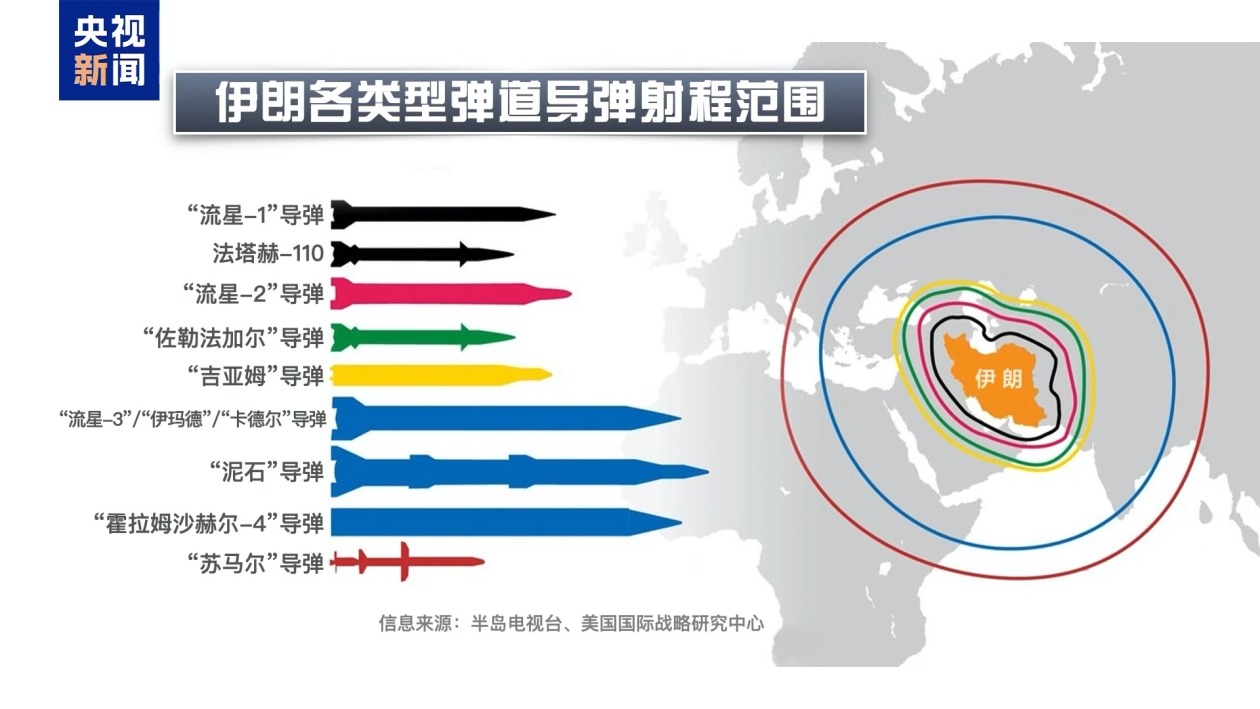
According to military observer Wei Dongxu from the Central Station, Iran's missile capabilities can effectively deter the US and Israel and are an important bargaining chip in negotiations with the US.
Israel's missile defense system cannot intercept Iranian missiles 100%
In contrast, although Israel has a three-tier missile defense system (Iron Dome, David's Sling, Arrow series), based on the interception effectiveness of its missile defense system during last year's Israel-Iran conflict, a significant number of ballistic missiles still broke through its missile defense system, thus Israel cannot effectively achieve 100% interception of Iranian missiles.
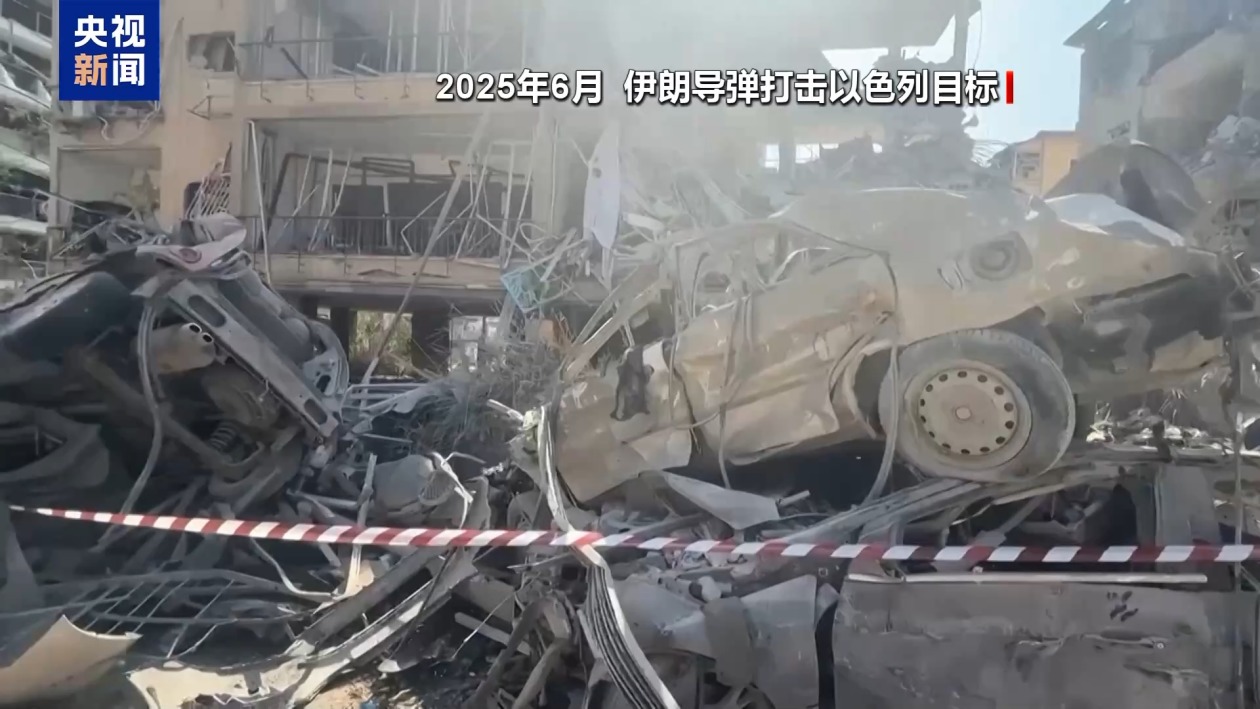
Military observer Wei Dongxu analyzes that due to the limitations of Israel's missile defense system, Israel has adopted two response strategies:
Independently produce more missile defense systems and seek US assistance for American-made missile defense equipment;
Attempt to have the US propose more stringent conditions in negotiations to limit Iran's missile capabilities.
If the US insists on limiting Iran's missile capabilities, it may lead to a breakdown in negotiations
Analysts believe that based on Iran's current positioning of its missile capabilities as an important bargaining chip in negotiations, as well as its status as a core pillar of Iran's defense strategy, Iran will not compromise or back down on this issue. If the US insists on demanding limitations on Iran's missile capabilities in negotiations, it may lead to a breakdown in talks and even ignite the fuse of conflict.
Iran and the U.S. are engaged in nuclear negotiations, with Iran asserting its red lines on uranium enrichment and missile capabilities. Israeli Prime Minister Netanyahu is set to visit the U.S. to pressure for restrictions on Iran's missile program. Iran's nuclear chief stated that uranium enrichment could be diluted if all sanctions are lifted, while emphasizing that missile discussions are off the table. The situation remains tense, with both sides indicating a willingness to negotiate.
- Iran has stated its red lines in negotiations: the right to enrich uranium and the non-negotiability of its missile program.
- Iran's nuclear chief indicated that uranium enrichment could be diluted if all sanctions are lifted.
- Israeli Prime Minister Netanyahu is visiting the U.S. to discuss Iran's missile capabilities and uranium enrichment.
- Iran possesses the largest stockpile of ballistic missiles in the Middle East, with around 2000 medium-range missiles.
- The negotiations are ongoing, with both sides showing willingness to continue despite tensions.