
The Four Types of Main Battle Equipment of the People's Liberation Army Make Their Debut at the Egypt Air Show: What Step Is Still Needed for the Air Force's Systematic Deployment at Sea?
 Li Minghui
PLA's Four Main Battle Equipment Types Make Their Debut at the Egypt Airshow: What Step Is Still Needed for the Air Force's Systematic Overseas Deployment?
On September 8, the second Egypt Airshow opened at Alamein International Airport. At the invitation of the Egyptian military, the Chinese Air Force sent the KJ-500 early warning aircraft, Y-20A tanker, J-16 fighter jet, and Z-20K helicopter for static display. Reports outside the Chinese military network confirm that these four aircraft types are being publicly showcased for the first time at an overseas airshow. The highlight of this news is not just "what aircraft were brought," but that the Chinese Air Force has presented the chain of early warning, refueling, strike, and battlefield mobility to overseas audiences in a relatively complete manner for the first time.
The Four Aircraft Do Not Form a Product Catalog
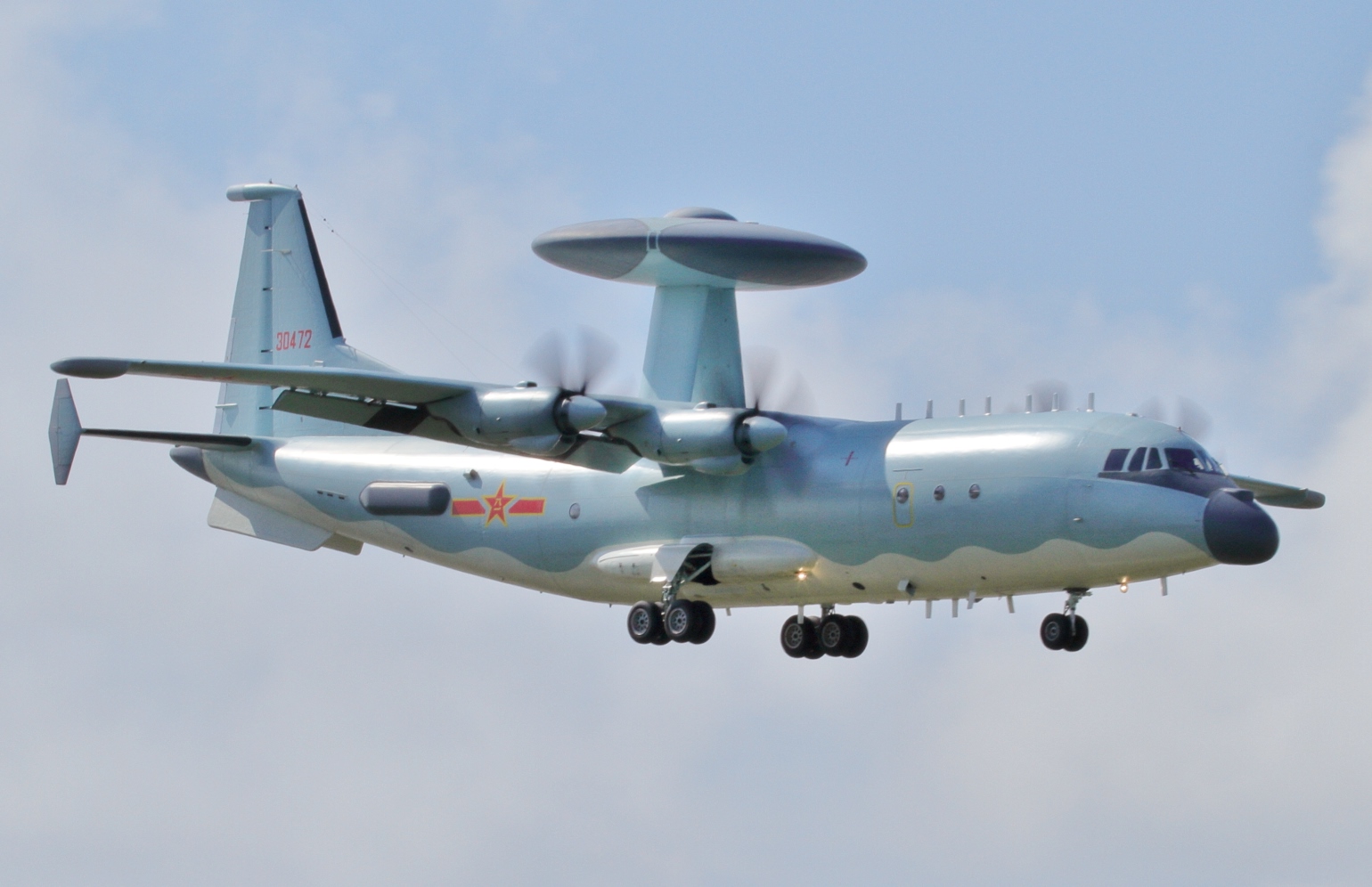
The KJ-500 serves as an airborne early warning and command node, with its core value lying in integrating fighter jets, ground radars, and other combat units into the same air situation map. The Y-20A determines how far and how frequently fighter jets can maintain their presence. The J-16 is a heavy multi-role platform capable of performing air-to-air, air-to-ground, and anti-ship missions; the Z-20K has more tactical significance, involving personnel transport, air assault, search and rescue, and rapid maneuvering in complex terrains.
From a performance perspective, these models belong to different product categories; from a combat system perspective, they correspond to the four links of "detection—command—strike—support." In simple terms, the static display at the airshow cannot prove that a formation has overseas combat capabilities, but it can demonstrate that Chinese military industry has the ability to provide multiple key nodes simultaneously, rather than just promoting an isolated fighter jet.
What Export Markets Really Care About Is the Support Chain
Egypt is not a buyer that only looks at aircraft parameters. It has a considerable air force, with equipment sources spanning the United States, France, and Russia, and procurement decisions will consider training systems, ammunition compatibility, maintenance cycles, spare parts supply, and political risks. By bringing the KJ-500 and Y-20A to Egypt, China is essentially showcasing an answer to a question: if a customer purchases Chinese fighter jets, can they obtain a more complete command and support system?
However, restraint must be maintained here. A static display does not mean that Egypt has already decided to procure, nor does it mean that the KJ-500 and Y-20A will immediately enter the export list. The early warning aircraft involves data links, identification systems, and software permissions, while the tanker involves base conditions, compatibility with receiving aircraft, and long-term maintenance. The most easily overlooked shortcoming of Chinese military industry in the past is not the ability to produce prototypes, but whether it can establish a stable training, spare parts, and upgrade network overseas. This aspect is more decisive for whether orders can be finalized than the paint scheme at the airshow.
Forming a Soft and Hard Rhythm with the Taiwan Strait Direction
The timing of this airshow is also interesting. On September 10, Taiwan announced that from 6 AM the previous day to 6 AM that day, 18 PLA military aircraft, 8 warships, and 1 civilian vessel were detected, with 13 aircraft crossing the median line of the Taiwan Strait. The South China Morning Post reported concurrently that the Fujian aircraft carrier transited the Taiwan Strait after Taiwan initiated combat readiness drills. One direction is near-field military pressure, while the other is far-field equipment display; the combined message is that the Chinese Air Force is maintaining high-frequency operations around its homeland while also attempting to package its systematic capabilities into products that can be understood, procured, and used by partners.
The author believes that the strategic value of this appearance should not be summarized as "a comprehensive move towards global presence." What China's aviation industry truly needs to prove is whether it can integrate early warning aircraft, tankers, and fighter jets into a sustainable overseas capability, and complete training, maintenance, and data security handover in the customer's home country. The Egypt Airshow provides a window, but behind that window lies an entire supply chain.
Sources
- CNR Military September 10, 2026 Chinese Air Force Multiple Main Battle Aircraft Appear at Egypt Airshow
- Taiwan News September 10, 2026 Taiwan Military Releases Data on PLA Activities Around the Taiwan Strait
- South China Morning Post Report on Fujian Carrier Transiting the Taiwan Strait
What is truly worth tracking is not where these four aircraft are parked at the Egypt Airshow, but when they can reappear at overseas bases as a maintainable, upgradable, and sustainably deployable system.
The Chinese Air Force displayed four types of military aircraft, including the KJ-500 early warning aircraft and J-16 fighter jet, at the Egypt Airshow on September 8, 2026. This marks the first international showcase of these models, emphasizing China's military capabilities and potential for export. The event also reflects Egypt's considerations for military procurement, focusing on comprehensive support systems rather than just aircraft specifications.
- Chinese Air Force showcased four types of military aircraft at the Egypt Airshow.
- This is the first time these aircraft have been displayed at an international airshow.
- The showcased aircraft include KJ-500, Y-20A, J-16, and Z-20K.
- The event highlights China's military capabilities and potential export opportunities.
- Egypt's military procurement considerations include training, compatibility, and maintenance.