
The Houthi Attack on Abha Airport 2026 Reveals Gaps in Saudi Defense with Patriot and THAAD
 Ahmed Al-Rashid
The Houthi Attack on Abha Airport 2026 Reveals Gaps in Patriot and THAAD in Saudi Defense
On the evening of July 13, 2026, missiles and drones from Yemen returned to the skies over southern Saudi Arabia, not as a fleeting border incident but as a clear military message after years of relative calm. The Associated Press reported that the Houthis launched missiles and drones towards Abha Airport, while Arab sources spoke of Saudi defenses engaging with ballistic missiles, and of Saudi strikes targeting Sana'a Airport to prevent an Iranian plane from landing there. Militarily, this is not just a new round in the old Yemen war; it is a live test of an air defense system on which Riyadh has spent tens of billions of dollars.
The choice of Abha is not a minor detail. The airport is located in the Asir region, close to an area that the Houthis have known well for years, and represents a complex target between civilian infrastructure and military symbolism, especially with its proximity to King Khalid Air Base in Khamis Mushait. When an armed group strikes a civilian airport or threatens the vicinity of an air base, it does not need to cause widespread destruction to achieve a political effect. It is enough to force the defenses to operate, raise the cost of insurance, and remind investors, travelers, and military leadership that the southern front has not truly been closed.
What Changed After Years of Calm
Since the unofficial truce between Saudi Arabia and the Houthis, Riyadh has treated Yemen as a manageable file rather than an open front. This assumption took a hit in July. The return of attacks means that the Houthis still possess three key capabilities: a stockpile of drones and missiles, a flexible launch network that is difficult to incapacitate with a single strike, and Iranian technical and political support that allows for improved accuracy of messages even if not every weapon is entirely Iranian.
The most important news is not that Saudi Arabia intercepted a new threat; this is expected from a country that possesses Patriot PAC-3 systems and American warning networks. The more significant news is that the adversary was able to impose its rhythm in a region already charged with exchanges of strikes between the United States and Iran and with targeting American bases and interests in the Gulf. In this environment, the Yemeni front becomes part of a broader picture, not a separate local conflict.
Interception Capability Is Not Deterrence Capability
Many confuse the success of interception with the success of deterrence. Interception means that the missile did not reach its target, or that the damage remained limited. Deterrence means that the adversary did not launch the missile at all because it fears the cost. The difference between them is fundamental. Saudi Arabia possesses expensive and effective systems, but the Houthis know that every relatively cheap missile or drone can exhaust a much more expensive interception missile and force Saudi leadership to deploy warning aircraft, radars, maintenance teams, and communications.
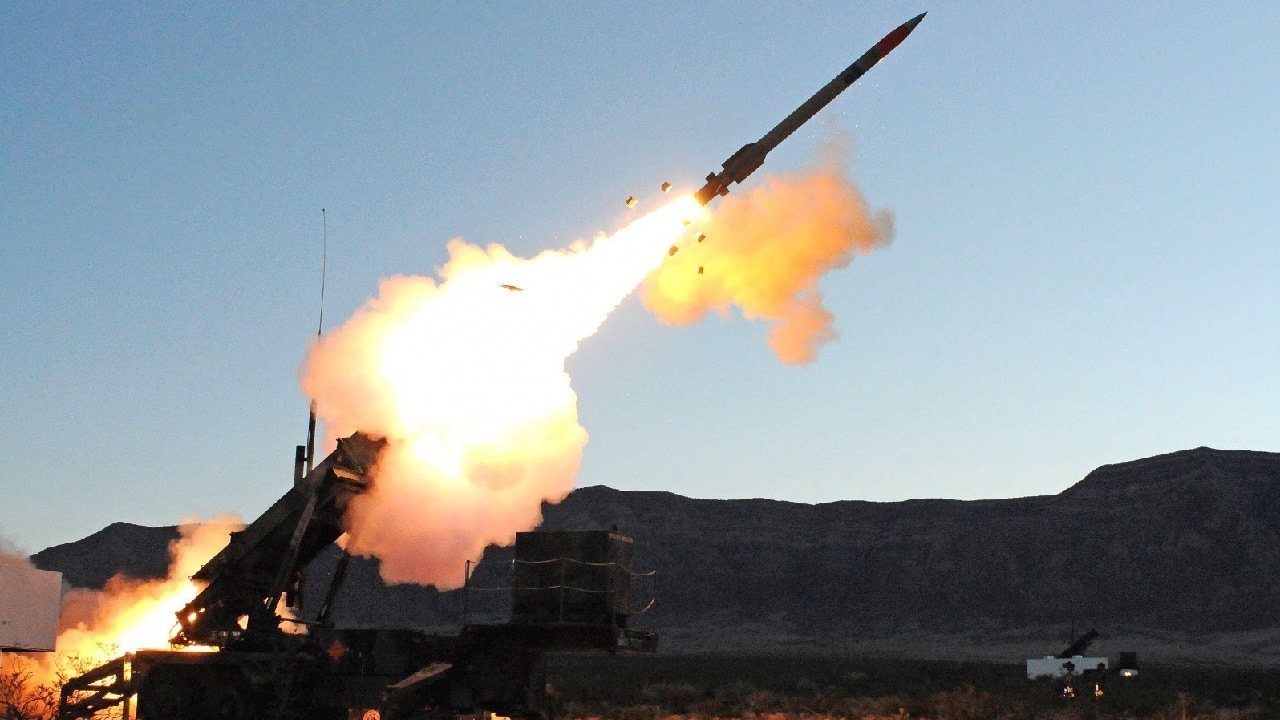
Patriot PAC-3 is originally designed to intercept tactical ballistic missiles and aircraft, and it features high accuracy in the final phase of the target's trajectory. THAAD, which Saudi Arabia contracted as part of a broader American system, is designated for intercepting missiles at higher altitudes and longer distances. On paper, these are strong defensive layers. But war does not only read technical manuals. If the adversary combines a ballistic missile, low-signature drones, and multiple targets at the same time, the question is no longer: Can the battery intercept? It becomes: How many times can it intercept, at what cost, and who decides the priority of the target in the first minute?
Command and Control Gap
From my experience, any military officer who has served in the region knows that the problem is not in purchasing the radar or the launcher, but in integrating them into a fast and joint command and control system. Saudi Arabia has purchased advanced American systems, but it still relies on the United States for sensitive parts of warning, integration, and operational linking. Here lies the paradox of the Gulf that recent analyses in Al Jazeera have pointed out: the American presence makes Gulf states targets for Iran and its allies, but at the same time protects them through early warning, interception, and technical support.
This is not a condemnation of Saudi Arabia alone. Almost all Gulf states are stuck in the same equation. The UAE possesses THAAD and Patriot and some Barak capabilities, Qatar has Patriot and NASAMS, while Kuwait, Bahrain, and Oman have varying layers of air defense. But possessing systems does not necessarily mean having independence in fire decision-making, maintenance independence, or the ability to withstand a long missile campaign. The weapon here is like a large tent in the desert: it looks reassuring from afar, but its true value shows when the wind blows from multiple directions.
Why the Houthis Target Abha Now
The first reason is political. The Houthis want to say that they have not exited the regional response equation, and that any pressure on Sana'a or on Iranian supply channels can turn into direct pressure on Saudi Arabia. The second reason is operational. Southern Saudi Arabia offers closer and easier targets than the Gulf's depth, allowing the use of familiar routes for drones and short or medium-range missiles. The third reason is psychological. A civilian airport like Abha creates a greater media impact than an isolated military facility, even if there are no significant losses.
As for the Saudi strike on Sana'a Airport, according to the Yemeni government’s narrative, it reflects an old obsession in Riyadh: that Iranian flights serve as cover for transporting experts or parts or equipment related to missiles and drones. However, striking an airport within a city controlled by the Houthis also has a political cost. It provides the Houthis with material for mobilization and portrays Saudi Arabia as a party that has returned to using direct force, even if the security justification is understandable.
The Message to the Gulf, Not Just to Riyadh
This attack should be read in Abu Dhabi, Doha, Kuwait City, and Manama as it is read in Riyadh. If Iran or its allies are capable of opening a southern front against Saudi Arabia at a time when American bases and maritime corridors are under increasing pressure, then the concept of separate Gulf defense becomes an illusion. There is no Saudi sky separate from the skies of Bahrain, Qatar, and the UAE when missiles and drones move within a single regional network.
The problem is that Gulf states talk a lot about defensive integration, but in practice, they purchase different systems, with different operational doctrines, and varying reliance on external suppliers. There are meetings, memoranda, and training, but the real test is the first minute of warning. Does information move from radar to battery to a joint Gulf decision center quickly enough? Or does each state wait for its American ally's screen? This is the question that purchase contracts alone do not answer.
After Abha
Practically, the attack does not mean that Saudi defenses have failed. Rather, it means that the deterrence equation is incomplete. Riyadh is capable of intercepting many missiles and drones, but it has not convinced the Houthis that the launch itself has become futile. And this is the difference between an army that possesses equipment and an army that has a system capable of imposing new calculations on the adversary.
The next equation will be harsh: the more Saudi Arabia relies on American air defense, the more it can intercept threats, but it remains politically and operationally tied to Washington. And the more it tries to build defensive independence, the more it will need years of training, integration, and maintenance that cannot be bought with a single contract. The Abha attack reminds us of a simple rule known to veteran officers: a weapon that does not change the adversary's decision before pressing the launch button remains a defense, not a deterrent.
Houthi forces launched missiles and drones at Abha Airport in Saudi Arabia on July 13, 2026, prompting Saudi defenses to engage with ballistic missiles and conduct airstrikes on Sana'a Airport. This attack marks a significant escalation in the conflict, revealing vulnerabilities in Saudi air defense systems. The operation underscores the ongoing military capabilities of the Houthis and the complex geopolitical landscape in the region.
- Houthi forces launched missiles and drones at Abha Airport on July 13, 2026.
- Saudi defenses engaged with ballistic missiles and conducted airstrikes on Sana'a Airport.
- The attack signifies a shift in Houthi capabilities after years of relative calm.
- The operation highlights gaps in Saudi air defense systems like Patriot and THAAD.
- The geopolitical implications extend beyond Saudi Arabia to the broader Gulf region.