
The Houthi Attack on Two Saudi Oil Tankers in the Red Sea Opens the Bab el-Mandeb Front in 2026
 Ahmed Al-Rashid
The Houthi Attack on Two Saudi Oil Tankers in the Red Sea Opens the Bab el-Mandeb Front in 2026
On July 23, 2026, the Houthi group announced that it had attacked two Saudi oil tankers in the Red Sea, while Reuters reported via Al-Monitor that the Encelia tanker sent a distress signal after being hit near Jazan and that the fire affected the bow of the ship, while the account of the second attack on Layla could not be independently confirmed. The most important number is not just the number of missiles or drones, but that the price of Brent surpassed $100 per barrel for the first time since May, as the market understood that the war was no longer confined to the Strait of Hormuz.
From Hormuz to Bab el-Mandeb
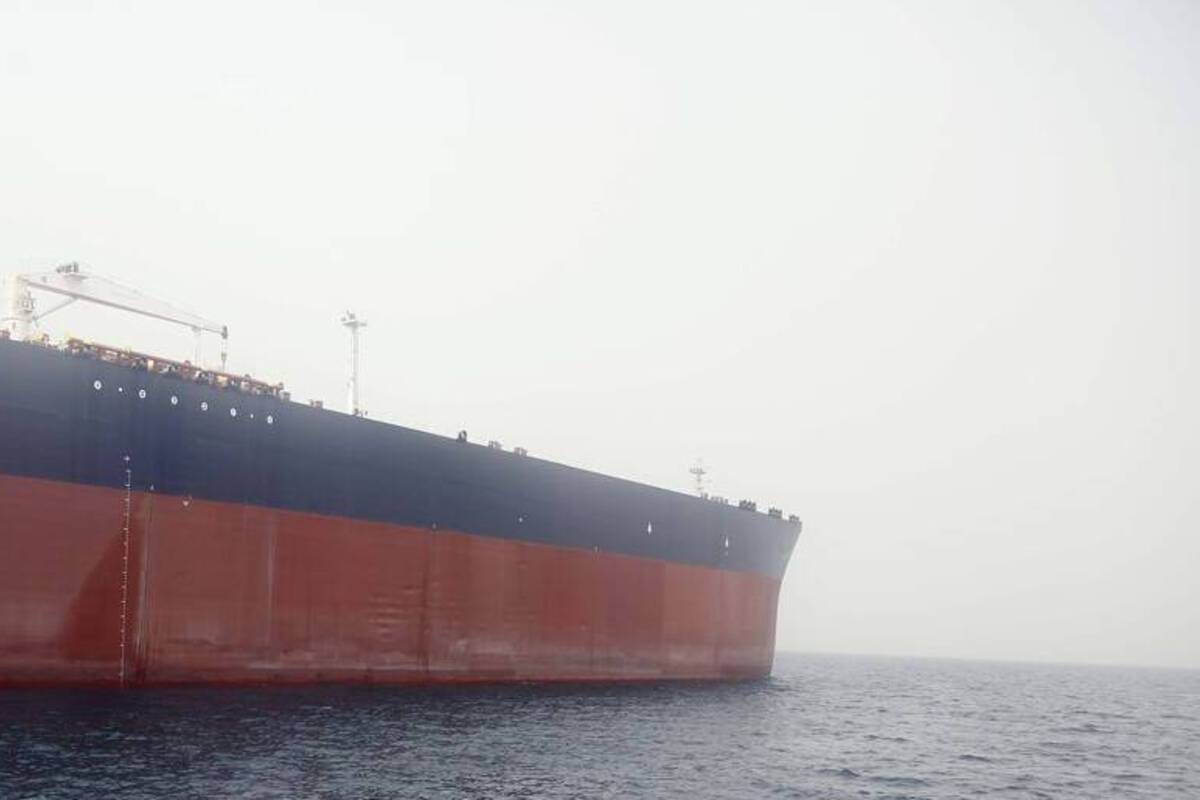
Saudi Arabia has built a simple alternative idea over decades: if Hormuz is congested, oil barrels move east and west through the pipeline to Red Sea ports. This idea seemed practical on paper, and it is indeed logical from an engineering perspective. However, modern warfare does not respect clean maps. If Bab el-Mandeb comes under pressure from missiles and drones, the exit that was supposed to alleviate the Hormuz problem turns into a second bottleneck.
Here lies the paradox known to any military personnel who has served in the region: the alternative route is not an alternative if it requires the same level of protection as the original route. The Houthis do not need to completely close the Red Sea. It is enough for them to raise the cost of insurance, force some tankers to change their routes, and create doubt among shipping companies. In economic wars, doubt is sometimes cheaper than a missile and more effective.
The Houthi Capability is Not Traditional Naval Power
The Houthis do not possess a naval fleet in the classical military sense. They have no destroyers, submarines, or naval aviation. But this does not make the threat marginal. Their pattern relies on anti-ship missiles, suicide drones, explosive boats, coastal surveillance information, and political rhetoric preceding the strike to amplify its impact. CNBC noted the deployment of missiles and drones against ships in the southern Red Sea, which aligns with the model we have seen since the beginning of the navigation crisis.
The capability here is not the ability to occupy the sea, but the ability to deny and extort. The difference is important. The U.S. Navy can destroy a launch platform if it identifies it in time, but it cannot guarantee every tanker a psychologically safe passage when the Yemeni coast is open to dozens of small launch points. Practically, naval defense against a cheap and mobile threat becomes a war of attrition between a missile costing hundreds of thousands and an interception or protection costing much more.
Saudi Arabia Between Air Defense and Naval Defense
Saudi Arabia has important layers of air defense, including Patriot and THAAD systems and American and Western surveillance systems, but protecting a tanker in the Red Sea is not like protecting an airbase or a city. The ship is moving, the threat line comes from the coast, and the political decision regarding deterrence is not entirely Saudi. When a tanker is hit near Jazan, the military question is not just who fired the missile, but who has the right to respond, at what level, and who bears the expansion of the war if platforms inside Yemen or Iranian targets are struck.
This is the problem of the triad capability that I often return to: equipment × training × institution. Buying an advanced defense system is easier than building a joint naval institution capable of managing a continuous threat in a global trade corridor. Riyadh can pay the money, and that is known. But it needs a maritime intelligence network, clear rules of engagement, real-time coordination with Washington, Cairo, and Djibouti, and the ability to convince shipping companies that protection is not a temporary news item but a permanent system.
Washington Facing a Strain of Deployment
Reuters described the threat as a test for an already stretched U.S. military. This is an accurate description. The United States is simultaneously required to protect its bases in the Gulf, support Israel, monitor Hormuz, keep carriers and fighters in the region, and protect the Bab el-Mandeb corridor. If Saudi tanker convoys are added in the Red Sea, Washington is not facing a single naval battle, but a network of overlapping missions extending from Kuwait and Bahrain to Jazan, Aden, and the Suez Canal.
American statements about punishing Iran carry a deterrent message, but they also acknowledge that the Houthis do not operate solely as a local actor. Al-Monitor reported from sources that Iran sent advisors and equipment related to missiles and drones to Yemen before the announcement of the blockade, which the Houthis denied. Even if we take this cautiously, the overall picture is clear: Tehran does not need to have direct control over every launch button to benefit from the chaos. A good proxy in the logic of asymmetric wars is one that expands the front without imposing a clear signature on every strike from the patron.
The Impact on the Oil Market Precedes the Military Impact
The rise of Brent above $100 is not just an economic news item. It is a military alarm signal. When prices change this rapidly, it means that the market is pricing in the possibility of protection failure before the full catastrophe occurs. The doubling of insurance costs for some ships, as reported by navigation reports, means that companies are not waiting for a Pentagon statement to decide. They are looking at risk probabilities, delay times, the cost of rerouting around Africa, and then raising the price for everyone.
For Saudi Arabia, the danger is not the loss of a single tanker. The danger is that the Asian buyer sees every Saudi barrel as a barrel carrying a double risk premium: Hormuz from the east and Bab el-Mandeb from the west. This does not undermine Saudi Arabia's position in the energy market, but it weakens the idea that Riyadh has enough geographical flexibility to overcome a major Gulf crisis.
What This Means for Gulf Deterrence
Gulf deterrence has been accustomed to looking north and east toward Iran, but it has not built a southern system around Yemen and the Red Sea at the same speed. The UAE understood early the importance of ports, bases, and influence on the coasts, while Saudi Arabia focused more on protecting the depth, cities, and facilities. Today, it appears that the Red Sea is not a Yemeni margin, but part of Saudi energy security and global navigation security.
In my estimation, military response alone will not solve the problem. Striking Houthi platforms may relieve pressure for days or weeks, but it does not eliminate the environment that allows for repositioning and launching. What is needed is not another fiery statement from Washington, but a mix of continuous maritime intelligence, protection for specific convoys, pressure on smuggling chains, and a clear political message to Tehran that Bab el-Mandeb is not a free card. But saying that is easier than executing it, especially when Gulf capitals want full American protection with an independent decision margin.
The old military adage says that the safe road is the one protected every day, not the road that you declared safe in a press conference.
The Red Sea attack brings Saudi Arabia back to the same contradiction: it wants multiple export corridors so as not to fall under the mercy of Hormuz, but it finds itself needing Washington to protect the alternative corridor. Between the independence Riyadh desires and the protection it needs, there is a gray area called Bab el-Mandeb, and this area has now become a real testing ground, not just a slogan in a security document.
Houthi forces attacked two Saudi oil tankers in the Red Sea on July 23, 2026, causing one tanker, Encelia, to send a distress signal after being hit near Jazan. This incident has raised Brent crude oil prices above $100 per barrel, indicating heightened concerns over maritime security in the region. The attack reflects the Houthi strategy of disrupting shipping routes without needing a traditional naval fleet.
- Houthi forces attacked two Saudi oil tankers in the Red Sea on July 23, 2026.
- The Encelia tanker sent a distress signal after being hit near Jazan.
- Brent crude oil prices exceeded $100 per barrel for the first time since May 2026.
- The attack raises concerns about maritime security in the Bab el-Mandeb Strait.
- Houthi capabilities include anti-ship missiles and drones.