
The Houthis announce six attacks on Saudi Arabia and Egypt's participation re-tests Gulf defense in 2026
 Ahmed Al-Rashid
The Houthis Announce Six Attacks on Saudi Arabia and Egypt's Participation Reassesses Gulf Defense in 2026
On October 20, 2026, the Houthi Ansar Allah group announced that it had carried out six attacks against targets in Saudi Arabia, while Reuters reported on a potential Egyptian move to participate militarily in the Saudi-Yemeni conflict. On the same day, Riyadh postponed its major investment conference known as "Davos in the Desert" to 2027 following the deadly attacks. This is not separate news; it is a sign that the war has returned to strike the Gulf's ability to operate normally, not just to test interception missiles.
From the Announcement of Attacks to Disrupting Political Decisions
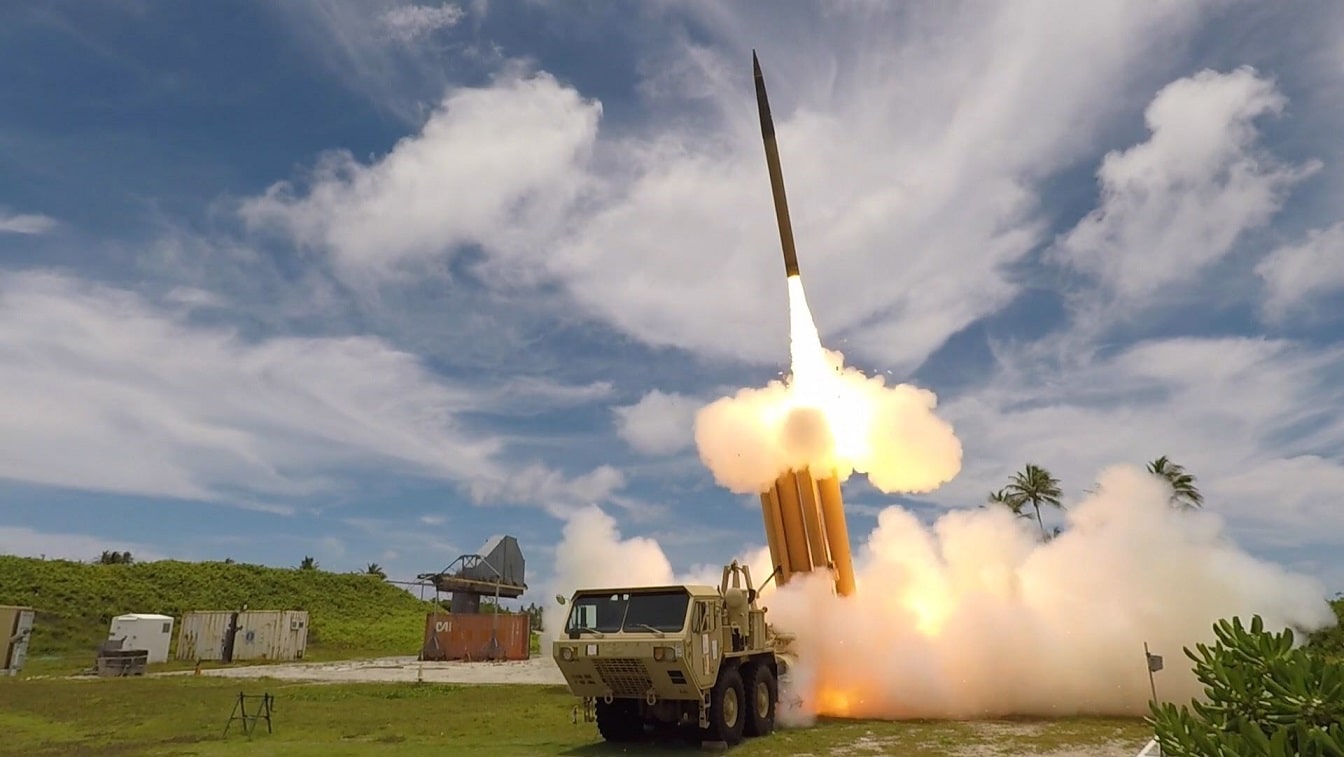
The group did not provide verifiable details in its public announcement regarding the number of targets or the extent of the damage, so the figure of six should be treated as a Houthi claim rather than a final tally. However, the military value of the news does not depend on the accuracy of each hit. Launching several attacks in a short period forces Riyadh to distribute radars and batteries, and compels it to protect airports, oil facilities, and cities simultaneously. The Patriot and THAAD systems can intercept specific missiles, but they do not eliminate the early warning problem, do not protect every facility, and do not prevent low-altitude drones from exhausting defenses.
Practically, the Houthis do not need to destroy a major facility to achieve a political impact. It is enough for them to raise the cost of insurance, delay air travel or investment, and make officials reconsider the state's ability to ensure economic life. The decision to postpone the "Davos in the Desert" conference to 2027 clearly illustrates this point: a missile that does not hit a military target may hit investor confidence.
Why Egypt Appears at This Moment
Reuters reports that Cairo is considering the possibility of military engagement in the Saudi-Yemeni conflict, a sensitive development due to Egypt's location, naval expertise, and direct responsibility for the security of the Suez Canal and the Red Sea. Egypt's participation, if it occurs, could provide Saudi Arabia with Arab depth and additional naval and aerial capabilities, but it would also impose an operational burden on Cairo that is unlike sending a political message. Yemen is not a theater that can be controlled with a single strike, and the Houthis have proven capable of turning coastal geography and mountains into a launch and attrition network.
The issue is not the number of Egyptian aircraft, but the entire capability spectrum: munitions, reconnaissance, maintenance, command and control, and rules of engagement. This is the capability triangle that Gulf capitals often overlook when purchasing platforms and delaying institutional building. Egypt's entry could improve the training and operational discipline element, but it does not alone solve the problem of data exchange between armies nor guarantee a long campaign with a politically achievable objective.
Saudi Arabia and the UAE Between Coordination and Disagreement
The communication between the foreign ministers of Saudi Arabia and the UAE to discuss regional security reflects a return to coordination at a moment of pressure, but it does not mean that disagreements over the perception of the Yemeni war have disappeared. Riyadh views the attacks as a direct threat to its internal security and vital facilities, while Abu Dhabi has different calculations regarding southern Yemen, ports, and local powers. Gulf alliances work quickly on data, but they become slower when it comes to sharing human risks and operational decisions.
Moreover, the discussion of potential Israeli support for Saudi Arabia against the Houthis, which has emerged in recent regional discussions, illustrates the narrow options available. Israel may provide expertise in air defense or intelligence, but any announced role would give the Houthis propaganda material and complicate Riyadh's political position in the Arab world. Therefore, the most likely assistance will remain in the fields of reconnaissance, warning, and technologies, not in the form of a publicly declared alliance on the ground.
What Missiles Can Explain About Deterrence
Deterrence is not a stockpile of interceptors. It is a continuous ability to detect threats, make decisions, protect infrastructure, repair damage, and then punish the attacking party or force it to retreat. Saudi Arabia spends on advanced equipment, but repeated attacks reveal the gap between possessing a system and operating it under simultaneous saturation pressure. If every round requires additional American protection or urgent negotiations, this is not defensive autonomy; it is managing dependence.
The Houthis, on the other hand, are not a conventional air force and do not possess a state economy. Their strength lies in the ability to choose low-cost timing, mix missiles with drones, and exploit political divisions among their adversaries. Therefore, simply increasing the number of batteries is not enough. What is needed is a real regional defense network, with joint operations rooms, immediate data exchange, and plans to protect ports, facilities, and energy, alongside a political track that alleviates recruitment and funding sources.
Conclusion
The announcement of six Houthi attacks, the potential entry of Egypt, the postponement of an economic conference, and urgent Saudi-Emirati communications all point to a crisis that extends beyond Yemen. The Gulf has the money and platforms, but it is still searching for a security institution capable of transforming them into cohesive capability. As every military officer who has served in the region knows, strength is not measured by how much a state buys, but by what it can operate when it receives the first blow. The contradiction that will haunt Riyadh is its desire for defensive independence while continuing to rely on external protection, and this contradiction cannot be resolved by a new arms deal.
Sources
- Reuters — Developments on the possibility of Egyptian participation in the Saudi-Yemeni conflict
- Middle East Eye — Houthi announcement of six attacks on targets in Saudi Arabia
- Al Arabiya English — Saudi-Emirati communications regarding regional security
- The Jerusalem Post — Support options for Saudi Arabia against the Houthis
The Houthi group announced six attacks against targets in Saudi Arabia on October 20, 2026, coinciding with reports of Egypt considering military involvement in the Saudi-Yemeni conflict. Saudi Arabia postponed its investment conference to 2027 following the attacks, highlighting the impact on regional stability. The situation reflects ongoing military operations and political dynamics in the Gulf region.
- Houthi group announced six attacks on Saudi Arabia on October 20, 2026.
- Egypt is considering military involvement in the Saudi-Yemeni conflict.
- Saudi Arabia postponed its major investment conference to 2027 due to the attacks.
- The attacks are seen as a threat to Saudi internal security and vital facilities.
- Coordination between Saudi Arabia and the UAE is ongoing despite differing views on the Yemen conflict.