
The Intensifying Maritime Confrontation Between the U.S. and Iran: The High-Stakes Game in the Strait of Hormuz
On September 7 local time, the U.S. Central Command stated that as of that day, the U.S. military had requested 94 commercial vessels to change course during its maritime blockade operations against Iran, rendered 3 commercial vessels incapable of navigation, and boarded 2 vessels for inspection. On September 6 local time, Secretary of Iran's Supreme National Security Council Rezaei announced that in the coming days, Iran would declare a "restricted area" in the Strait of Hormuz. He stated that this "restricted area" would extend from the U.S. Navy's blockade line into certain waters of the Persian Gulf.
Recently, the U.S. and Iran launched attacks on each other's vessels in the Strait of Hormuz, escalating maritime confrontations between the two nations. The main battlefield of the U.S.-Iran conflict has shifted to the sea; does this mean a comprehensive escalation of the conflict? Meanwhile, Iran announced the establishment of a "restricted area" in the Persian Gulf to counter the U.S. maritime blockade. What impact will this new mechanism have on navigation in the Strait of Hormuz?
Both the U.S. and Iran still hope to control the scale of the conflict
Li Zixin, Middle East expert at the China Institute of International Studies: The intensity of maritime confrontations between the U.S. and Iran is indeed escalating, but whether the shift of the main battlefield to the sea means a full-scale escalation of the conflict cannot underestimate both sides' subjective willingness to limit the intensity of the conflict. Currently, the White House hopes to de-escalate tensions before the midterm elections. Although the Pentagon has extended its deployment in the Middle East to next year, the U.S. strategic orientation still aims to keep military pressure in the background and reassess after the elections, rather than immediately launching a full-scale war. While Iran intends to maintain the visibility of the conflict to pressure the U.S., it is also controlling the so-called manageable toughness. Iran's most important realistic goal at present is to stabilize domestic economic activities and boost people's livelihoods. Therefore, the real risk of escalation in the U.S.-Iran conflict does not lie in the current strategic intentions of both sides, but rather at the operational level, where unexpected misjudgments, significant casualties, or the chain reactions caused by harming third-country vessels may occur.
The game of navigation rules in the Strait of Hormuz intensifies
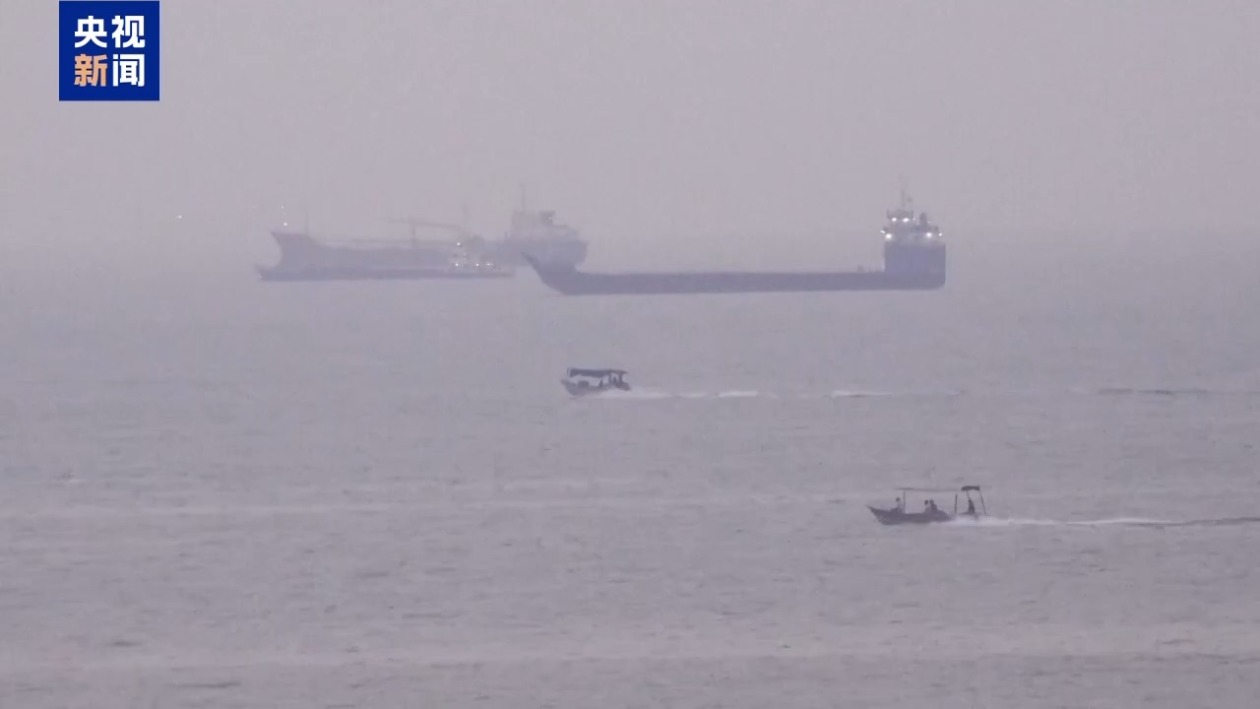
Li Zixin, Middle East expert at the China Institute of International Studies: Iran's announcement of a "restricted area" in the Persian Gulf represents another level of escalation, moving from a military factual blockade to institutionalized navigation control. The "restricted area" announced by Iran extends from the U.S. Navy's blockade line into the Persian Gulf, while the Iranian parliament is simultaneously advancing a navigation ban bill against sanctioning countries. The combination of these two factors effectively elevates the Revolutionary Guard's previous control based on military force to navigation rules with legal and institutional constraints. In the short term, shipping order will become more chaotic, with increased insurance rates, shipowners' risk aversion, and Gulf oil-producing countries seeking alternative export routes, creating a triple pressure that could further drive up oil prices. In the medium term, the coexistence of the U.S. blockade and Iran's "restricted area" will turn the Strait of Hormuz into a region of dual control, intensifying the game of navigation rules. In the long term, Iran truly aims to transform its control over the Strait of Hormuz into a negotiable institutional asset. In the future, the political determination of all relevant parties to implement their announced policies will determine whether these threats remain at the level of deterrence or become the starting point for reshaping the order in the Strait of Hormuz.
U.S. Central Command reported that on September 7, 2023, it redirected 94 merchant ships and incapacitated 3 during a maritime blockade against Iran. Iran announced a 'no-go zone' in the Strait of Hormuz, extending from the U.S. Navy's blockade line into parts of the Persian Gulf. Both nations have engaged in attacks on each other's vessels, escalating maritime tensions in the region.
- U.S. military requested 94 merchant ships to change course.
- 3 merchant ships were rendered incapable of navigation.
- Iran announced a 'no-go zone' in the Strait of Hormuz.
- Both U.S. and Iranian forces engaged in attacks on each other's vessels.
- Iran is pushing for a legal framework for maritime control in the Persian Gulf.