
The Islamic State kills 54 civilians in Mali in 2026 — the massacre reveals the void in the northeast
 Marie Dubois
The Islamic State kills 54 civilians in Mali in 2026 — the massacre reveals the void in the northeast
In Ménaka, in northeastern Mali, the bodies of 54 civilians were found after a massacre attributed to the Islamic State in the Sahel. The toll, reported on October 25 by several media outlets, is still being consolidated: the Malian army has simultaneously updated the toll of a recent attack, while local sources do not always describe the same incident. This caution does not detract from the operational fact. In this area, an armed group can kill, move, and disappear before a regular unit reaches the location.
A massacre in an area without permanent presence
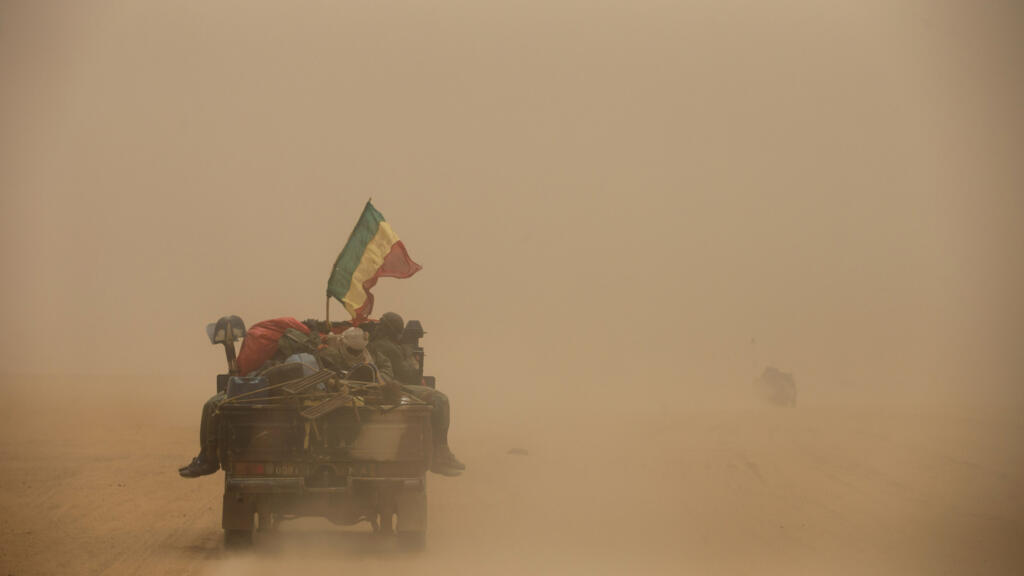
Northeastern Mali is not a continuous front line. It is a theater of operations made up of tracks, seasonal markets, and water points separated by dozens of kilometers. Ménaka, Gao, and the corridors leading up to the Nigerien border form a network of circulation rather than an administered territory. A patrol holds a route for a few hours; it does not control the surrounding villages.
This is precisely the advantage sought by the Islamic State in the Sahel, also known as EIGS. The group does not need to hold a city to impose its law. It is enough for it to punish communities suspected of cooperating with Bamako, to tax herds, and to temporarily close a track. Violence against civilians then serves as intelligence: it signals who talks, who supplies, and who refuses to pay.
The figure of 54 does not tell the whole battle
The announced figure should be read as a documented minimum, not as a complete measure of the campaign. The affected areas are difficult to access, communications are irregular, and displaced families do not always file complaints. The Malian state communicates quickly when it can attribute a victory, much less so when it has to explain why a community has been left unprotected. The available open sources do not yet allow for a definitive establishment of the exact timeline or the chain of command responsible for the massacre.
Human Rights Watch again raised alarms in October about abuses committed by the Malian army and its Russian auxiliaries, as well as the excesses of the insurgents. This parallelism does not mean that the actors are militarily equivalent. It rather indicates that civilians are caught between two systems of coercion. When a government force arrives after an attack with indiscriminate arrests, it destroys the same information it needs for the next ambush.
On the ground, the decisive question is not who has raised their flag. It is who can return the next morning.
A tactical victory for the EIGS, a strategic problem for Bamako
For the Islamic State, the massacre produces three effects. First, it weakens the civilian relays of the state in a region where administration is already intermittent. Second, it pushes families towards urban centers and main roads, facilitating recruitment, taxation, and control of movements. Finally, it opens a friction zone with JNIM, the Support Group for Islam and Muslims linked to Al-Qaeda, which also seeks to dominate the corridors of eastern Sahel.
The rivalry between the EIGS and JNIM does not turn civilians into beneficiaries. It multiplies reprisals. A village that negotiates with one faction becomes suspect to the other. Northeastern Mali can thus suffer a war of social control without identifiable battles, with civilian casualties appearing in the statistics only several days after the events.
The Bamako government has been claiming for two years the reconquest of sovereignty, with the support of the Russian Africa Corps. But military sovereignty is not measured by the number of bases retaken. It is measured by the ability to protect a road, to investigate a massacre, and to maintain a presence after the departure of armored vehicles. The toll in Ménaka reminds us of the difference.
The Gao Niger corridor becomes the next test
The most vulnerable area is located between Ménaka, Gao, and the Nigerien border. The convoys there are predictable, distances complicate evacuation, and seasonal rains can slow heavy vehicles. An attack on an isolated post would not necessarily be the main objective. The EIGS may prefer to cut communications, isolate garrisons, and let authorities announce contradictory figures.
France no longer has a Barkhane deployment to fill this void, and the states of the Sahel States Alliance now refuse the regional framework that once facilitated intelligence sharing. This is the concrete consequence of the withdrawal of partners: each capital has more political freedom, but each unit on the ground sees its operational radius shrink.
In the coming weeks, it will be necessary to monitor attacks on convoys and forced displacements around Ménaka rather than just victory statements. If the EIGS manages to prevent markets from functioning and to make the tracks to Gao impassable, the massacre of 54 civilians will not have been an isolated episode. It will have demonstrated that in northeastern Mali, control of the terrain still belongs to those who can return after the patrol.
Sources
- The Hindu, Malian military toll updated to 54 dead, October 25, 2026.
- Human Rights Watch, report on abuses by the Malian army and insurgent groups, October 2026.
- Reuters, investigation into JNIM attacks against Malian forces, September 2026.
- Africanews, summary of the report on human rights violations in Mali, October 2026.
The Islamic State in the Greater Sahara (EIGS) killed 54 civilians in a massacre in Menaka, northeastern Mali, in October 2026. This incident underscores the group's ability to operate in areas with limited military presence, using violence to exert control and intimidate local communities. The Malian army's response has been criticized, highlighting ongoing challenges in maintaining security and protecting civilians in the region.
- 54 civilians were killed in a massacre attributed to ISIS in northeastern Mali.
- The incident highlights the lack of permanent military presence in the region.
- ISIS uses violence against civilians to control and intimidate local populations.
- The Malian army's response to such incidents is often criticized for being inadequate.
- The area is characterized by difficult access and irregular communications.