
The Japan Maritime Self-Defense Force submarine sinks USS Juneau in 2026 VS26, meaning SINKEX 200 nautical miles away.
 Tanaka Takashi
Japan Maritime Self-Defense Force Submarine Sinks USS Juneau in 2026 VS26, Meaning of SINKEX 200 Nautical Miles Out
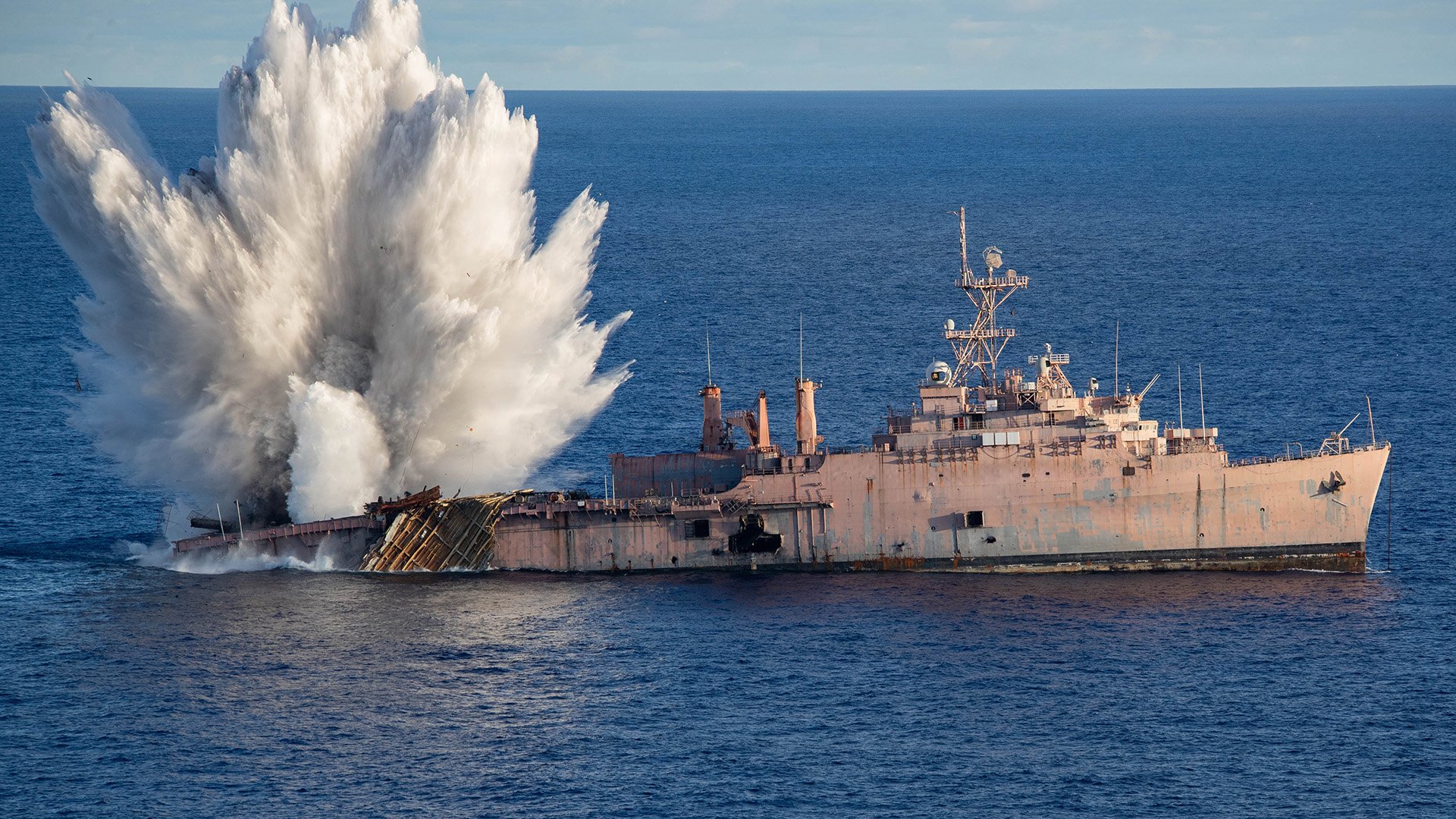
It should not be overlooked that on June 27, the final blow to the decommissioned U.S. amphibious transport dock USS Juneau was delivered by a submarine of the Japan Maritime Self-Defense Force. According to records released by DVIDS, the SINKEX was conducted in the Mariana Islands firing range complex, over 200 nautical miles off the coast of Guam, with air, surface, and underwater forces attacking in succession.
The target was not just a towed target but the Austin-class LPD-10. Although it is considered an old vessel at 17,000 tons when fully loaded, it is a real ship with a well deck, engine room, and fuel and ammunition-related compartments, providing sufficient complexity to observe the extent of damage.
The Denial Capability Demonstrated by "Jingei" from Underwater
According to a separate image description from DVIDS, the Japan Maritime Self-Defense Force vessels participating in Valiant Shield 2026 included the destroyer "Kaga," destroyer "Fuyuzuki," and submarine "Jingei" SS-515. While the name of the ship that launched the torpedo during the SINKEX has not been officially confirmed in public documents, the fact that the latest Taigei-class submarine was operating in the exercise area with the U.S. carrier strike group is significant.
The Taigei-class is a conventionally powered submarine that employs lithium-ion batteries, expected to provide higher underwater endurance and charging efficiency than conventional types. This is valuable not for flashy speed performance but for reducing the time spent with the snorkel exposed in areas around the first island chain, where the density of patrol aircraft and unmanned sensors is increasing. The capability of a submarine should be measured not by visible weapons but by the time it forces the opponent to maintain anti-submarine vigilance.
The Significance of Sinking with Torpedoes Instead of Missiles
Army Recognition reports that this attack was carried out using heavy torpedoes from a 533 mm launch tube. The Japanese side has not disclosed the type of torpedo used. Whether it is the Type 18 torpedo associated with the Taigei-class or the conventional Type 89 torpedo, both aim for effects different from anti-ship missiles.
Anti-ship missiles can cause damage to ship structures, radar, launch and recovery equipment, and areas around the engine room. In contrast, heavy torpedoes act on buoyancy and the keel below the waterline. Whether a ship is rendered "combat ineffective," "unseaworthy," or sunk is a distinction that cannot be easily judged by hit probabilities on paper. A real ship target like the old Juneau provided valuable material for observing this progression of damage.
The Integration of Firepower in the Japan-U.S. Alliance Has Deepened
In this SINKEX, in addition to U.S. aircraft, surface ships, and underwater forces, the forces of allied partners were involved in multiple axes. DVIDS states that the entire VS26 exercise took place over ten days in the Northern Mariana Islands, Guam, Japan, and surrounding waters, including anti-submarine warfare, high-altitude balloons, MQ-28 Ghost Bat, bilateral resupply, expeditionary reload, and live-fire capabilities for medium-range interception. This was not a one-off sinking show but an exercise to actually coordinate the procedures of detection, tracking, assignment, firing, and battle damage assessment.
For the Japan Maritime Self-Defense Force, a noteworthy point is that submarines were placed not as auxiliary forces for coastal defense but within the same operational framework as U.S. long-range air firepower and carrier strike groups. During the Cold War, JMSDF submarines were primarily positioned to wait for Soviet submarines in the Soya, Tsugaru, and Tsushima straits. The current role has expanded towards restraining the opponent's surface forces in the Philippine Sea.
The Remaining Weakness is Not in Numbers but in Procedures
In the author's view, the lesson from this event is not simply that "Japan can also sink ships." To sink a large vessel, sensors, communications, firing authority, air-sea domain coordination, environmental regulation compliance, and post-evaluation must all operate on a single timeline. Particularly, submarines are highly valuable the more they conceal their presence, yet they require information sharing to enter the alliance's kill chain. This contradiction has not yet been sufficiently discussed.
The sinking of the Juneau demonstrated the technical maturity of the JMSDF submarine force. At the same time, it brought to the surface a more complex issue of how to balance political engagement decisions with the secrecy of submarines.
Major References: DVIDS "Multilateral, Joint Forces execute sinking exercise during Valiant Shield 2026," DVIDS "Valiant Shield 2026 concludes in Western Pacific," and analysis of USS Juneau SINKEX by Army Recognition.
On June 27, 2026, the Japan Maritime Self-Defense Force submarine sank the decommissioned USS Juneau during a sinking exercise in the Philippine Sea, over 200 nautical miles off Guam. This event was part of Valiant Shield 2026, involving multiple military forces and showcasing the capabilities of JMSDF submarines in joint operations.
- The JMSDF submarine sank the decommissioned USS Juneau during a SINKEX.
- The exercise took place over 200 nautical miles off Guam in the Mariana Islands.
- The sinking involved multiple military forces, including U.S. and allied assets.
- The submarine used a heavy torpedo for the sinking, demonstrating advanced capabilities.
- This event marks a significant evolution in the role of JMSDF submarines in joint operations.