
The JNIM Strikes Niamey in 2026 — Diori Hamani Airport Becomes the New Test for the Nigerien Regime
 Marie Dubois
The JNIM Strikes Niamey in 2026 — Diori Hamani Airport Becomes the New Test for the Nigerien Regime
On June 18, in Niamey, armed men attacked the area of the Diori Hamani International Airport and the nearby military base. This was not a raid on an isolated village in Tillabéri, nor an ambush on a secondary track towards the Malian border. It was an attack at the gates of the capital, where the regime of General Abdourahamane Tchiani has concentrated part of its security narrative since the coup d'état of 2023.
The Nigerien Ministry of Defense claims that eleven soldiers and two civilians were killed, while twenty-two assailants were reportedly shot dead. The Group for Support of Islam and Muslims (JNIM, affiliated with Al-Qaeda) has claimed responsibility for the operation according to several press reports. The toll should be handled with caution: in this theater, each side publishes figures that also serve the psychological battle. But the location is not debatable.
An Attack on the Power's Air Hub
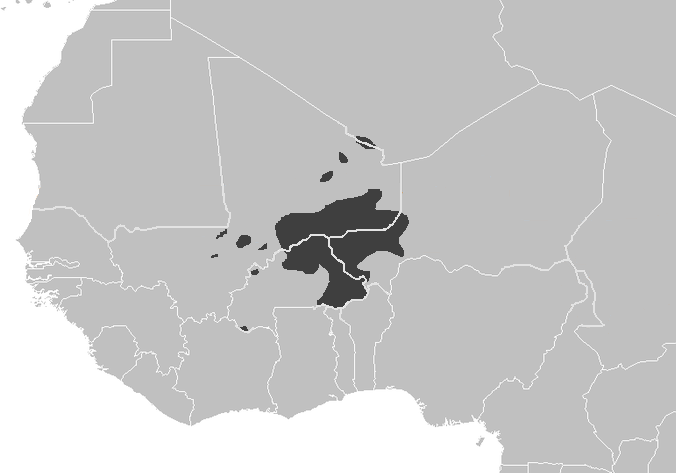
Diori Hamani is not just a civilian airport. It is the diplomatic entry point of Niamey, a logistical hub for Nigerien forces, and the symbol of a capital that the junta presents as better protected since the departure of French troops and the rise of Russian partners. In a Sahelian war, an airport is never neutral: it allows for medical evacuations, the transport of munitions, the movement of foreign advisors, and sometimes the takeoff of drones.
On the ground, the effect sought by the JNIM is therefore not necessarily the lasting capture of the infrastructure. A light column that approaches, fires, sets ablaze, or forces a reaction is enough to produce a strategic result. It forces the power to thin out other axes, to multiply checkpoints, and to show that the capital is no longer safe from the rural war that has been gnawing at western Niger for years.
Distance matters. Between the tri-border area and Niamey, the roads pass through spaces where state control is intermittent: intimidated villages, isolated posts, side tracks passable in the dry season. An attack in the capital does not mean that the JNIM controls the corridor up to the airport gates. It means that it can move men, weapons, and information there long enough to choose its moment.
The Precedent of January Has Not Been Absorbed
This operation is all the more serious as it comes after a previous alert around Niamey in January. At that time, the authorities had already been forced to explain how a threat could reach such a sensitive area. Five months later, the attack on June 18 indicates that the correction was not sufficient, or that the adversary changed methods faster than the Nigerien security apparatus.
One must be wary of easy conclusions. Defending an airport on the edge of an African capital has nothing to do with securing a European base. The perimeter is long, the urban approaches are numerous, civilian flows cannot be completely interrupted, and the available forces must also protect ministerial buildings, barracks, and command quarters. But it is precisely for this reason that this type of target reveals the true quality of the system.
From experience, Sahelian armies rarely suffer from an absolute lack of courage. They rather suffer from three weaknesses that are harder to correct: fragile local intelligence, slow inter-armed reaction, and dependence on a few elite units that are moved from one fire to another. The JNIM knows these limits. It maps them better than the staff sometimes does.
The JNIM Wants to Speak to Niamey as Much as to Its Fighters
The JNIM's claim must be read as an internal and external message. To recruits, it says: we can strike where the regime claims to be strong. To rural communities, it suggests that the junta is not capable of protecting even its capital. To jihadist rivals, particularly the Islamic State in the Sahel, it reminds them that Al-Qaeda remains capable of producing a high-visibility operation without necessarily engaging a mass of fighters.
This dimension is important because Niger has become a scene of armed competition. To the west, networks linked to the JNIM benefit from the continuities in Mali and Burkina Faso. To the east, the Lake Chad ecosystem maintains its own logics, with ISWAP and Boko Haram. In the center, the state must hold roads, not just cities. When an attack hits Niamey, it connects these fronts in the political imagination, even if the operational chains remain distinct.
For the junta, the difficulty is almost insurmountable in communication. Blaming France or external powers can mobilize the street for a few days. It does not close an intelligence gap around an airport. Insisting on the twenty-two assailants killed may reassure regime supporters. It does not answer the central question: how did the group approach such a sensitive area?
The Russian Presence Does Not Replace Territorial Coverage
Since the French departure, Niamey has sought to rewrite its security architecture around new partners, including Russia. Foreign advisors can train, equip, provide drones, or reinforce certain units. They cannot buy the trust of a village, restore a chain of human intelligence destroyed by abuses, or transform in a few months an army built for garrison duty into a mobile counter-insurgency force.
This is the point that many capitals forget when they replace one partner with another. The Sahelian problem is not just the choice of the flag on the training camp. It is the ability to hold the intervals: markets, gendarmerie posts, bridges, water points, supply routes. As long as these spaces remain negotiated day by day, the JNIM retains the initiative.
The Nigerien junta can strengthen the immediate security of Diori Hamani. It can impose lockdowns, multiply patrols, and arrest suspects. These measures are likely. They will have a cost: more pressure on the population of Niamey, more resources immobilized around the capital, and less mobility available for rural areas where the JNIM recruits, taxes, and intimidates.
The Next Risk Lies on the Axes, Not Just at the Gates
The attack on June 18 does not necessarily predict a fall of Niamey. That would be a theatrical reading, not a military one. It rather announces a phase where the capital becomes a target of harassment, intended to provoke a reaction that is too heavy and expose the weaknesses of the regime.
The points to watch in the coming weeks are concrete: the road to Ouallam, the western accesses from Tillabéri, fuel convoys, and communication installations around the capital. If the JNIM manages to chain an attack against a logistical axis after the Diori Hamani raid, then the operation of June 18 will no longer just be a propaganda blow. It will become the beginning of a methodical pressure on the political heart of Niger.
Sources: Al Jazeera/AFP-Reuters, Associated Press via PBS, Africanews, statements reported from the Nigerien Ministry of Defense. The casualty figures and the number of fighters killed remain those published by the Nigerien authorities and should be cross-checked as new information emerges.
On June 18, 2026, JNIM launched an armed attack on Diori Hamani International Airport and a nearby military base in Niamey, resulting in the deaths of 11 soldiers and 2 civilians, while 22 attackers were reportedly killed. This incident underscores the vulnerabilities of the Nigerien regime's security narrative and serves as a strategic message to both local communities and rival jihadist groups.
- JNIM attacked Diori Hamani International Airport in Niamey on June 18, 2026.
- 11 soldiers and 2 civilians were killed, with 22 attackers reportedly killed.
- The attack challenges the security narrative of the Nigerien regime.
- The incident highlights vulnerabilities in Niger's security apparatus.
- JNIM's operation serves both internal and external messaging.