
The Middle East War Situation Shrouded in Multiple Mysteries
[Global Times Special Correspondent Chen Yang, Global Times Reporter Ma Jun] Editor's Note: While negotiations between the U.S. and Iran were still ongoing, the U.S. and Israel suddenly launched a large-scale airstrike against Iran on February 28, resulting in the deaths of several high-ranking Iranian officials, including Iran's Supreme Leader Khamenei, plunging the Middle East into a fog of uncertainty. Unlike previous localized conflicts, all parties involved in this conflict have clearly controlled the dissemination of related information on social media and actively released information that is difficult to distinguish between true and false, further increasing the unpredictability of the future situation in the Middle East.
Why the U.S. and Israel launched a surprise attack on Iran in broad daylight
On February 28, Israel and the U.S. announced a joint airstrike against Iran, surprising observers—because this strike was not conducted at night as is customary, but during the day on the 28th.
Analysis from the U.S. Defense News website on March 1 suggested that President Trump was eager to launch military action against Iran on February 28 because Congress was about to hold a public vote to restrict Trump's "unilateral military strikes against Iran" without formal authorization from Congress. The report stated that although the president, as commander-in-chief, has the authority to direct certain strategic military actions, the U.S. Constitution grants Congress the power to declare war. "Has Trump learned nothing from decades of U.S. interference in Iran and the endless wars in the Middle East?" criticized Virginia Democratic Senator Tim Kaine, calling the attack on Iran "a huge mistake."
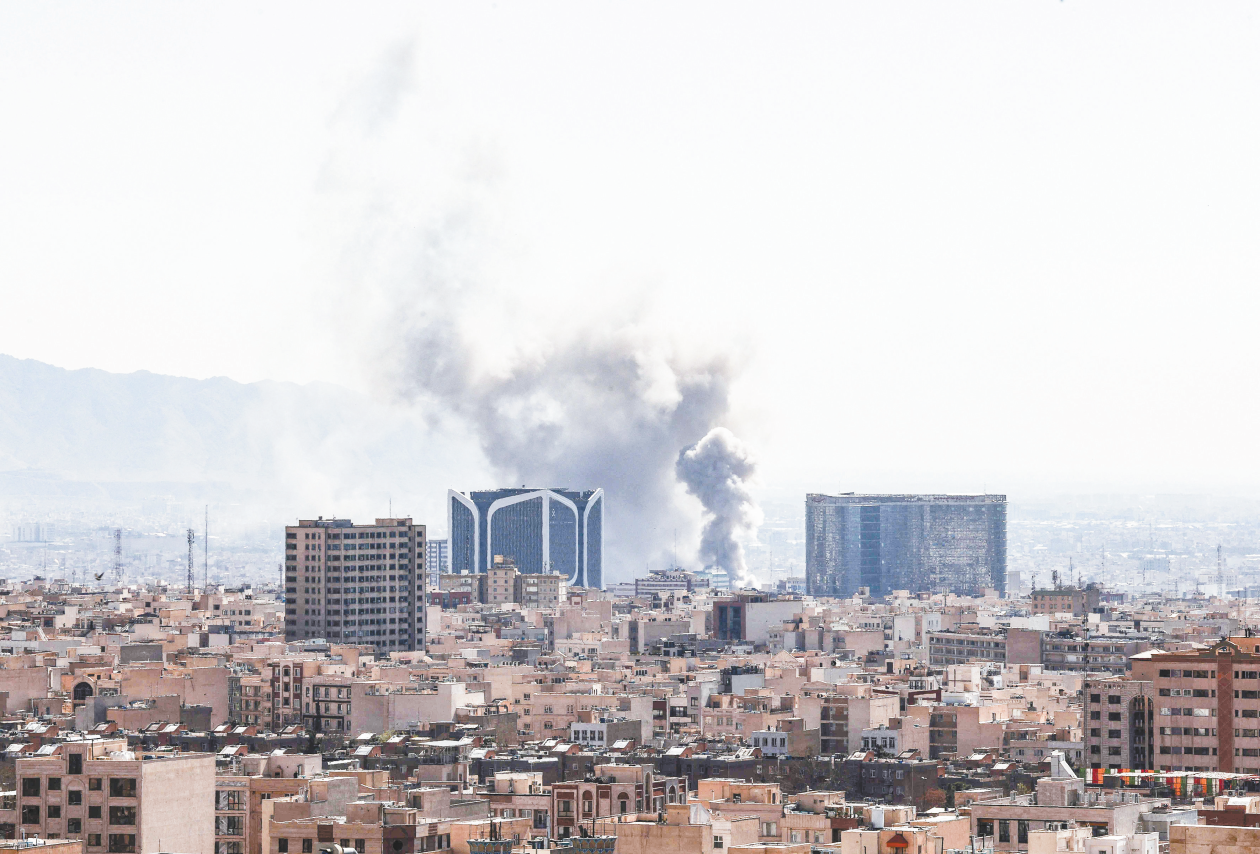
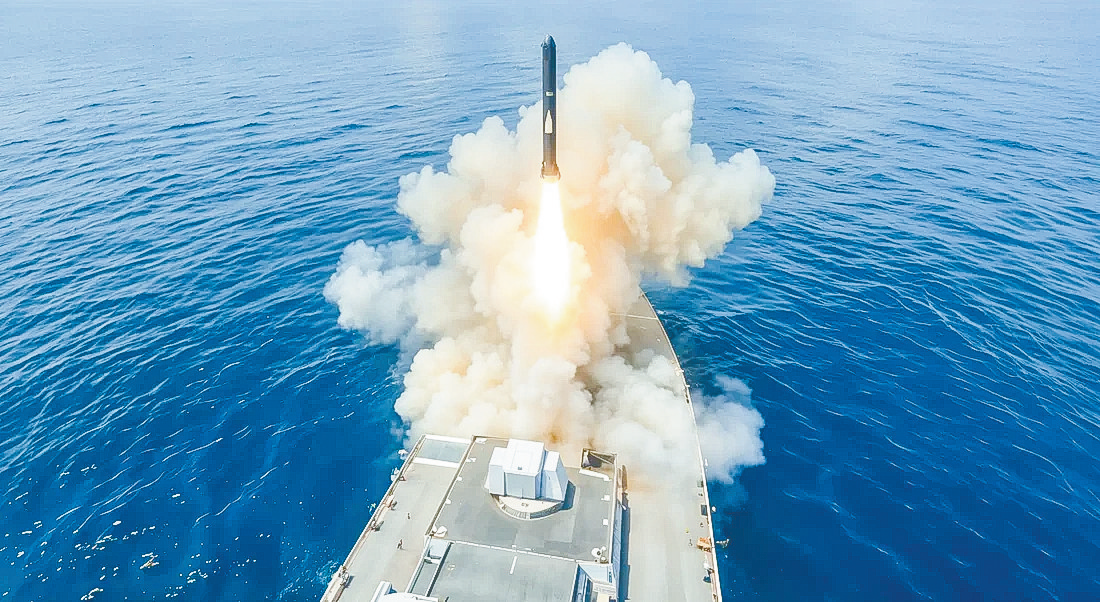
Israeli Defense Minister Katz announced at noon on February 28 that a "preemptive" strike had been launched against Iran, and witnesses reported seeing cruise missiles heading towards Iran over Iraq. Subsequently, U.S. officials stated that the military action was jointly initiated by Israel and the U.S., with U.S. officials claiming that the U.S. was striking Iran from the air and sea. Later, the U.S. Navy also released a video of "Tomahawk" cruise missiles being launched from an Arleigh Burke-class destroyer. On that day, thick smoke billowed from the office of Iran's Supreme Leader Khamenei in Tehran and several Iranian government ministries during the attack.
Analysis from the U.S. Business Insider on March 1 noted that in recent years, U.S.-led airstrikes have often been conducted late at night, taking advantage of the opponent's physiological fatigue and psychological weariness at night, as well as fully utilizing the U.S. military's night vision equipment technology advantages to achieve surprise attacks. Whether in the Gulf War or the Afghanistan War, the U.S. military has chosen to launch offensives in the early morning. In last year's "Midnight Hammer" operation against Iran's nuclear facilities, U.S. B-2 strategic bombers also chose to drop bunker-busting bombs on multiple locations in Iran at night. The Israeli Air Force launched a large-scale airstrike against Iran, codenamed "Lion's Strength," on June 13 last year, also choosing to strike in the early morning.
The U.S. Defense One website's "Battlefield" channel speculated on March 1 that the decision to conduct the airstrike against Iran at noon rather than at night might have been due to the acquisition of timely intelligence that prompted an early launch of the operation. The Wall Street Journal quoted former Israeli Military Intelligence Chief Amos Yadlin as saying, "In the past, everyone had to wait until midnight to launch an attack under the cover of darkness," and that this daytime attack "was a tactical surprise." The report also stated that U.S. intelligence agencies had been tracking Khamenei's movements for several months. Senior Pentagon officials disclosed that on February 28, the U.S. and Israel received a piece of highly time-sensitive intelligence indicating that 5 to 10 high-ranking Iranian leaders, including Khamenei, would be meeting that morning in a courtyard in Tehran. The U.S. and Israel decided to adjust the originally planned strike time and launch a "decapitation operation" against Iranian leaders, conducting the attack in broad daylight, with Israeli aircraft dropping 30 precision-guided bombs on Khamenei's office. The official also added that Israeli intelligence had infiltrated Iran's security high command, making this attack possible.
Iran also confirmed that in the February 28 attack launched by the U.S. and Israel against Iran, in addition to Khamenei, several senior commanders of the Iranian armed forces were killed, including Chief of Staff Mousavi, Commander of the Islamic Revolutionary Guard Corps Pakpour, Secretary of the Iranian Defense Council Shamkhani, and Iranian Defense Minister Aziz Nahid Zadeh.
Will it turn into a protracted war?
Reuters quoted Middle East Institute expert Paul Salem's analysis, stating that just days ago, Trump described the potential U.S. strikes as leverage to force Iran to reach a nuclear agreement, but now his announcement of military action openly called for "regime change in Iran." Salem stated, "Unlike the large-scale U.S. invasion of Iraq in 2003, Trump seems to be betting on a short, decisive action, hoping to achieve significant results within days or weeks, limit U.S. military casualties, and control domestic political risks."
However, there are widespread concerns that the current round of airstrikes by Israel and the U.S. against Iran may turn into a protracted war. Based on last year's conflict between Israel and Iran, in addition to various political and economic pressures, military factors limiting the combat capabilities of the three parties include the stockpiles of intercept missiles and offensive weapons held by the U.S. and Israel, as well as Iran's inventory of medium-range ballistic missiles.
Last year's conflict between Israel and Iran lasted only 12 days, but the high-intensity interception operations nearly exhausted the ammunition of Israel and the U.S. military's missile defense systems stationed in the Middle East, which was one of the key factors that led Israel to ultimately agree to a ceasefire. Before the start of this airstrike against Iran, the U.S. mobilized a large amount of ammunition for the "Patriot" and "THAAD" missile defense systems from various locations around the world to increase the stockpile of intercept missiles. However, analysis from the U.S. Military Observer magazine stated that based on the actual situation of Iranian missile strikes against Israeli and U.S. bases in the Middle East, the U.S. and Israeli missile defense systems still cannot achieve "100% complete interception," and any significant casualties would put immense pressure on the U.S. and Israeli governments.
Before this round of attacks, senior Pentagon officials also warned that if the conflict becomes protracted, it would severely impact the reserves of U.S. offensive precision-guided weapons. The Defense One website's "Battlefield" channel stated that the U.S. military used two new types of weapons in this operation: the "Lucas" cheap drone, which mimics Iran's "Shahed-136" suicide drone, and the black "Tomahawk" cruise missiles.
On the Iranian side, the weapons available for counterattacks mainly rely on various medium and short-range ballistic missiles. Western assessments suggest that Iran currently possesses about 2,000 medium-range ballistic missiles capable of striking Israel and 2,000 medium-range ballistic missiles that can cover major U.S. military bases in the region. Iranian military officials claimed that the missiles launched on February 28 were "old stock," primarily consisting of liquid-fueled missiles with long preparation times, while Iran also possesses multiple types of solid-fuel ballistic missiles and hypersonic missiles, which not only have shorter launch preparation times but also stronger penetration capabilities.
From "live battlefield" to "information black box"
In the era of social media, during the previous Russia-Ukraine conflict and the Israel-Iran conflict, there were instances of the public "live streaming" the war situation, allowing observers to judge the direction of the battle based on these open-source intelligence pieces, humorously referred to as "eliminating the fog of war." However, for the parties involved in the conflict, this situation greatly impacts military operations. Therefore, in this tripartite offensive and defensive battle involving the U.S., Israel, and Iran, all parties have strengthened information control and actively released information that is difficult to distinguish between true and false, largely restoring the "unknowability" of the battlefield.
Unlike last year's Israeli airstrike operations that disrupted and delayed Iran's counterattack rhythm, after the airstrikes by Israel and the U.S. against Iran on February 28, Iran began its counterattack against Israeli and U.S. military targets in the Middle East within hours, launching a counteroffensive operation codenamed "Real Commitment-4." According to the Israel Times on March 1, within 24 hours of the start of military actions against Iran, Iran launched at least 20 waves of missiles and drones. The Israeli Defense Forces assessed that Iran fired at least 150 medium-range ballistic missiles at Israel. This number is slightly lower than the number of missiles Iran launched at Israeli targets on the first night of last year's conflict, when Iran launched five waves of simultaneous strikes within 7 hours, firing approximately 180 missiles. The counterattack on February 28 was conducted in a more dispersed manner with more simultaneous strikes. Israeli experts believe that the scale and coordination of Iran's single missile attacks in this conflict significantly differ from previous instances. "While this situation may be related to disruptions in Iran's missile forces' command and control systems, at least part of the reason is that Iran adopted different tactics and implemented a decentralized command and control strategy to cope with the significant disruptions that this conflict may bring."
In addition to directly striking Israeli targets, Iran also launched missiles at U.S. military targets within countries such as Saudi Arabia, the UAE, Bahrain, Qatar, Kuwait, and Jordan. Iran's foreign minister has made it clear that all U.S. military bases in the region are "legitimate targets" for Iran. According to statistics from Al Jazeera, Iran used short-range ballistic missiles and suicide drones to attack multiple locations, including the U.S. Navy's Fifth Fleet service center in Bahrain, the Al Udeid Air Base in Qatar, and the Ali Salem Air Base in Kuwait.
Iran claims to have attacked several U.S. military bases in the region, resulting in hundreds of U.S. military casualties and severely damaging one U.S. warship. However, these claims have been denied by the Pentagon. Gulf countries stated that the vast majority of incoming Iranian missiles and drones were successfully intercepted. However, Qatar admitted that two missiles hit the Al Udeid Air Base, and another radar station was struck by a drone. The U.S. Defense Blog reported that, according to information released by Iran, the U.S.-made "Patriot" long-range early warning radar that was hit was damaged, which would reduce the ability of U.S. forces in the region to detect Iranian ballistic missiles.
Similar to the situation with Iran, Israel and the U.S. released information that was difficult to distinguish between true and false during this conflict, even regarding whether the "decapitation" operation against Iranian leaders was successful, with related statements undergoing significant reversals within 24 hours. Regarding the results of Iran's counterattack, U.S. and Israeli officials have largely avoided discussing it to prevent providing more intelligence on Iran's counteroffensive actions. However, Israeli and U.S. officials released multiple photos of strikes against Iranian targets and videos of hunting down Iranian missile launchers to showcase their combat capabilities. According to Israeli sources, the Israeli Air Force deployed approximately 200 fighter jets on February 28 to conduct "the largest strike operation in history" against Iran, primarily targeting Iranian missile launchers and air defense systems. On March 1, Israel continued to launch large-scale airstrikes against Iran "to establish air superiority and open the way to Tehran."
On February 28, 2023, U.S. and Israeli forces executed a daylight airstrike in Tehran, targeting high-ranking Iranian officials, including Supreme Leader Khamenei, resulting in multiple casualties. This operation marked a significant escalation in military actions against Iran, prompting immediate retaliatory strikes from Iran against U.S. and Israeli military positions in the region.
- U.S. and Israel launched airstrikes on February 28, 2023, targeting Iranian leaders.
- Supreme Leader Khamenei was among those reported killed in the strikes.
- The operation was conducted during daylight, a departure from typical nighttime strikes.
- Iran retaliated with missile and drone attacks against U.S. and Israeli targets in the region.
- The airstrikes were described as a 'decapitation' operation against Iranian leadership.