

Summary and Key Points: The Navy’s top uniformed officer is signaling hard limits on how long the USS Gerald R. Ford aircraft carrier strike group can stay deployed.
-After more than 200 days at sea since leaving Norfolk on June 24, 2025, the strike group has already shifted from Europe and the Mediterranean to SOUTHCOM missions in the Caribbean.
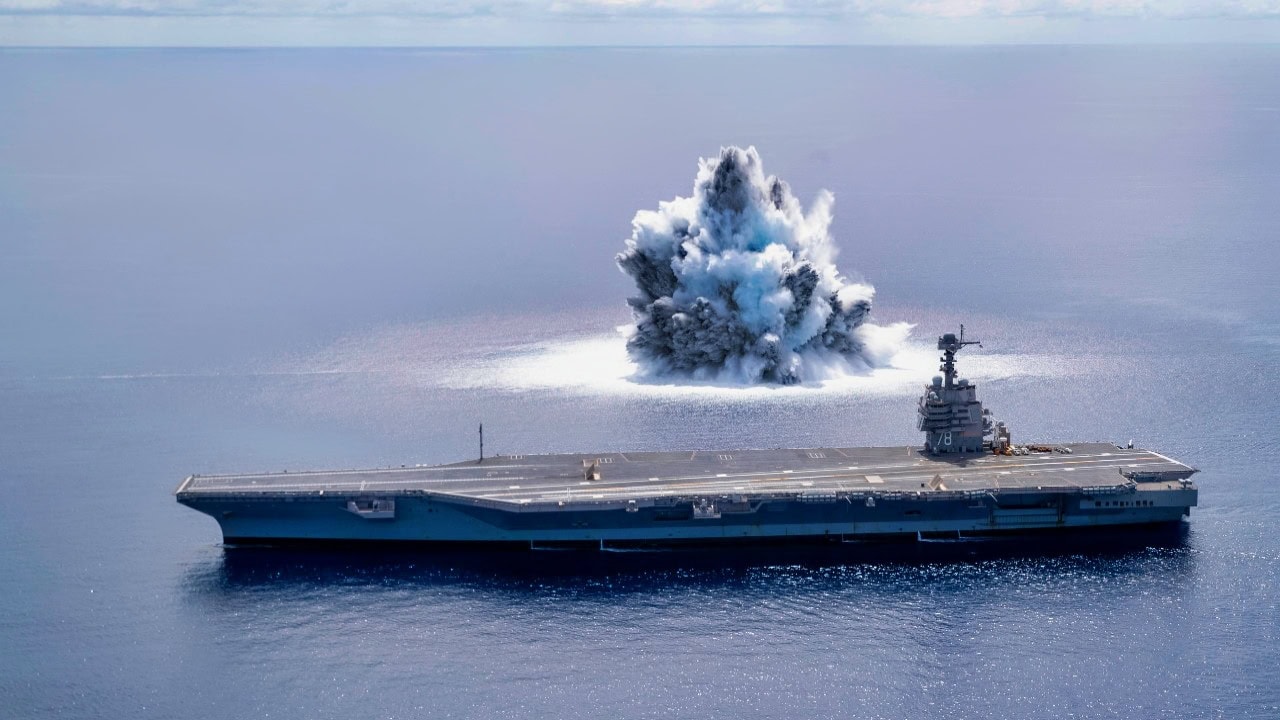
The aircraft carrier USS Gerald R. Ford (CVN 78) completes the first scheduled explosive event of Full Ship Shock Trials while underway in the Atlantic Ocean, June 18, 2021. The U.S. Navy conducts shock trials of new ship designs using live explosives to confirm that our warships can continue to meet demanding mission requirements under harsh conditions they might encounter in battle. (U.S. Navy photo by Mass Communication Specialist 3rd Class Riley B. McDowell)
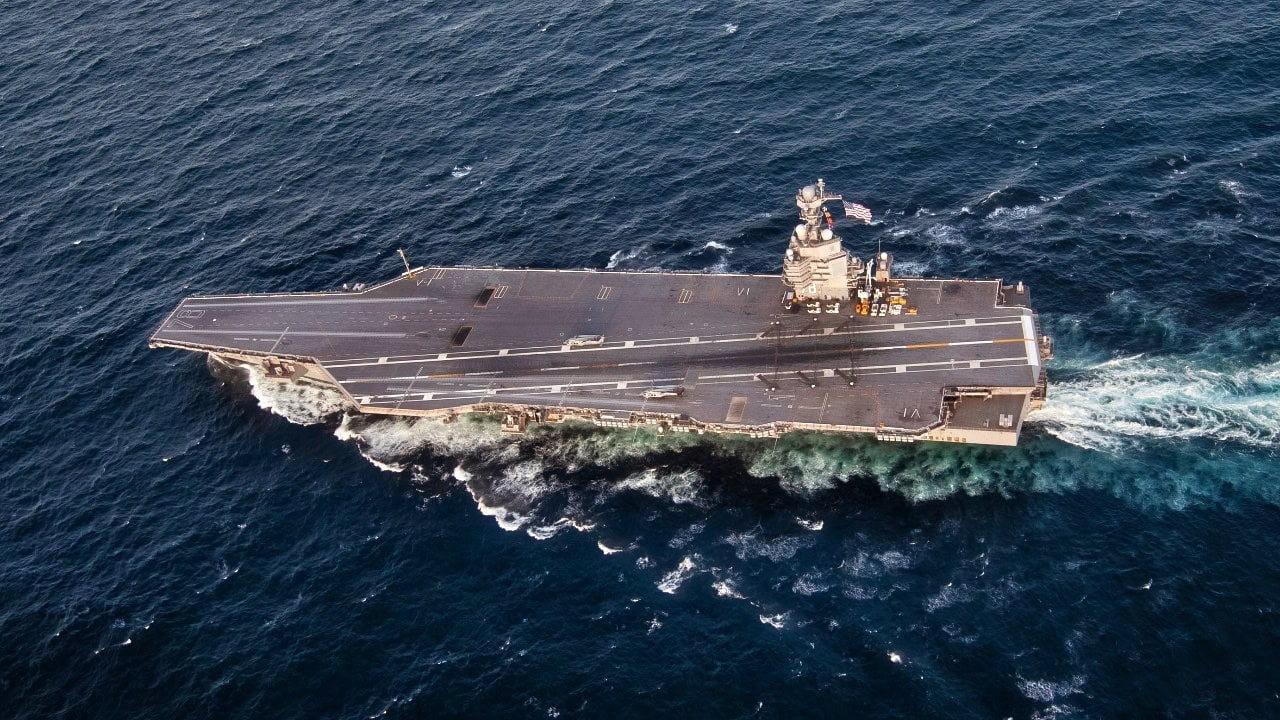
The Ford-class aircraft carrier USS Gerald R. Ford (CVN 78) and the Italian aircraft carrier ITS Cavour (CVH 550) transit the Atlantic Ocean March 20, 2021, marking the first time a Ford-class and Italian carrier have operated together underway. As part of the Italian Navy’s Ready for Operations (RFO) campaign for its flagship, Cavour is conducting sea trials in coordination with the F-35 Lightning II Joint Program Office’s Patuxent River Integrated Test Force to obtain official certification to safely operate the F-35B. Gerald R. Ford is conducting integrated carrier strike group operations during independent steaming event 17 as part of her post-delivery test and trials phase of operations.
-Adm. Daryl Caudle argues that additional extension would strain sailors’ families, disrupt planned maintenance, and erode readiness as ships return in worse condition and cost more to repair.
-The situation highlights a broader problem: global demand is colliding with limited carrier capacity and limited surge flexibility.
America’s Aircraft Carrier Crunch: Why the Navy Says the Supercarrier USS Gerald R. Ford Can’t Keep Extending
Chief of Naval Operations Adm. Daryl Caudle warned in recent days that extending the historic deployment of the USS Gerald R. Ford (CVN-78) and its associated carrier strike group would impose unsustainable strain on both sailors and the strike group’s readiness.
The assessment was outlined to reporters at the Surface Navy Association’s annual symposium in Arlington, Virginia.
The strike group, led by the U.S. Navy’s newest and most advanced supercarrier, has been at sea for more than 200 days since departing Naval Station Norfolk on a regularly scheduled deployment on June 24, 2025. Originally tasked with operations in European and Mediterranean waters, the group was moved in autumn to Southern Command (SOUTHCOM) and the Caribbean to support counternarcotics and security missions at the direction of the Trump administration.
Speaking to reporters, Caudle said he would resist any attempt to extend the Ford’s planned deployment period, citing the cumulative impact on the crew’s families and personal lives, as well as the strain it would place on scheduled maintenance and readiness.
What Caudle Told Reporters on Supercarrier USS Gerald R. Ford
While talking to reporters at the annual symposium, Caudle said that while the Gerald R. Ford strike group’s capabilities remain highly valued, he cannot support extending its deployment, which is currently being watched by the world, if such an order would be required for operations in the Middle East or elsewhere.
“I think the Ford, from its capability perspective, would be an invaluable option for any military thing the president wants to do,” Caudle said, per The War Zone. “But if it requires an extension, it’s going to get some push back from the CNO. And I will see if there is something else I can do.”
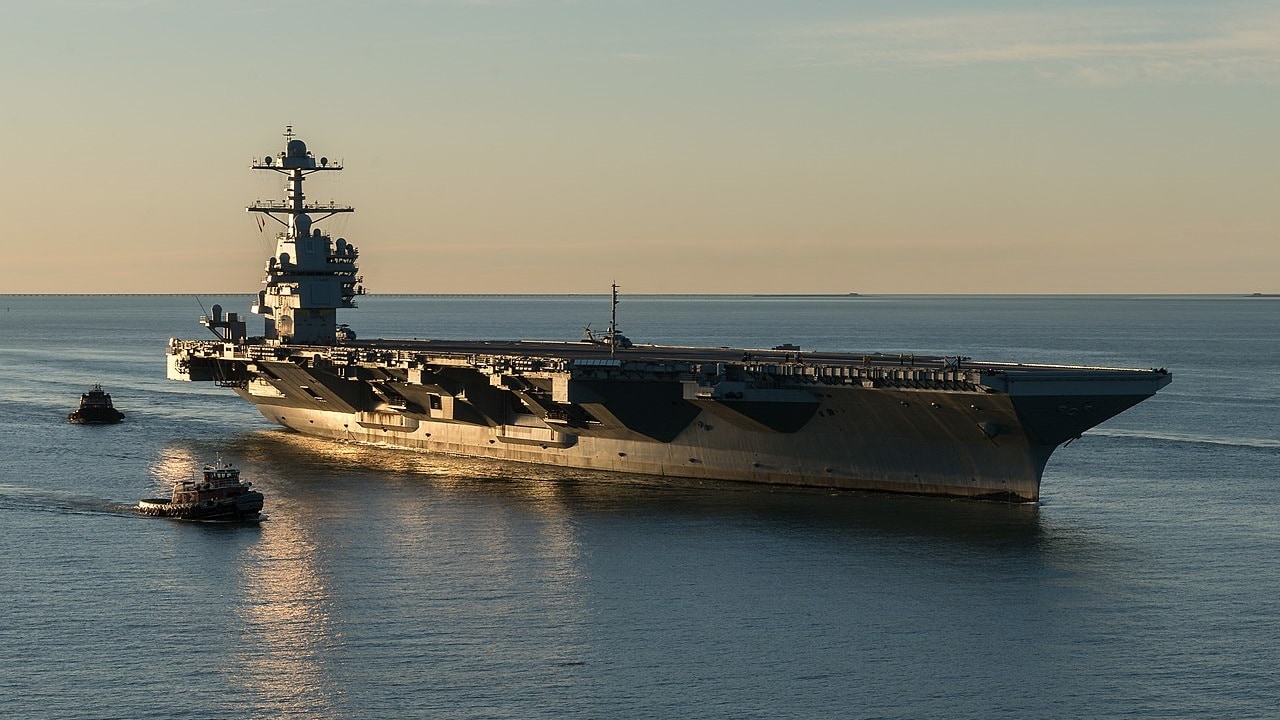
Ford-Class Aircraft Carrier. Image Credit: Creative Commons.
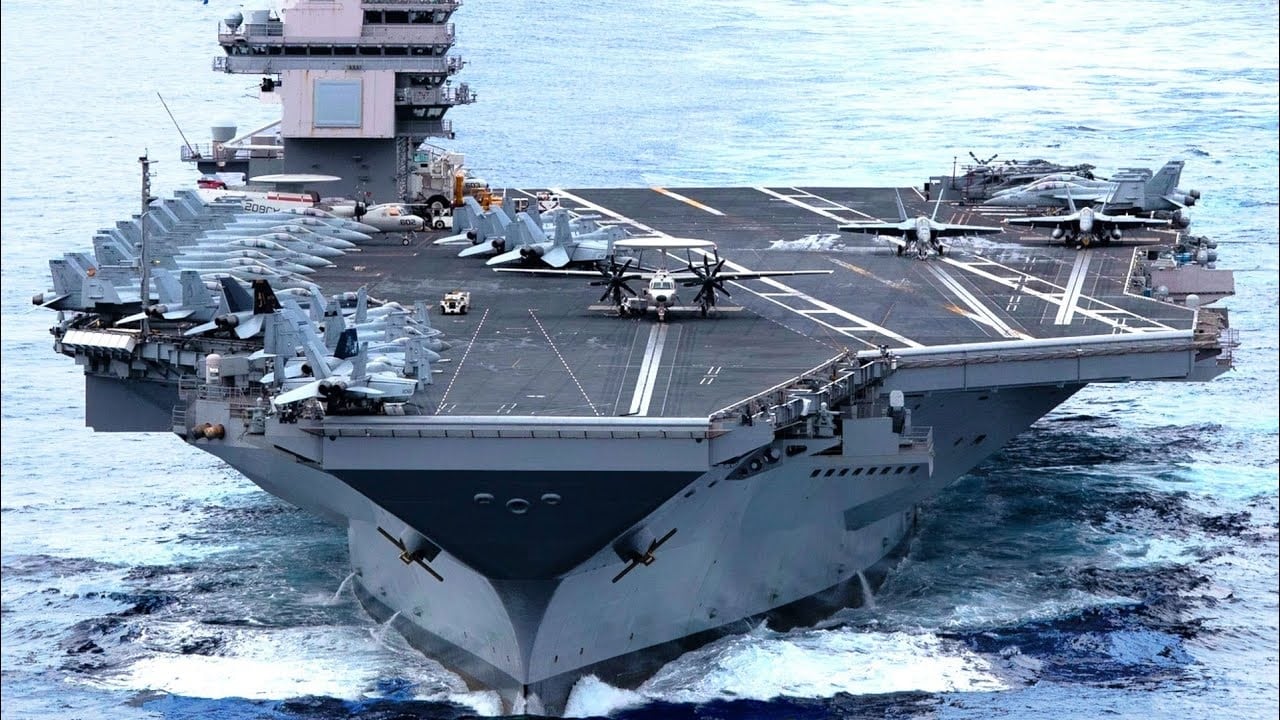
USS Gerald R. Ford. Image Credit: Creative Commons.
Caudle also outlined multiple ways in which prolonged cruises can impact U.S. readiness. First, there is the human dimension: extended time at sea beyond scheduled deployment periods disrupts sailors’ lives, complicating family events and personal planning.
Second, he noted, was the impact of prolonged deployment on the ships’ material readiness and maintenance schedule, disrupting critical yard work and increasing repair costs when ships eventually return for maintenance in a worse state than originally anticipated.
The strike group’s current mission – roughly seven months and counting – already places it at the upper end of what the Navy typically plans for carrier deployments. Extended cruises of this sort have historical precedent: USS Nimitz completed a 341-day deployment during the pandemic, marking the longest such U.S. carrier deployment in decades. But Caudle’s comments suggest that what was once an extraordinary exception should not become a norm.
Caudle declined to specify alternative options for meeting operational demands if the Ford were not available for extension, but did indicate that other naval assets could be tapped to provide options.
Global Demands and Navy Posture After the Venezuela Operation
The Gerald R. Ford’s extended 2025 deployment has not only put pressure on its crew and material readiness, but it has also reshaped U.S. naval posture in critical regions, with implications for strategic flexibility.
The decision to move the strike group from the Mediterranean to the Caribbean under SOUTHCOM to bolster counter-narcotics operations has left the U.S. Navy without a carrier strike group in the Middle East and Europe at a time of continued and rising tension with Iran. The move has reduced the number of carrier platforms available to respond immediately to Middle East contingencies, limiting immediate air attack capability and thereby affecting deterrence posture, too.
The absence of an aircraft carrier – and its air wing – in the Middle East is a major operational trade-off that was made as a result of finite assets being committed in overlapping theaters. Though other naval assets, such as destroyers, littoral combat ships, and shore-based air forces, can partially fill gaps, they cannot fully replicate the sustained, layered air power and command and control that a carrier strike group can provide.
While the U.S. is by no means ill-equipped, the situation surrounding the Gerald R. Ford strike groups reflects a broader structural problem facing the U.S. Navy: persistent global demand rubbing up against a carrier force with little to no flexibility.
According to U.S. Navy fleet-tracking data compiled by the United States Naval Institute, only a small number of America’s 11 aircraft carriers are deployable at any given time due to maintenance and training cycles, limiting surge capacity amid overlapping crises. Analysts have warned for years that repeated deployment extensions risk worsening existing maintenance backlogs and accelerating long-term readiness decline – a concern that has also been echoed in multiple Government Accountability Office assessments on the matter.
Caudle’s stated resistance to extending Gerald R. Ford’s deployment is by no means a fringe concern – it reflects growing concern about America’s overall readiness and reveals an uncomfortable truth: America’s shipbuilding industry is struggling with major infrastructure, workforce, and capacity challenges that limit deployment flexibility.
About the Author:
Jack Buckby is a British researcher and analyst specialising in defence and national security, based in New York. His work focuses on military capability, procurement, and strategic competition, producing and editing analysis for policy and defence audiences. He brings extensive editorial experience, with a career output spanning over 1,000 articles at 19FortyFive and National Security Journal, and has previously authored books and papers on extremism and deradicalisation.