
The P-8A Gives the Philippines a Wider South China Sea Picture
 Marcus Chen
The P-8A Gives the Philippines a Wider South China Sea Picture
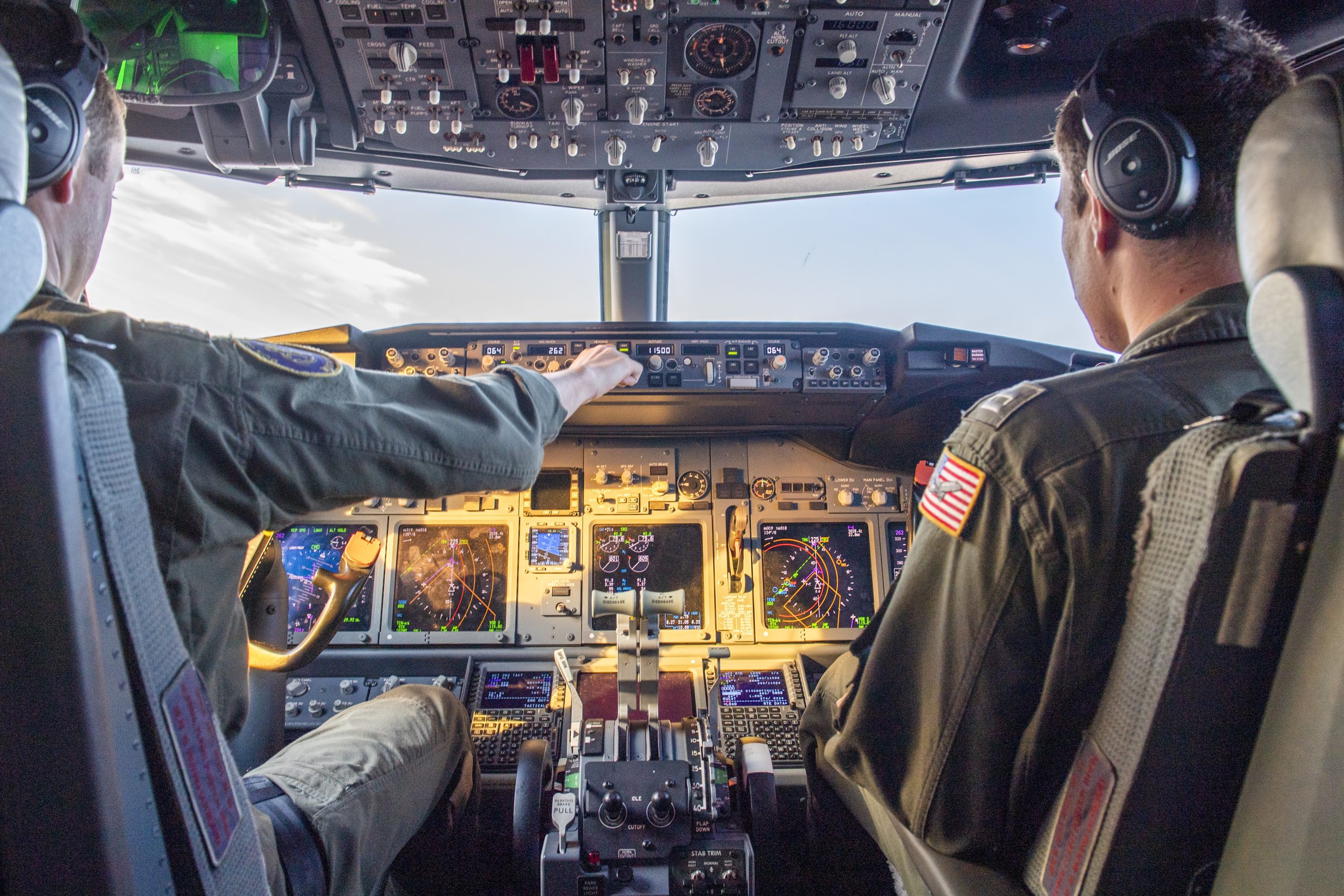
A single P-8A Poseidon cannot control the South China Sea. It can do something more useful for the Philippines: make it harder for a maritime incident to remain ambiguous.
The aircraft is operating from the Subic Bay area alongside USS Canberra, an Independence-class littoral combat ship, and naval forces from seven regional partners in an ADMM-Plus maritime security activity launched on September 20, 2026. The declared mission is cooperation, interoperability, and humanitarian assistance. The military value is the surveillance architecture being assembled around those words.
The Exercise Is About Information Before Firepower
Army Recognition reported that the force includes Japan Maritime Self-Defense Force helicopter destroyer JS Ise, Indian frigates INS Sahyadri and INS Kulish, Philippine Navy ships BRP Jose Rizal and BRP Tarlac, Australia’s HMAS Perth, Singapore’s RSS Justice, Brunei’s KDB Darussalam, and New Zealand’s HMNZS Te Mana and HMNZS Aotearoa. That is an unusually broad coalition for a maritime activity near the South China Sea, even if it is not a combat formation.
The important piece is not the number of hulls. It is the connection between sensors. A P-8A can patrol far beyond the horizon of a surface ship, classify contacts, and pass a track to vessels that cannot see the same target themselves. Ships then provide persistence close to the operating area. Helicopters extend local reconnaissance. A command-capable platform can fuse reports from several national networks. A replenishment ship gives the force more time before it must return to port.
That is the basic arithmetic of maritime domain awareness: one aircraft finds; several ships verify; a shared network decides what matters. Without that chain, a patrol is a photograph. With it, a patrol becomes a continuously updated operating picture.
Why Subic Bay Matters
Subic Bay is not merely a convenient harbor. Its position on western Luzon gives the Philippines and its partners access toward the South China Sea while connecting them to existing Philippine infrastructure. That shortens the distance between a political decision and a ship at sea.
For Manila, the geography is especially consequential. Philippine forces do not need a carrier strike group to document activity near their maritime interests. They need aircraft that can stay on station, ships that can maintain contact, and communications that can move evidence quickly between national headquarters. The P-8A contributes the first part of that equation. BRP Jose Rizal contributes a modern surface combatant. BRP Tarlac contributes lift, helicopters, and logistics flexibility.
The arrangement also gives smaller partners a practical role. Brunei and Singapore do not need to bring major combatants to add value. Patrol vessels, liaison officers, communications links, and procedural familiarity can reduce the delay between detection and coordinated response. That delay is often where a coercive maritime tactic succeeds.
The China Problem Is Below the Threshold of War
Beijing does not need to sink a ship to change the balance in the South China Sea. Coast guard patrols, maritime militia, water-cannon incidents, shadowing, blocking, and competing radio calls can create control without crossing the threshold that would trigger a military response. These actions are difficult to answer if each event is treated as an isolated encounter.
A shared surveillance picture changes the calculation. It can establish where a vessel came from, how it maneuvered, which ships were present, and whether an encounter was accidental or patterned. That does not remove escalation risk. It does make the political argument faster and more credible.
The point of maritime awareness is not to win a briefing-room argument. It is to prevent an opponent from owning the first version of events.
This is why the exercise matters even though its public language emphasizes disaster response. The same capabilities used after a typhoon—airborne search, ship coordination, helicopter operations, communications, and sustainment—are useful during a maritime standoff. Humanitarian framing also lets partners rehearse procedures without announcing a coalition aimed at a named adversary.
What the P-8A Cannot Do
There is a temptation to treat the P-8A as a solution to the South China Sea problem. It is not. The aircraft improves detection, but it does not guarantee access to the airspace or protect the ships receiving its information. In a serious confrontation, a P-8A would need fighter cover, tanker support, resilient datalinks, and bases that can survive missile attack. Its sensors are valuable precisely because they are also vulnerable.
Nor does a multinational exercise automatically create a multinational command. India, Japan, Australia, New Zealand, the Philippines, Singapore, Brunei, and the United States have different rules of engagement, political thresholds, and views of risk. An agreed communications procedure is not an agreed decision to intervene.
That is the gap between interoperability and alliance commitment. The former can be practiced at sea. The latter appears only when a government accepts the cost of acting.
The Strategic Meaning Is Persistence
The September activity is best understood as an attempt to make maritime presence more distributed and less episodic. A single U.S. ship passing through the region is a signal. A P-8A linked to Philippine and partner vessels is a system. Systems are harder to intimidate because they do not depend on one platform or one national crew.
For the Philippines, the gain is concrete: better warning, better documentation, and more options before an encounter becomes a crisis. For the United States, the gain is burden sharing. For regional partners, it is a low-cost way to learn whether their sensors and procedures work together under pressure.
But the math remains unforgiving. A wider picture is not sea control. It is the first condition for sea control and a stronger form of sea denial. If Washington and Manila want the P-8A’s information to matter during a crisis, they must keep aircraft in the air, ships at sea, networks connected, and crews trained after the exercise ends. The patrol is easy to announce. Persistence is the real test.
Sources: Army Recognition report on the ADMM-Plus maritime activity; U.S. Navy and partner force public descriptions cited in that report.
The P-8A Poseidon enhances maritime awareness for the Philippines during a multinational exercise in Subic Bay and the South China Sea, which began on September 20, 2026. This operation involves naval forces from the U.S., Japan, India, Australia, and other regional partners, focusing on cooperation and interoperability. The exercise aims to improve surveillance capabilities and address maritime challenges posed by China.
- The P-8A Poseidon is enhancing maritime awareness for the Philippines.
- The exercise involves multiple regional partners including Japan, India, and Australia.
- The activity commenced on September 20, 2026, in Subic Bay and the South China Sea.
- The coalition aims to improve interoperability and humanitarian assistance capabilities.
- China's maritime tactics below the threshold of war are a concern for the region.