
The Permanent Deployment of Three RQ-4B Aircraft by the U.S. Air Force at Yokota Indicates the 2026 Japan-U.S. ISR Alliance
 Tanaka Takashi
The Permanent Deployment of Three RQ-4B Global Hawks at Yokota Air Base Signals the 2026 Japan-U.S. ISR Alliance
On May 27, a photo of an RQ-4B Global Hawk Block 40 taxiing on the runway at Yokota Air Base is not just a record of seasonal deployment. The U.S. Air Force's 374th Airlift Wing announced on June 15 that it would permanently transfer three RQ-4s from the 4th Reconnaissance Squadron from Andersen Air Force Base to Yokota Air Base. According to Janes, this involves three aircraft and a personnel movement of about 150 people.
Transition from Seasonal Deployment to Permanent Stationing
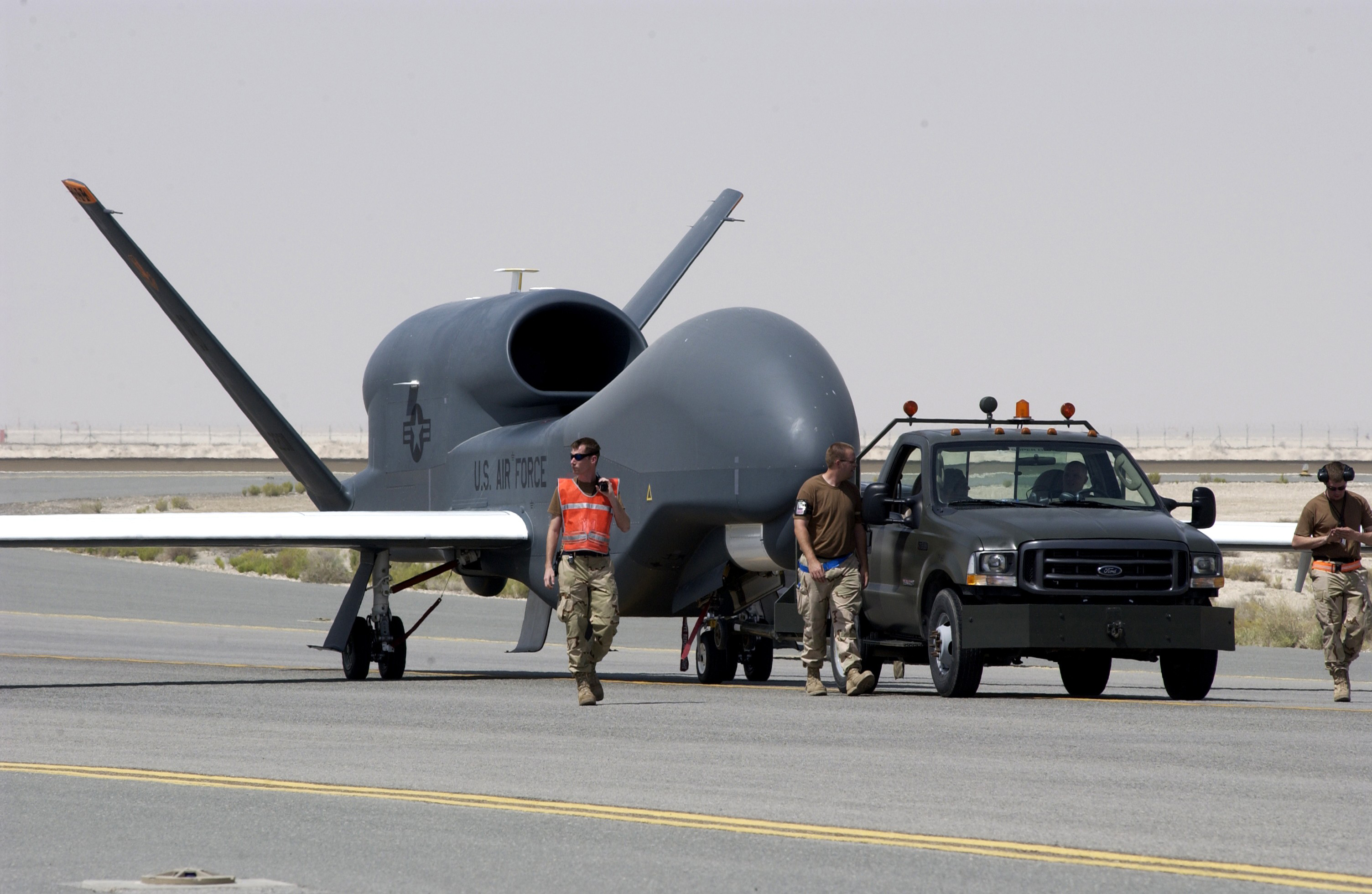
The deployment of Global Hawks to Yokota itself is not a new phenomenon. Due to more stable weather conditions in the Kanto region during the typhoon season, temporary summer deployments from Guam have occurred in the past. The difference this time is that the U.S. side has described this as a "permanently transition." While the explanation of weather convenience is valid, it would not necessitate a permanent presence on its own.
Yokota is a base that is politically difficult to manage due to its proximity to the metropolitan area. Nevertheless, the decision to station high-altitude, long-endurance unmanned reconnaissance aircraft there can be seen as a statement of intent to bring the Japan-U.S. alliance's ISR (Intelligence, Surveillance, and Reconnaissance) capabilities closer to the inner side of the first island chain.
Significance of the RQ-4B Block 40
The Global Hawk is an unarmed reconnaissance aircraft and does not bring attack capabilities into Japan. However, what often determines the effectiveness of a theater is detection and identification rather than firepower. Northrop Grumman describes the aircraft as capable of flying at high altitudes for over 30 hours and obtaining wide-area, high-resolution images in day/night and all-weather conditions.
The Block 40 has radar capabilities suitable for wide-area surveillance, making it valuable for continuously tracking the movement of vessels and vehicles. From the perspective of the Japan Maritime Self-Defense Force, this does not replace the sensors of P-1 patrol aircraft or escort ships, but rather serves as a higher-level asset to narrow down "where to look" in the pre-operational phase.
Overlap with Japan's Global Hawks
It is important not to overlook that the Japan Air Self-Defense Force also operates three RQ-4Bs at Misawa Air Base. Just because the U.S. military has three aircraft with the same model name does not mean that integrated operations will be realized immediately. This is due to differences in data classification, mission planning, satellite communications, and the placement of analysis personnel.
However, having the same high-altitude unmanned reconnaissance aircraft on both the U.S. and Japanese sides over the Japanese archipelago increases the common language for training and information sharing. The value of wide-area ISR is increasing in the waters around Taiwan, the East China Sea, and the Sea of Japan. As the activities of the Chinese Navy and Air Force concentrate around the first island chain, the combination of Yokota and Misawa becomes not just a base configuration but a neural network of the alliance.
Constraints of Yokota Air Base
However, I believe that this deployment should not be overestimated. Yokota is a congested base with large transport aircraft, U.S. military command functions, and coordination with surrounding municipalities. While unmanned aircraft do not put crew members at risk, the burdens of runways, maintenance, control, and local explanations do not disappear.
Additionally, the Global Hawk is an expensive and vulnerable strategic sensor. In times of crisis, it attracts the attention of adversaries' cyber, electronic warfare, and anti-base attack capabilities. Placing it at Yokota extends the surveillance range while making the risks of the metropolitan area base more visible.
Practical Effects on SLOC Defense
From the perspective of defending sea lines of communication (SLOC), this deployment is modest but effective. Japan's defense does not conclude solely with the southwestern islands. Continuous situational awareness is needed from the East China Sea to the Philippine Sea, the Sea of Japan, and further towards Guam. The RQ-4B does not add an additional escort ship, but it provides information to prevent escort ships from being sent into unnecessary waters.
Ultimately, this permanent deployment at Yokota may be less conspicuous than missile deployments, but it profoundly changes the operational design of the alliance. The true challenge is not the number of aircraft. It is whether Japan and the U.S. can make decisions at the same speed after viewing the same airspace.
The U.S. Air Force announced the permanent deployment of three RQ-4B Global Hawk UAVs to Yokota Air Base from Andersen Air Force Base on June 15. This move involves the relocation of approximately 150 personnel and indicates a strengthening of the U.S.-Japan ISR alliance. The deployment enhances reconnaissance capabilities in the region, particularly in response to increasing activities by the Chinese military.
- Three RQ-4B UAVs are being permanently deployed to Yokota Air Base from Andersen Air Force Base.
- Approximately 150 personnel will be relocated as part of this deployment.
- The deployment signifies a shift in the U.S.-Japan ISR alliance towards a more permanent presence in the region.