
The PLA Liaoning Aircraft Carrier Group Conducts Training in the Western Pacific, Entering a New Phase of Carrier Operations in 2026
 Li Minghui
PLA Liaoning Aircraft Carrier Group Conducts Training in the Western Pacific, Marking a New Phase in Carrier Operations by 2026
A Worthwhile Long-Distance Training to Analyze
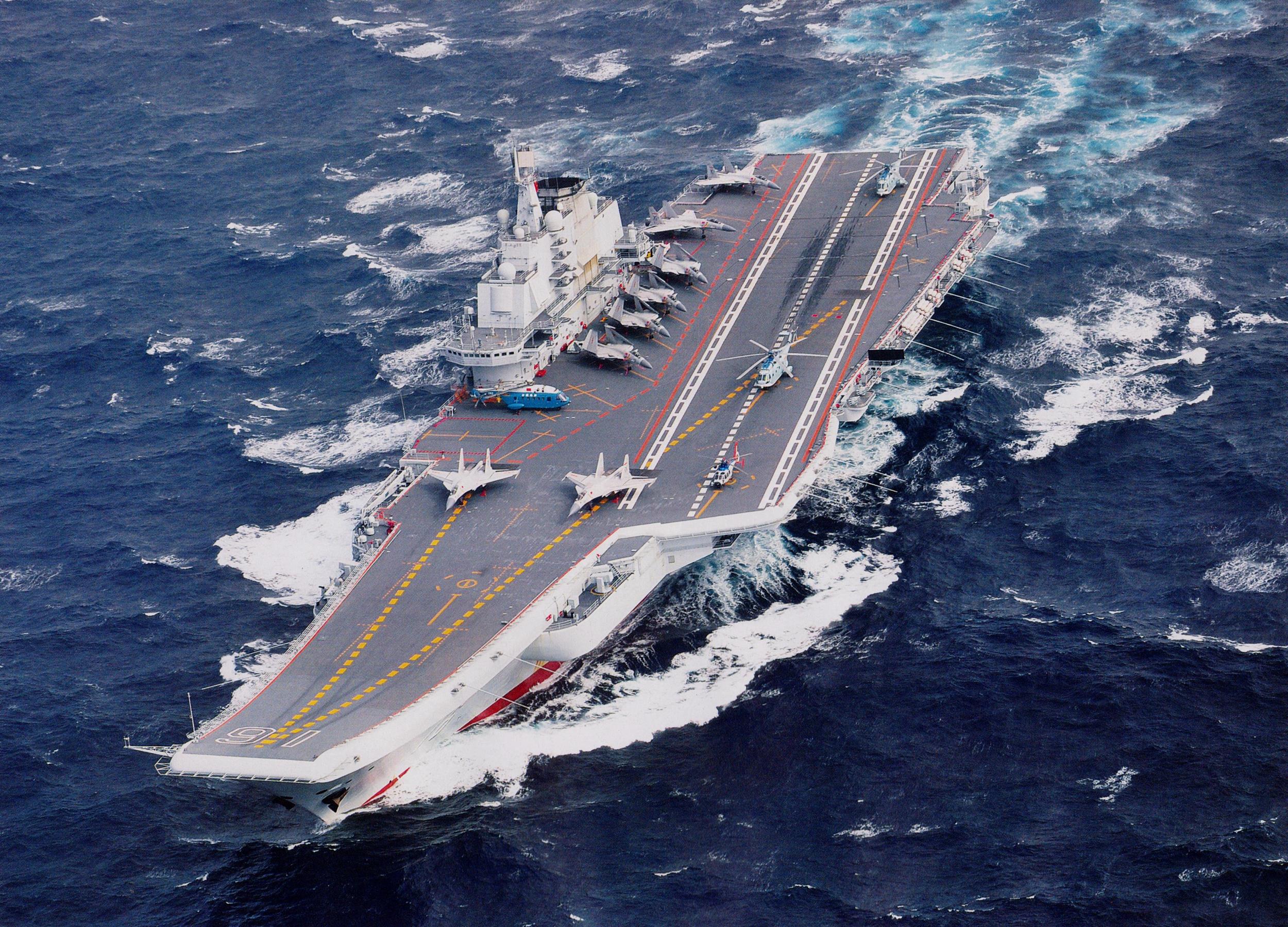
On October 14, Xinhua News Agency, China News Service, and The Paper reported that the Navy's Liaoning aircraft carrier group conducted training in relevant waters of the Western Pacific. The official statement emphasized that it "does not target specific countries or objectives," but the movement of such a group from near seas to the Western Pacific is a military action that warrants observation. It does not equate to an escalation of crisis, but indicates that the PLA is transitioning its carrier training from single-ship sorties to a combination assessment of formations, aviation units, and long-distance support.
What the Liaoning Can and Cannot Do
The Liaoning is China's first aircraft carrier, utilizing ski-jump takeoff and arrested landing, with the core carrier-based aircraft still being the J-15 series. Compared to the electromagnetic catapult system of the Fujian, it has inherent limitations in heavy-load takeoff, fixed-wing early warning aircraft operations, and high-intensity sortie rates; however, this does not mean the Liaoning is merely a "training ship." Ski-jump carriers are more suitable for verifying formation coordination, aircraft rotation, at-sea replenishment, and long-distance command processes, especially for testing sustained operational capabilities without fully relying on land-based aviation.
- Platform level: The Liaoning and its escort vessels need to maintain formation air defense, anti-submarine warfare, and communication links.
- Aviation level: The sortie rhythm, fuel and munitions replenishment, and deck scheduling of the J-15 series better reflect combat capability than a single flight demonstration.
- Support level: After the formation leaves the first island chain, supply ships, satellite communications, and weather and sea condition assessments will become key to training quality.
The Real Test Lies Beyond the Aircraft Carrier
The highlight of the Liaoning's current operation is not whether it can replicate the operational radius of U.S. nuclear-powered aircraft carriers, but whether the PLA can use a greater number of carrier-based aircraft with shorter ranges, in conjunction with land-based long-range aviation, early warning reconnaissance platforms, and surface vessels, to form a layered maritime aviation system. In other words, the Liaoning may not need to independently undertake the entire aerial mission in the Western Pacific; it is more likely to serve as a mobile aviation node within the system.
This also explains why official reports typically only state "training in relevant waters" without disclosing the route, formation, and number of flights. Externally, it is routine training, while internally it can simultaneously test carrier-based aircraft support, formation communication, and long-distance replenishment. The focus of the PLA's aircraft carrier development by 2026 is no longer just about launching another ship, but whether it can establish a stable rotation system involving different generations of aircraft carriers, carrier-based aircraft, and support forces.
Strategic Implications of Training in the Western Pacific
For Japan, the United States, and other navies in the Western Pacific, the entry of the Liaoning carrier group into relevant waters will increase surveillance and force deployment pressure; for the PLA, it is also about familiarizing itself with the maritime conditions, routes, and joint operational environments beyond the island chains. It is important to maintain restraint, as public reports have not proven that this training targets any specific country, nor have they provided details on the formation size and specific subjects. Interpreting a long-distance training exercise directly as a "blockade drill" is not rigorous.
The author believes that the value of the Liaoning is shifting from a symbol of "the first aircraft carrier" to a continuously operating maritime training school. What truly deserves attention is not where it has sailed today, but whether in the coming months the Shandong and Fujian can complete similar long-distance operations at shorter intervals, and whether the Chinese Navy can provide sufficient carrier-based aircraft, maintenance personnel, and supply ships to support this rhythm.
Information Sources
Xinhua News Agency, China News Service, The Paper, reported on October 14, 2026; publicly available information from the Chinese Military Network and the Liaoning equipment database. Public information has not disclosed the complete composition of this formation, training routes, and flight numbers; related judgments are limited to publicly available data.
The People's Liberation Army Navy (PLAN) conducted training exercises in the Western Pacific on October 14, 2026, involving the Liaoning aircraft carrier and J-15 fighter jets. This marks a new phase in naval operations, emphasizing coordination between carrier-based and land-based aviation. Official statements indicate that the exercises are not aimed at specific countries, but they increase monitoring pressures on regional navies.
- The Liaoning aircraft carrier group conducted training exercises in the Western Pacific.
- The exercises are part of a new phase of naval operations for the Chinese Navy.
- The training does not target specific countries, according to official statements.
- The exercises involve coordination between carrier-based aircraft and land-based aviation.
- The focus is on developing a layered maritime aviation system.