
The PLA Opens Air Force Base in Laos: 6,562-Foot Runway Connects Southeast Asia's Rear to the Taiwan Strait Direction
 Li Minghui
The PLA Opens an Air Force Base in Laos, 6562-Foot Runway Connects Southeast Asia's Rear to the Taiwan Strait
On September 29, the China-Laos Military Joint Support and Training Center, located in Ban Ken, approximately 40 miles from Vientiane, was officially opened. The International Crisis Organization's China Project (ISW-CDOT) stated that this is the PLA's third overseas military facility and the first overseas base primarily for air power. The Chinese Ministry of Defense emphasized that the center is used for training Laotian Air Force pilots and for China-Laos military cooperation, but what is truly noteworthy is not the word "base," but how much it advances the PLA's air operations into the depths of the Indochinese Peninsula.
What the 6562-Foot Runway Means
Public information shows that the base's runway is approximately 6562 feet long, about 2000 meters, which is sufficient to support the takeoff and landing of some transport aircraft, trainer aircraft, and tactical planes, but it cannot be equated with a U.S.-style overseas air force base capable of independently supporting large-scale airstrikes. It is more like a forward node: used for training, rotations, and joint exercises during peacetime, and providing conditions for emergency landings, maintenance, fuel, and personnel assembly during crises.
This point is crucial. The Chinese Navy already has overseas footholds leaning towards maritime power in Djibouti and Cambodia, while the Laos facility is the first to combine air force training with land depth. Ban Ken is close to the Thai border, connecting to the Mekong River basin to the west, observing the direction of Vietnam to the east, and providing more stable air support for China-Laos and China-Thailand joint exercises to the south. It has not temporarily changed the air power balance in the South China Sea or the Taiwan Strait, but it has increased Beijing's options for flight routes, airports, and training areas.
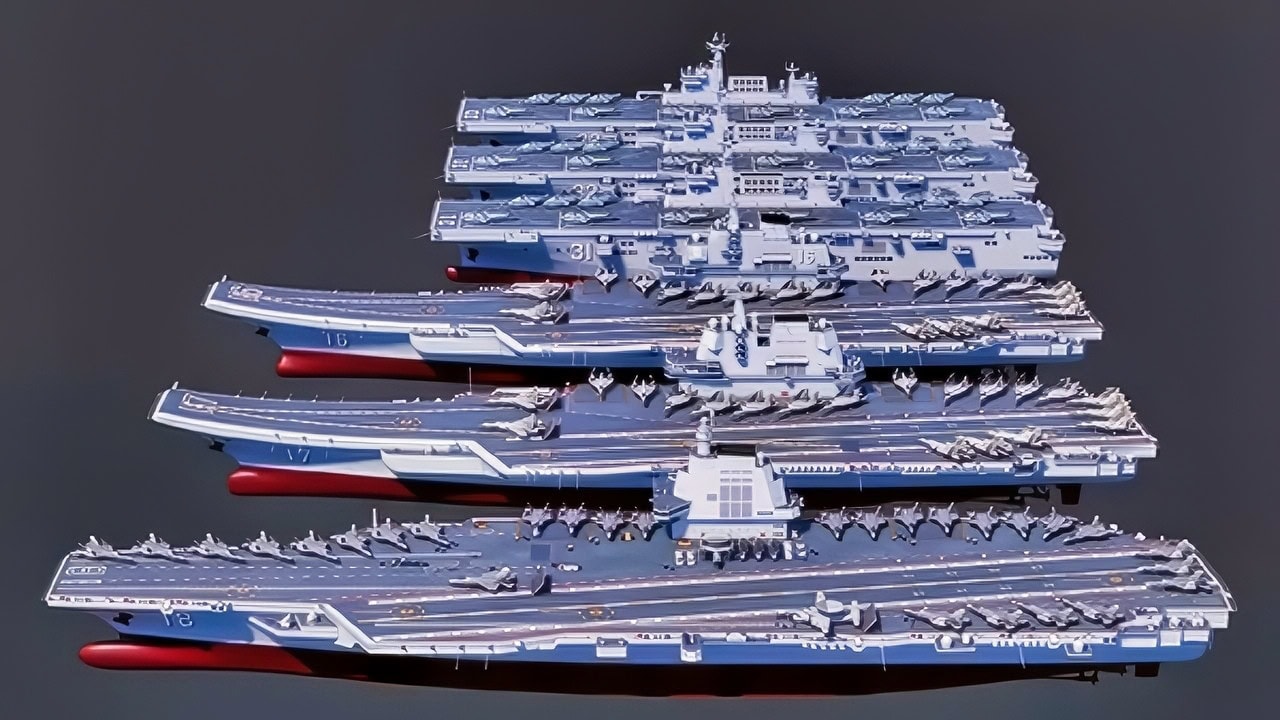
It should be noted that this image only represents the maritime aspect of China's long-range military projection and does not depict the actual situation of the Laos base. No assets directly matching the Ban Ken base were found in the image library, so this article does not use it as a base photo.
Why Laos is Willing to Provide Depth
Data cited by ISW shows that from 1989 to 2023, China has invested approximately $13 billion in Laos across 933 projects; as of 2024, Laos's debt exposure to China is about $10.5 billion, equivalent to 82% of its GDP. These figures do not automatically prove that Laos was "forced" to accept military facilities, but they explain why both sides bundle economic, railway, hydropower, and defense cooperation at the same table.
For Vientiane, the base can bring training, equipment, and political security; for Beijing, it is an experiment in transforming "Belt and Road" infrastructure into a support network. The author believes that the most easily exaggerated claim here is "overseas base = offensive springboard." A 2000-meter runway, limited ammunition, and maintenance capabilities still show a significant gap from sustained combat. The real value lies in achieving a continuous presence at a low cost and providing a legitimate, familiar starting point for future expansion.
Indirect Connection to the Taiwan Strait
The same ISW report from October 2 also mentioned that the Chinese research vessel "Jiahai Ke 7" was operating west of the Batan Islands in the Philippines, and the Philippine Coast Guard suspected it might be surveying undersea communication cables; the Chinese Coast Guard vessel 2503 subsequently arrived at the scene. The Batan Islands are located in the Luzon Strait, connecting Taiwan, the Philippines, and the Western Pacific, making it a key location for communication and shipping during a Taiwan Strait crisis.
The Laos base and the investigation in the Batan Sea are not the same operation, and public information is insufficient to prove a direct command relationship between the two. However, placing both events on the same map reveals two directions of PLA capability building: one end is the air support depth in the Indochinese Peninsula, and the other end is the underwater and maritime situational awareness around Taiwan. The former addresses "where to take off and resupply," while the latter addresses "how to cut off the opponent's connections."
This is not infrastructure that can launch a war tomorrow, but it is a practical chip in long-term competition. What needs to be observed next is not whether the J-20 appears at the Ban Ken base immediately, but whether it will accommodate more Chinese transport aircraft, special operations forces, and drones in future exercises—if the runway is just a training facility, why place it in this location?
Sources
- Institute for the Study of War, China & Taiwan Update, October 2, 2026
- Public statements from the Chinese Ministry of Defense regarding the purpose of the China-Laos Military Joint Support and Training Center, information cited from the above report
- Data from the Philippine Coast Guard and Starboard Maritime Intelligence regarding the activities of "Jiahai Ke 7" near the Batan Islands, information cited from the above report
The People's Liberation Army established a military airbase in Ban Khen, Laos, on September 29, 2023, featuring a 6562-foot runway for air force training and military cooperation. This facility marks the PLA's third overseas base and enhances its operational capabilities in Southeast Asia. The base is strategically positioned to support air operations and logistics, reflecting China's growing military presence in the region.
- The PLA has established a military airbase in Laos with a runway of 6562 feet.
- This is the PLA's third overseas military facility and the first primarily for air operations.
- The base is intended for training, maintenance, and logistical support during crises.
- Laos has significant economic ties to China, which influences its willingness to host the base.
- The base enhances China's military presence in Southeast Asia and its operational capabilities in the region.