
The Regularization of the Chinese Navy's Deployment Around the Southwestern Islands: The Pressure of a 100-Ship Scale by 2026 Changes the JMSDF's Surveillance
 Tanaka Takashi
China's Naval Deployment Around the Southwestern Islands Becomes Routine; Pressure of 100 Ships by 2026 Changes JMSDF Monitoring
In early November, the Secretary-General of Taiwan's National Security Council confirmed that the number of Chinese military-related vessels around Taiwan exceeded 100. This scale, which combines coast guard ships and naval vessels, serves as pressure on Taiwan while also sending a new maritime signal to Japan's southwestern islands. According to a November 16 report from Defense News, since Prime Minister Takagi's remarks in November 2025, China has increased its long-range deployments around Japan and has normalized its activities.
Repeated Deployments of Naval Vessels
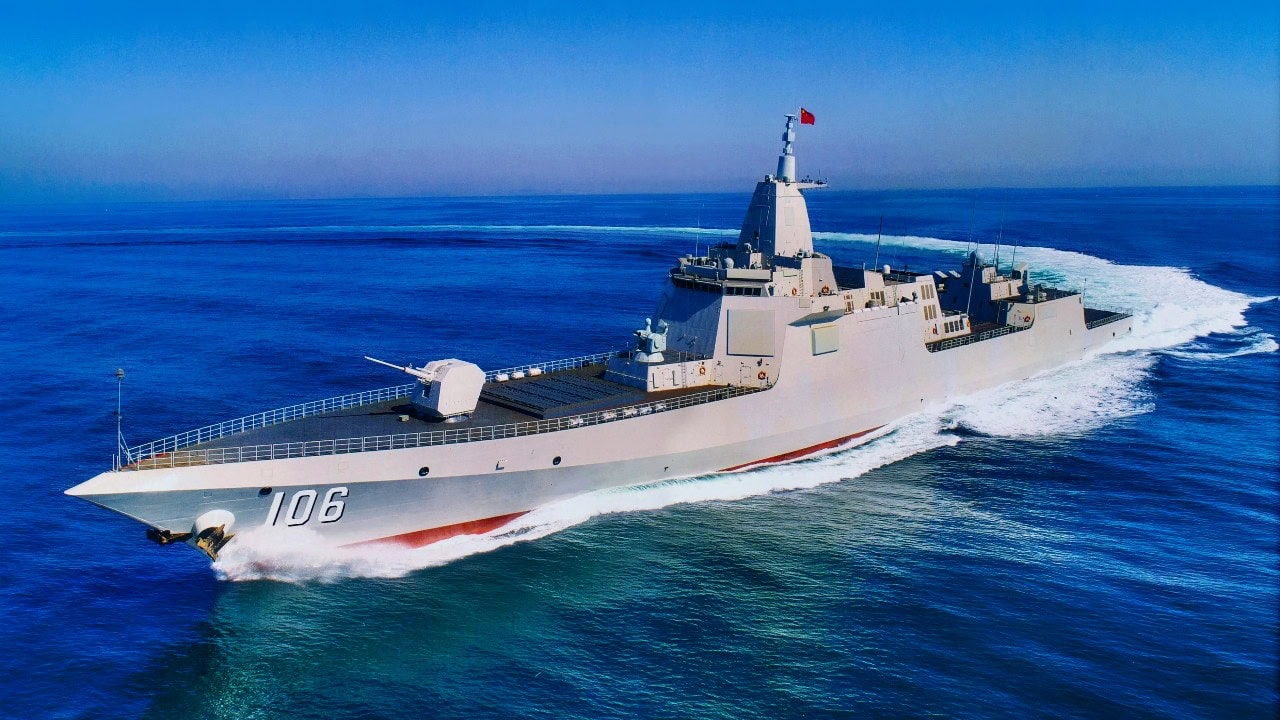
The methods employed by China are not one-off threats. They are repeatedly conducting operations within the bounds of international law, including the navigation of aircraft carrier strike groups, live-fire exercises, drone missions, and large formations that include coast guard vessels. If this pattern continues within the first island chain, particularly around the Miyako Strait and the Senkaku Islands, it will accumulate operational experience for the People's Liberation Army Navy and lead to a constant state of alert for Japan.
Separating Capability from Intent
It is important not to confuse capability with intent here. The ability to deploy a large number of vessels is evident, but each deployment does not immediately signify a crisis regarding Taiwan or an attack on Japan. Rather, it is believed that Beijing's aim is to continuously exhaust Tokyo's political judgment and the Japan Maritime Self-Defense Force's monitoring resources without crossing the threshold for armed conflict. When joint flights and joint navigation by China and Russia overlap, Japan must monitor not just one maritime area but also the Tsushima Strait, the East China Sea, and the Pacific simultaneously.
Practical Challenges Remaining for JMSDF
It has been reported that the Ministry of Defense is considering a defense plan worth 70 to 80 trillion yen over five years starting in fiscal year 2027. However, simply increasing the number of vessels is not enough. What is needed is a mechanism to integrate contact information from the JMSDF, the Air Self-Defense Force, the Japan Coast Guard, and the U.S. military faster than the increase in vessels. If the same scale of response is taken each time against normalized activities, crew fatigue and pressure on maintenance cycles will surface first.
The essence of China's pressure lies in its ability to transform routine surveillance duties into the operational environment itself, rather than relying on a single large-scale exercise.
Conclusion
The presence of the Chinese Navy around the southwestern islands is more an activity that gradually rewrites the order during peacetime rather than a warning of impending crisis. While the deterrent power of the Japan-U.S. alliance is essential, the true weakness lies not in the performance of vessels but in the slow decision-making regarding when to treat peacetime gray zone activities as common issues for the alliance.
Main Sources
Chinese naval operations around the Nansei Islands and Taiwan have become routine, with over 100 vessels confirmed in early November 2026. These operations include naval exercises and the deployment of aircraft carrier strike groups, aimed at exerting pressure on Taiwan and altering the maritime order around Japan. The Japanese Self-Defense Forces are challenged to adapt their monitoring and response capabilities to this evolving situation.
- Over 100 Chinese military-related vessels were confirmed near Taiwan in early November 2026.
- China's naval operations around the Nansei Islands have become routine, increasing pressure on Taiwan and Japan.
- The Chinese Navy is conducting repeated naval exercises and operations within international law.
- The Japanese Self-Defense Forces are facing challenges in integrating intelligence and resources effectively.
- China aims to exhaust Japan's political and military resources without crossing the threshold of armed conflict.