

For nearly two years, the Trump administration has pressured NATO’s allies to step up on defense, often testing the limits of the relationship. Yet it ultimately achieved a level of renewed European commitment to higher defense spending that no other administration had before. The president’s blunt, at times abrasive, transactionalism grated on Europe’s elites, but cooler heads always prevailed, and confrontations never reached a breaking point.
Even in the tensest moments, such as Donald Trump’s claims to Greenland or his levying of tariffs on the EU, European allies sought accommodation, keenly aware of America’s critical importance to their security.
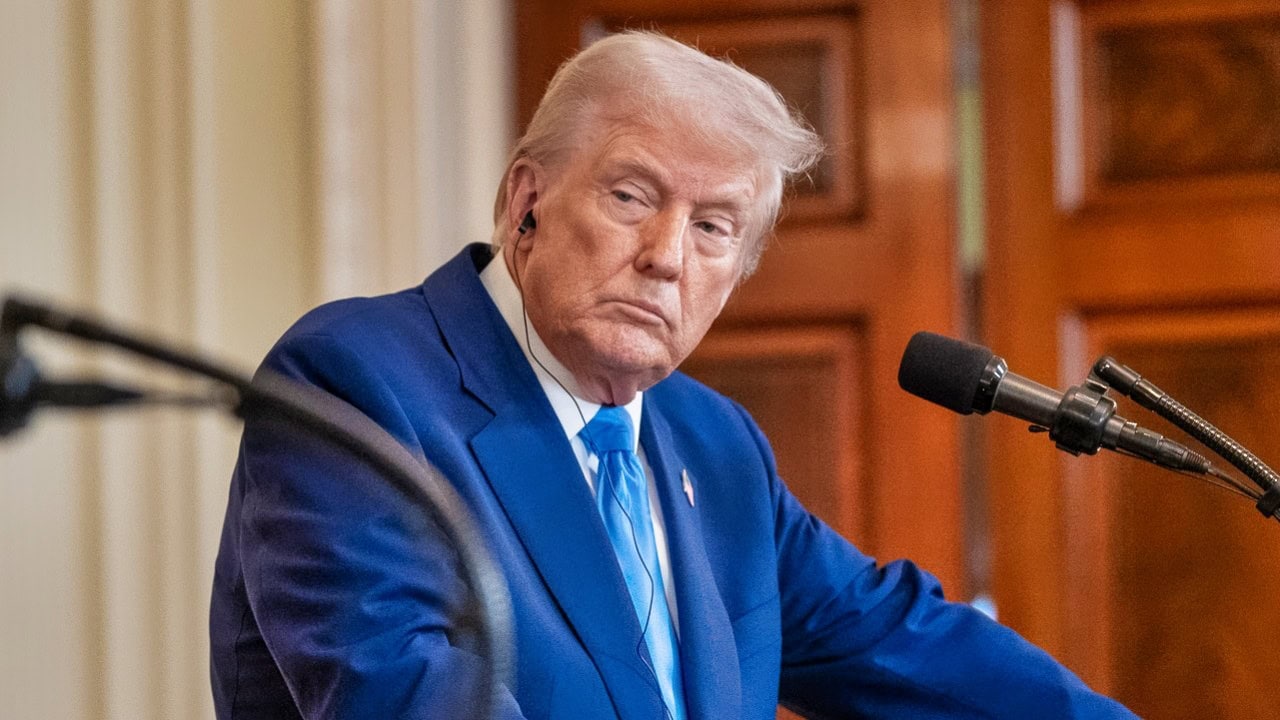
President Donald Trump and French President Emmanuel Macron hold a joint press conference, Monday, February 24, 2025, in the East Room of the White House.(Official Photo by Molly Riley)
The ultimate justification has been that the United States is the only global superpower capable of deterring Russia and, if need be, defending Europe against Moscow’s neoimperialism.
Amid fuming and complaints in Europe’s capitals, the transatlantic relationship nonetheless held. Today, the question is whether it will do so going forward, or whether we have reached an inflection point.
The Deal That Blindsided Kyiv and Brussels
The Trump administration’s deal with Moscow to allow the export of Russian diesel to the United States blindsided both Ukraine and European NATO allies, effectively ending – at least for now – US-Ukrainian talks on a Kyiv-Moscow peace agreement.
Amid the president’s demands that Ukraine cease attacking Russian refineries forthwith, POTUS accused President Zelensky of refusing to “make a deal” with Russia and called on Ukrainian citizens to elect a new president.
Reportedly, the US also threatened to cut off Ukraine’s access to intelligence and targeting support if Kyiv refused to accede to Washington’s demands. In turn, Ukraine struck a Russian refinery’s oil-loading terminal in Rostov-on-Don, causing a major fire that lasted for days.
An Inflection Point, Not Another Quarrel
Some moments in history become inflection points, and unlike past US-European quarrels, the United States’ decision to purchase Russian diesel may become one such event.
The White House has argued that the Russian diesel deal puts the American people’s interests first by aiming to lower fuel prices in the US and curbing inflation. In contrast, the administration’s critics at home and abroad have viewed it as siding with the Russian aggressor, noting that the volume of diesel Russia promised to sell will not make much difference to the price.
Unlike past transatlantic quarrels, this one is different because Europeans increasingly appear to have concluded that the US administration neither recognizes Russia’s neo-imperialist goals nor understands what is at stake for Europe and the Atlantic community in the war in Ukraine.
Most importantly, this decision will effectively end Russia’s economic isolation and risk fracturing the Atlantic alliance.
For Europe, it calls into question the very premise that the United States will always side with Western democracies against Russia’s aggression, putting at risk the cognitive foundation on which NATO has rested for decades.
When an Existential Threat Becomes a Commercial Proposition
Alliances are built on shared perceptions of threat and interests.
When an existential threat to one country becomes a commercial proposition for another, the alliance’s rationale unravels. This is not due to ideological preferences or different languages used to describe the relationship; rather, it is because the fundamentals of shared threats and interests no longer align.
The Trump administration’s decision to enter into the Russian diesel agreement has, in no uncertain terms, signaled to European NATO allies that Washington not only doesn’t see Russia as an existential threat but also increasingly views relations with Moscow through a commercial lens.
If the diesel deal goes through as announced and generates further economic cooperation between the United States and Russia, this perception, still incipient today, will solidify, directly affecting transatlantic relations and NATO’s long-term future.
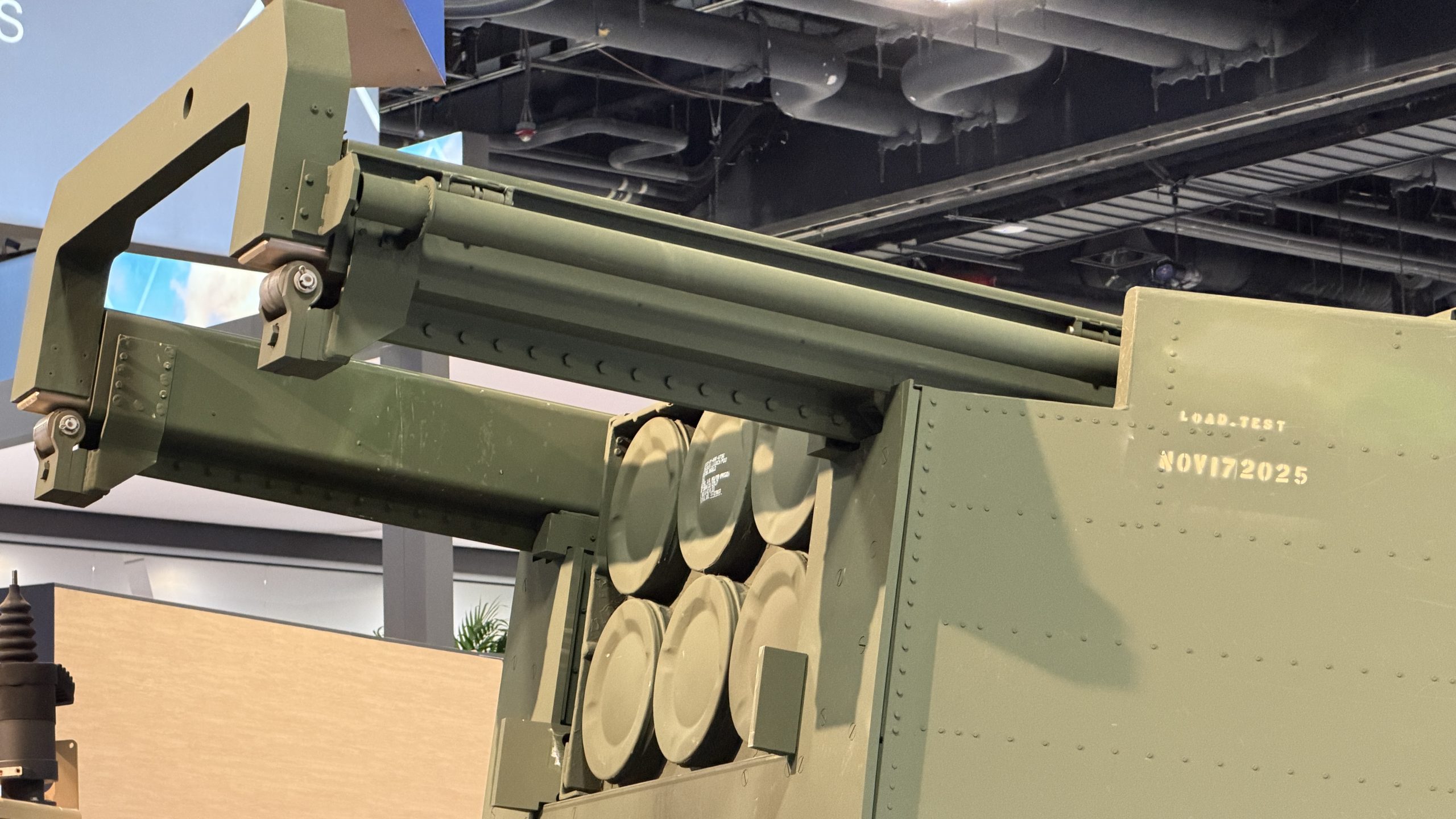
HIMARS like in Ukraine. Lockheed Martin Booth at AUSA 2026. 19FortyFive Photo.
Trust, Once Forfeited, Is Hard to Restore
Trust is a precious currency in international relations, taking decades to build; once forfeited, it’s hard to restore. The Russian diesel deal risks tearing the very fabric of transatlantic relations.
In its aftermath, a growing number of Europe’s leaders and the public view the United States as siding with Russia against Ukraine, putting Washington on a collision course with its oldest and most loyal allies across the Atlantic.
If the deal holds and the crash occurs, the impact will ripple not only through NATO, where the venerable alliance may ultimately prove unable to withstand the force, but also through all of America’s alliances and partnerships.
In this context, remember that bringing peace to Ukraine isn’t simply about making a deal to stop the fighting. It is about securing Europe’s and the United States’ interests on the Old Continent.
About the Author: Dr. Andrew Michta
Andrew A. Michta is Professor of Strategic Studies at the Hamilton School at the University of Florida, a Nonresident Senior Fellow at the Atlantic Council in Washington, D.C., and a Visiting Fellow at the Hoover Institution at Stanford University. The views expressed here are his own.