
The Russian Army Deploys the "Hawk" to the Front — Nine Interceptors Against a New Wave of Drones in 2026
 Dmitri Volkov
The Russian Army Deploys the "Yastreb" to the Front — Nine Interceptors Against a New Wave of Drones in 2026
From Exhibition Stand to Drone Warfare
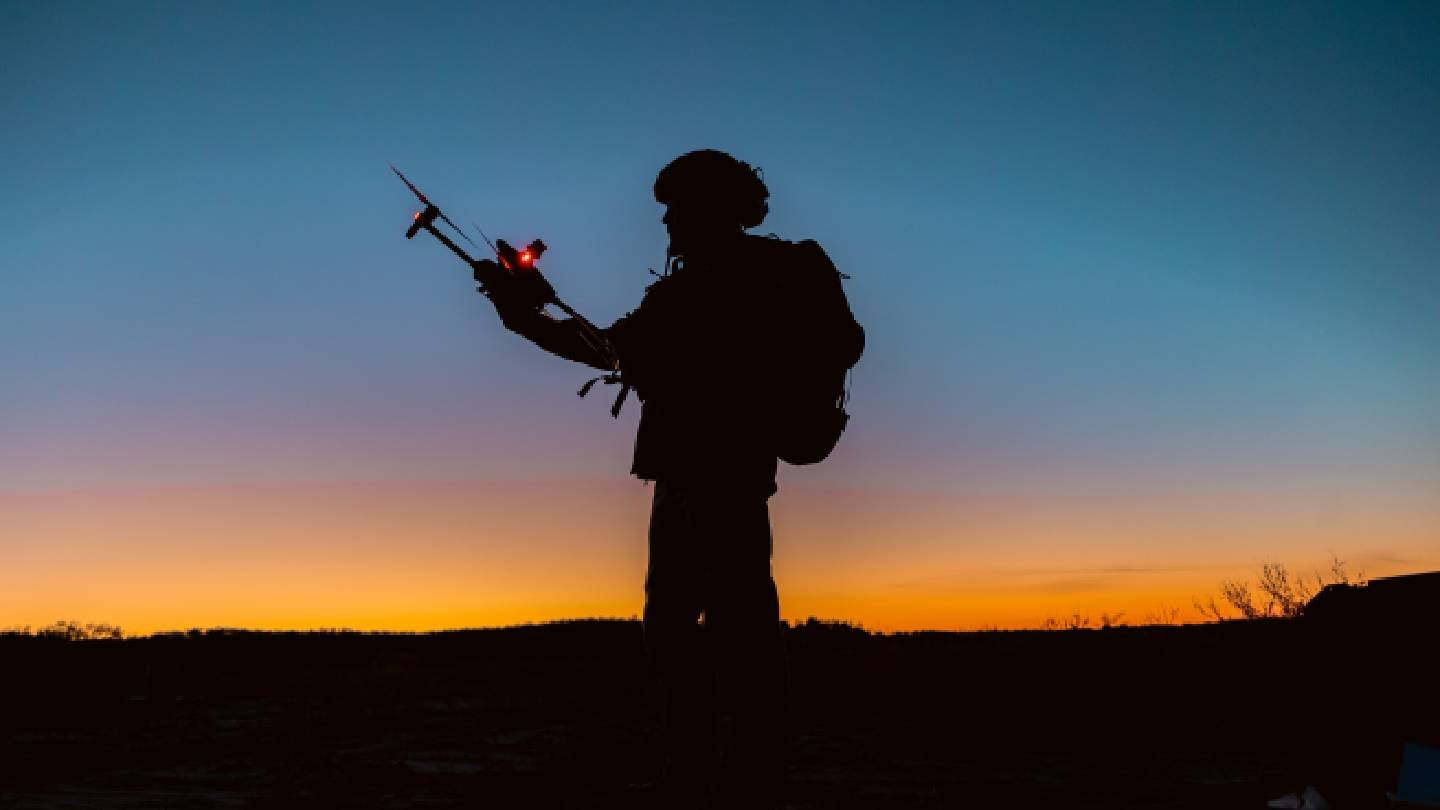
The most important figure in the announcement of the new "Yastreb" system is not the claimed ability to detect "all types of drones," but rather the nine munitions in a single launch box. At the Security Space exhibition in Moscow on October 21, K-Avia presented a mobile complex for detecting and physically defeating UAVs, which, according to the manufacturer, has already completed testing and is recommended for use. A company representative added that the system may soon appear in the combat zone (TASS, October 21, 2026). This is still a manufacturer's statement, not a confirmation of delivery to a specific unit. However, the very logic of development shows how Russian industry is trying to adapt to the changed cost of aerial warfare.
In 2022, the Russian army primarily relied on layered air defense, where expensive surface-to-air missiles protected important facilities, and electronic warfare was supposed to disrupt the control of drones. After four years of war, it became clear that this model poorly responds to mass attacks by small devices. Electronic suppression does not always work against autonomous routes, fiber-optic channels, and the constantly changing tactics of operators. A surface-to-air missile can destroy a target, but its cost is often disproportionate to that of a commercial quadcopter or strike drone. The "Yastreb" aims to occupy an intermediate layer between a jammer and a traditional air defense system.
What the System Promises
According to K-Avia's description, the crew of the complex consists of two people. One operator detects and identifies the target, determines the need for engagement, and passes the command to the second operator, who launches the interceptor. Nine rounds are placed in a box that can operate from both the ground and a vehicle platform. The manufacturer also mentions round-the-clock operation, the "Domovoy" software, and the ability to detect various types of UAVs. However, there is currently no open data on detection range, interceptor speed, operational altitude, type of guidance system, or cost per shot.
This is where the difference between promotional descriptions and military value begins. The formula "detect all drones" is not a technical indicator. For the front, other factors are more important: how many targets the complex can track simultaneously, how it operates under electronic suppression, how long it takes to reload, and whether the crew can distinguish between reconnaissance and strike drones before launch. If nine munitions are the entire ammunition load of the machine, then after a short raid, it will require resupply. If the launch box is completely replaced, logistics are simplified, but ammunition consumption increases.
Why Physical Interception is Making a Comeback
The Russian side has already promoted electronic warfare complexes "Yastreb-S," designed to disrupt the operation of UAVs, including devices with satellite communication terminals. The new system, judging by the description, is built on a different idea — not to deprive the drone of communication, but to destroy it in the air. This does not negate electronic warfare but complements it. In modern combat zones, the same target may survive suppression, switch to autonomous mode, or use another navigation channel. Therefore, the defense of an object gradually transforms into a combination of detection, suppression, interception, and fire defeat.
This combination has an unpleasant economic arithmetic. Even a relatively inexpensive interceptor will be more costly than an FPV drone; however, it may turn out to be cheaper than using a missile from the "Tor" or "Pantsir" complex against a small aerial target. This is especially important for command posts, warehouses, and artillery positions, where the enemy employs not just one device but a series with different tasks. In such a scenario, effectiveness is determined not by maximum range but by the cost of destroying a single target and the crew's ability to withstand repeated attacks. For Russia, which spends expensive missiles on cheap drones, this is no longer a matter of convenience but a question of the sustainability of the combat budget.
The Lesson of "Yastreb-AV"
The name of the system should not be confused with the counter-battery radar "Yastreb-AV." The latter has already become a priority target for Ukrainian strikes: publications from Defense Express and Militarnyi described the destruction of Russian radar complexes of this family. The similarity of names is important not technically but organizationally. The Russian army is simultaneously creating expensive specialized reconnaissance means and simpler complexes for drone defense, but both types will only work if there is camouflage, mobility, and a stable command network. One successful sample does not fix the vulnerability of the entire system.
The experience of "Yastreb-AV" also reminds us of another problem. The more noticeable and valuable the sensor, the faster it becomes a target for hunting. The new mobile complex must not only shoot down drones but also survive their reconnaissance perimeter. If its own emissions are easily detectable, the Ukrainian side will be able to attack the machine with artillery or FPV drones after the first use. Therefore, the real test of the "Yastreb" will begin not at the exhibition and not even after a successful interception, but after several days of operation under the observation of the enemy.
Military-Industrial Significance
The appearance of the system at the exhibition also has industrial significance. The Russian defense industry has learned to quickly bring to market solutions that arise from frontline demand; however, there remains a significant distance between prototype, serial production, and mass supply. The advertised readiness for deployment in the operational zone does not yet mean the existence of a stable supply chain for engines, sensors, warheads, and spare boxes. Assessments of the Russian drone industry, including analyses from Defense Express and CSIS on the growth of strike drone production, simultaneously indicate the scale of the task for defense: the enemy is increasing not only the number of drones but also the diversity of their control channels.
This reveals the institutional weakness of the Russian model. Military agencies demand quick solutions, enterprises offer individual products, and troops receive a set of systems that are not always integrated into a single architecture. The Soviet air defense school was strong precisely because of its network organization — radar, command post, and fire means formed a system. Today, the "Yastreb" will have to prove that it is part of such a network, not just another standalone device with a nice name.
Forecast
In the coming months, the "Yastreb" may prove useful at sites where the use of expensive surface-to-air missiles is economically unfeasible, and a single electronic warfare asset does not guarantee protection. However, it is premature to expect that nine interceptors will change the balance of aerial warfare. What will matter is not the number of deployed machines but the serial production, cost per shot, crew survivability, and integration with radars and electronic warfare systems. The Russian defense industry will likely create a working intermediate layer of counter-drone defense. The condition is one — the army must perceive it as an element of the network, not as yet another exhibition novelty.
Sources: TASS, "Yastreb mobile anti-UAV system debuted at exhibition in Moscow," October 21, 2026; Defense Express and Militarnyi, materials on the destruction of Russian radars "Yastreb-AV"; CSIS, analysis of lessons from the Russian-Ukrainian drone war, October 2026.
The Russian Army is deploying the 'Yastreb' mobile anti-UAV system to the front lines as of October 21, 2026, to counter new drone threats. This system features nine interceptors capable of detecting and engaging various types of drones. It was showcased at the Security Space exhibition in Moscow and is intended to enhance Russia's air defense capabilities against increasing drone attacks.
- The Russian Army is deploying the 'Yastreb' system to the front lines.
- The system can detect and engage various types of drones.
- Nine interceptors are housed in a single launch box.
- The system is designed to operate both from the ground and vehicle platforms.
- The deployment is part of a response to evolving drone warfare tactics.