
The UAE and Hanwha Build an Integrated Air Defense Network in 2026 and Test Gulf Independence
 Ahmed Al-Rashid
The UAE and Hanwha Build an Integrated Air Defense Network in 2026 and Test Gulf Independence
The Emirati EDGE Group and South Korea's Hanwha Systems announced on September 17, 2026, the signing of a memorandum of understanding paving the way for a partnership to build an integrated air defense network within the UAE, while exploring the establishment of a local manufacturing and service base. This step comes after years of Gulf facilities being subjected to ballistic missile and drone attacks, making it not just a single system deal but an attempt to redefine the management of Emirati airspace.
What EDGE and Hanwha Agreed Upon
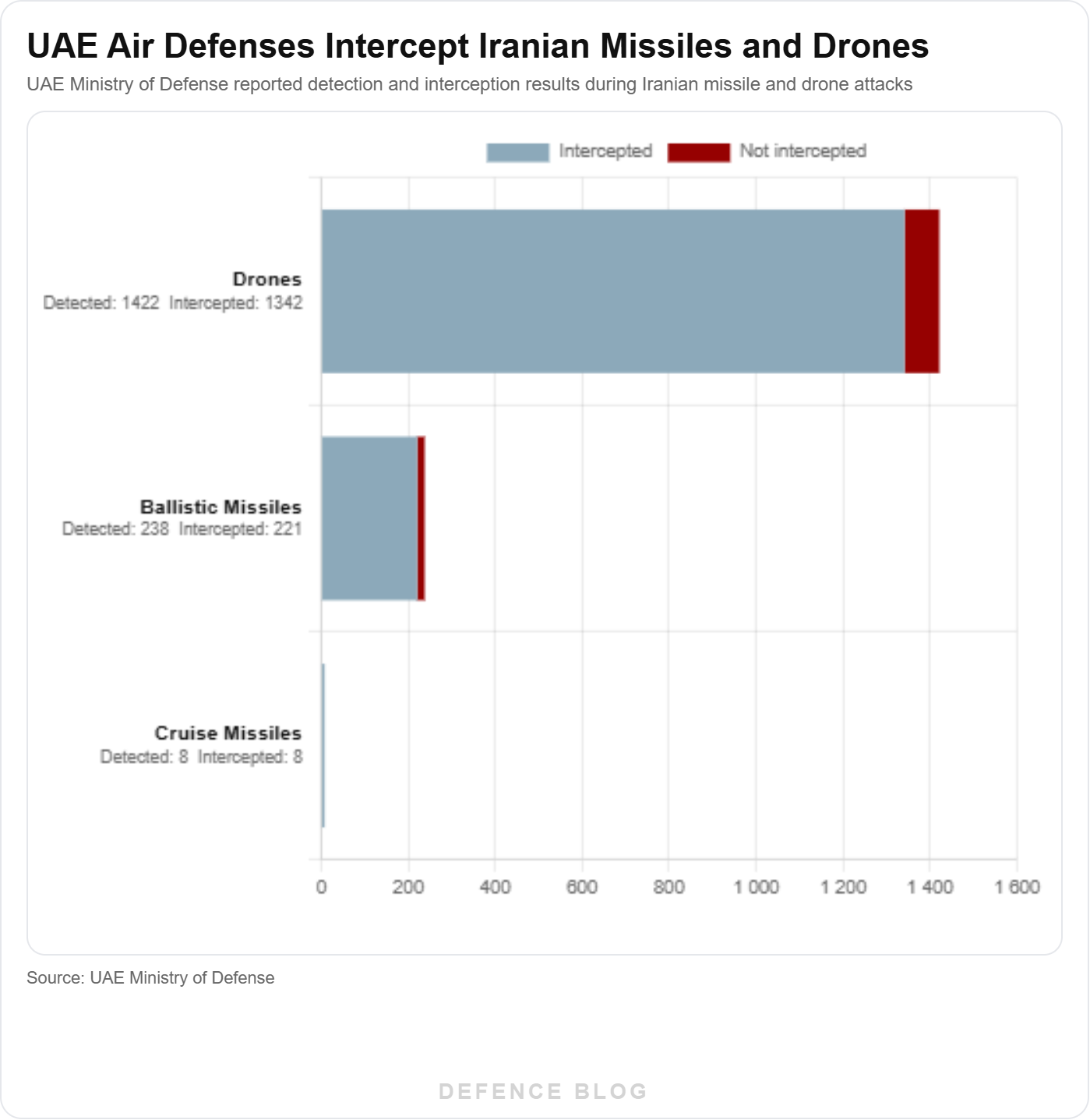
According to Aviation Week, Janes, and The Korea Times, the understanding focuses on integrating command and control sensors and interception layers, rather than purchasing a single battery. Hanwha offers a family of Korean solutions including L-SAM for high-altitude ballistic missile defense, M-SAM for medium-range defense, in addition to the Chunmoo rocket launcher, which provides ground forces with long-range firepower. EDGE adds its expertise in unmanned systems, electronic warfare, radars, and software, along with manufacturing infrastructure and local contracts.
- L-SAM adds an upper interception layer against ballistic missiles, but requires early warning radars, secure communication, and precise fire management.
- M-SAM fills the middle layer, which is the most pressured when cheap drones coincide with faster and more expensive missiles.
- Chunmoo is not an air defense system, but it expands ground deterrence capability and complicates the adversary's calculations regarding launch sites.
Why the UAE Needs a Network, Not a Shopping List
The Gulf's experience shows that owning Patriot or THAAD does not equate to having an effective air defense. Air defense is a three-legged capability: equipment, training, and institutions. A state may succeed in purchasing the radar and missile, but then fail to distribute responsibilities, share data, and keep crews ready during a complex attack lasting hours. In such circumstances, the most expensive missile becomes part of the problem, not the solution, if the command center does not know which target to engage first.
The UAE needs a command and control layer capable of aggregating data from national, American, and Gulf radars, and then converting it into a single aerial picture. It also needs to connect air defense with fighter aircraft and counter-drone systems. The current threat is not a single missile that is easy to classify, but a mixed attack that consumes munitions and forces defenders to reveal their positions. Therefore, the value of the Korean-Emirati agreement will be measured by the operational testing of the system, not by the number of missiles displayed at a defense exhibition.
The Industrial and Political Dimension
Abu Dhabi aims to transform EDGE into a regional export hub, while Hanwha seeks a foothold in the Middle Eastern market after expanding its exports in Europe and Asia. The partnership serves both parties: the UAE gains localization, maintenance, and knowledge transfer, while South Korea obtains a sales gateway and long-term support contracts. However, the term localization needs scrutiny. Assembling the launcher or producing some components does not mean owning tracking algorithms or the right to modify command software or the ability to replenish stock in wartime.
Politically, the UAE diversifies its sources between the United States, South Korea, Europe, and Israel, a behavior understandable after experiences of reliance on a single supplier. However, it is not complete independence; each system carries with it a supply chain and export restrictions and software updates. While having multiple suppliers may reduce political risks, it could create technical islands that do not communicate with each other if there is no Emirati command structure that owns the standards, tests, and decision-making authority.
The Impact on the Gulf Balance
Saudi Arabia, Qatar, and Bahrain will watch this partnership closely, as its success could open a less costly and more flexible Asian channel than full reliance on Washington. Iran will also monitor it, not because the L-SAM will prevent every strike, but because an integrated network raises the cost of planning and forces the attacker to use saturation methods, low-flying tactics, or cyberattacks before launching missiles. Conversely, the proliferation of new interception layers may lead to an additional arms race in drones and cheap munitions, a race not determined by budgets alone.
The real gain for the UAE will be the ability to operate the network year-round and repair it under pressure, training its crews on independent launch decisions and coordinating with its neighbors. If the partnership remains an industrial facade for marketing equipment, the result will be another costly system added to an arsenal still reliant on external protection at the critical moment. As any military personnel who has served in the region knows, the sky is not protected by the platform alone; it is protected by the system that connects the platform to the human and the decision. Here lies the contradiction that a memorandum of understanding cannot resolve: the Gulf's desire for decision-making independence while continuing to rely on external technologies and supply chains.
Sources
- Aviation Week, September 16, 2026, report on the EDGE and Hanwha memorandum for Emirati air defense.
- Janes, September 17, 2026, report on the proposed partnership for integrated air defense.
- The Korea Times, September 17, 2026, report on the Emirati air defense network.
- Defence Industry Europe, September 16, 2026, report on exploring local manufacturing for L-SAM, M-SAM, and Chunmoo systems.
The UAE and Hanwha Systems signed a memorandum of understanding on September 17, 2026, to develop an integrated air defense network. This partnership focuses on local manufacturing and enhancing air defense capabilities, including systems like L-SAM and M-SAM. The initiative aims to improve the UAE's defense management and operational readiness against mixed threats, while also diversifying its defense procurement sources.
- The UAE and Hanwha signed a memorandum of understanding for an integrated air defense network.
- The partnership aims to enhance local manufacturing and service capabilities.
- Hanwha will provide various air defense solutions including L-SAM and M-SAM.
- The UAE seeks to improve its air defense management and operational readiness.
- The partnership is seen as a strategic move to diversify defense procurement sources.