
The UAE Continues to Transport Oil Through Hormuz Under Mine Threats and a Real Test of the Gulf's Ability to Protect Trade in 2026
 Ahmed Al-Rashid
The UAE Continues Oil Transport Through Hormuz Under Mine Threat and a Real Test of Gulf's Ability to Protect Trade in 2026
On November 23, 2026, the paradox that clearly summarizes the current Gulf crisis emerged. While the United Arab Emirates attempts to keep oil shipments moving through the Strait of Hormuz in a risky operation, media reports indicated that two giant tankers were hit by naval mines near the strait, while Gulf countries demanded security guarantees in any future settlement with Iran. Militarily, we are not talking about a separate maritime incident here, but rather a direct test of the ability of countries that possess the latest aircraft and air defenses to protect their economic lifeline when the threat moves to the sea.
The Strait Remains the Real Choke Point
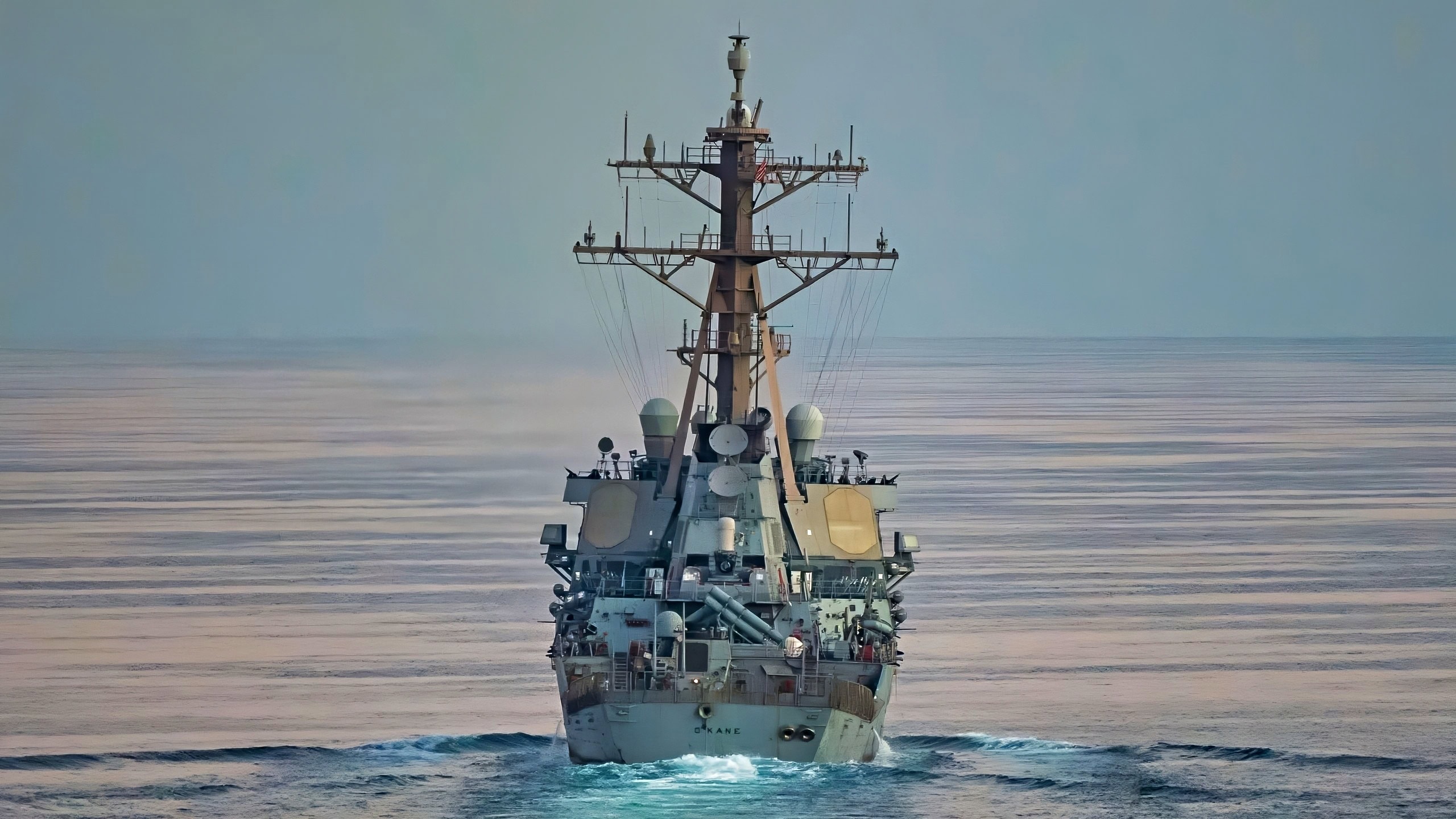
The Strait of Hormuz is not just a line on the map. Its narrowest point is about 33 kilometers wide, but the navigable corridors for tankers are limited and constrained by navigation rules, which means that a party possessing mines, fast boats, or anti-ship missiles can impose significant costs without officially closing the strait. Approximately one-fifth of global oil consumption typically passes through it, and the exports of Saudi Arabia, Iraq, Kuwait, Qatar, and the UAE remain linked to varying degrees to this corridor.
The UAE has an important advantage in the form of the Habshan-Fujairah pipeline to the Gulf of Oman, and it can redistribute some exports through ports outside the strait. However, this capability does not eliminate the need for Hormuz. The pipeline's reserve capacity, the type of crude, storage capacity, and tanker routes do not allow for a complete overnight shift in trade. Sending tankers through an area where it is said that mines have hit ships is not a sign of control, but rather a sign of limited options.
Mines Reveal a Gap Not Addressed by Patriot
Reports attributed to the Iranian navy and regional news agencies confirm that two giant tankers were hit by mines near the strait. The details regarding the type of mine, its location, and the party that planted it still require independent verification, which is an important point because the media war in the Gulf sometimes precedes technical investigation. But even with reservations about the narrative, the mere possibility of mines radically changes operational calculations.
The Patriot and THAAD systems, along with F-15 and Rafale aircraft, can intercept a missile or drone under certain conditions, but they do not automatically detect every mine lying on the seabed, nor do they create a safe passage for a massive tanker. What is needed is an integrated mine warfare capability that includes specialized minesweepers, reconnaissance helicopters, unmanned underwater vehicles, continuous monitoring of corridors, in addition to a unified naval command that can issue reliable warnings within minutes. This is the angle that is often overlooked when measuring Gulf power solely by the value of aircraft and missile deals.
The UAE Operation is a Political and Military Message
The UAE's attempt to transport oil through Hormuz carries a meaning that goes beyond economics. It signals that Abu Dhabi does not want to grant Iran a free victory simply by raising the cost of passage, while also wanting to keep markets convinced that the Gulf has not turned into a closed region. However, the operation simultaneously places tankers and sailors on the front line, turning every journey into a test of deterrence.
In my view, the problem is not that the UAE lacks money or military relationships. The problem is that maritime trade protection is distributed among national forces, American support, and temporary arrangements led by the crisis. When the threat is missile-based, additional battery support can be requested; however, when the threat is underwater or around the corridors, the response requires a permanent naval institution and accumulated training. Any military personnel who has served in the region knows that a commercial vessel does not wait for coordination between five operations rooms to be completed.
Security Guarantees or New Dependence on Washington
The Gulf countries' demand for security guarantees in any agreement with Iran reveals the limits of the current deterrence concept. Political guarantees may prevent a major attack, but they do not remove mines or prevent an armed faction from carrying out an operation that its sponsor denies. Moreover, the American guarantee, no matter how strong, remains tied to a political decision in Washington and broader war calculations.
Therefore, Gulf countries need to distinguish between three levels. The first is political deterrence that raises the cost of attack. The second is operational protection that secures ships, detects mines, and manages evacuations. The third is the ability to sustain operations for weeks or months without depleting stockpiles or waiting for foreign spare parts. The region has heavily invested in the first level and made progress in air defense, but it has yet to build a collective naval capability that matches the scale of its trade.
Conclusion
The real test in Hormuz is not whether the UAE can pass a single tanker, but whether the Gulf can maintain regular and safe movement when attacks recur and the threat expands. Mines, if confirmed, shift the discussion from purchasing a new platform to building a detection, command, maintenance, and training system. Here lies the contradiction that has haunted Gulf security for decades. Capitals want decision-making independence, but at the same time, they want Washington to remain the ultimate guarantor; they purchase advanced equipment, yet still rely on external arrangements to protect the route they pay for. At sea, as on land, ownership of weapons is not enough if there is no institution capable of using them continuously.
Sources
- The Wall Street Journal, report from November 23, 2026, on UAE oil transport near Hormuz.
- The Arab Weekly, report from November 23, 2026, on Gulf countries' demands for security guarantees.
- Anadolu Agency, report from November 22, 2026, on the injury of tankers by mines near Hormuz.
The United Arab Emirates continues to transport oil through the Strait of Hormuz despite threats from naval mines, with two supertankers reportedly hit on November 23, 2026. This situation tests the Gulf's ability to secure maritime trade amid rising tensions with Iran. Gulf states are seeking security guarantees in future negotiations, highlighting the strategic importance of the Strait for oil exports.
- Two supertankers were reportedly hit by naval mines near the Strait of Hormuz.
- The UAE is attempting to maintain oil shipments despite the threat.
- Gulf states are demanding security guarantees in any future agreement with Iran.
- The Strait of Hormuz is a critical chokepoint for global oil supply.
- The UAE has alternative routes but still relies on the Strait for significant oil transport.