
The United States strikes 74 times in Somalia in 2026 — Al-Shabaab regains ground
 Marie Dubois
The United States strikes 74 times in Somalia in 2026 — Al-Shabaab regains ground
In Baidoa, Saturday night, gunfire ran from Bukriyey to Barwaqo before residents understood who was shooting at whom. Forces loyal to Abdiasis Laftagaren, former president of the Southwest State, were clashing with federal troops in a town that is supposed to serve as a bulwark against Al-Shabaab. Just a few dozen kilometers away, the jihadist movement maintains bases, observes supply lines, and waits for Mogadishu to waste its men in a political quarrel.
This local detail explains better than lengthy doctrines the visible change in the American campaign. According to data compiled by Long War Journal, the United States has conducted at least 74 strikes in Somalia since the beginning of 2026, including 41 against Al-Shabaab. The figure is notable, but the choice of targets says even more. In 2025, Washington had primarily focused its efforts against the Somali Province of the Islamic State in the Cal Miskaad mountains of Puntland. This year, the center of gravity is shifting back to Shabaab, the East African branch of Al-Qaeda.
The return of the hunt for Shabaab
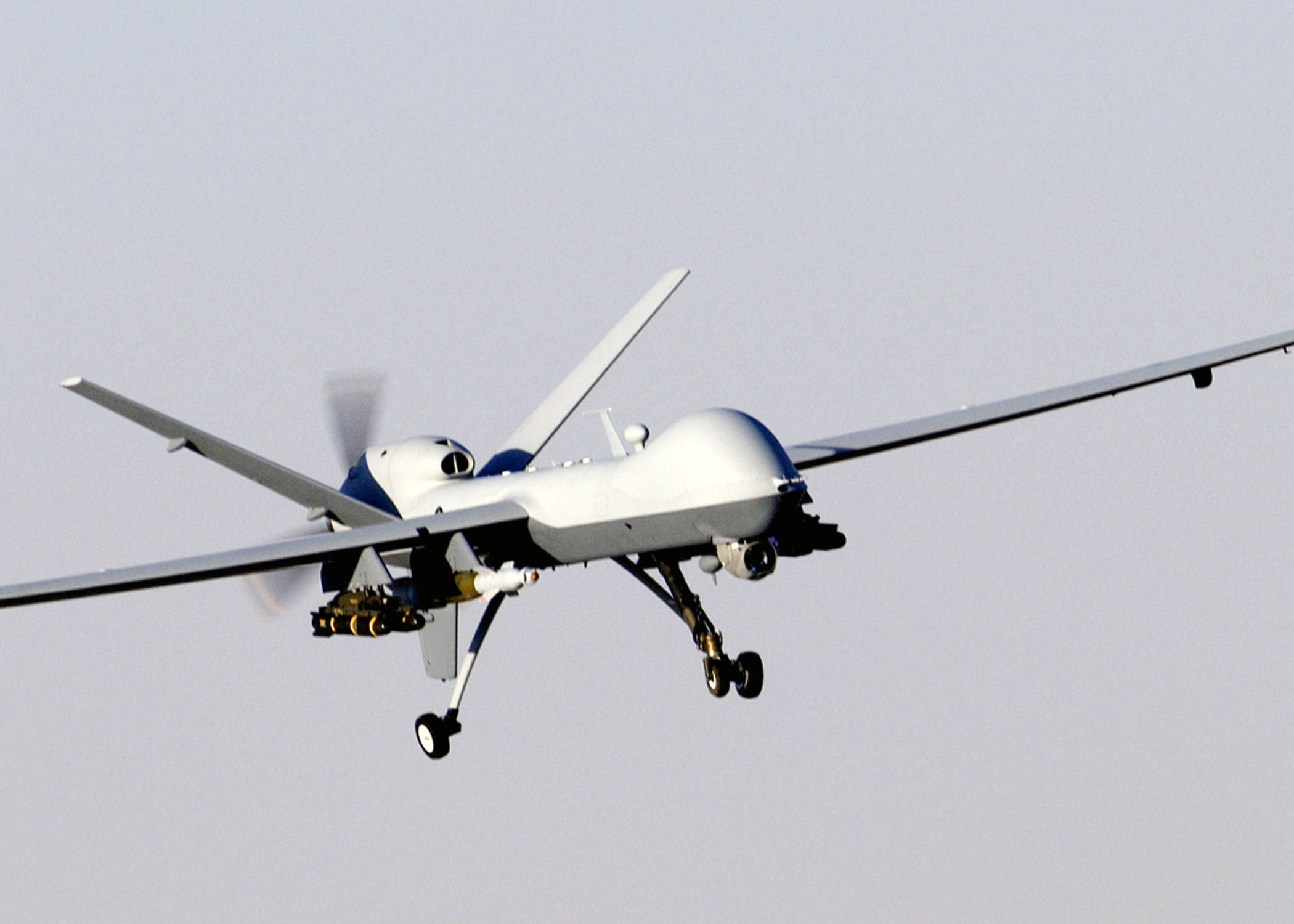
On paper, 74 strikes give an impression of constant pressure. On the ground, a strike does not hold a track, does not secure a bridge, and does not replace a company that refuses to leave its garrison. The MQ-9 can ambush a convoy, strike a cache, or disrupt a meeting of leaders. It cannot reassure a village in Lower Shabelle when the local chief knows that government soldiers will leave before nightfall.
However, the shift is real. Long War Journal estimates that the second Trump administration has already overseen at least 207 strikes in Somalia, compared to 48 during the entire Biden period. In 2025, the United States reached a record of 132 strikes, with at least 77 against the local branch of the Islamic State, 54 against Al-Shabaab, and one against arms traffickers. Air support given to Puntland, sometimes alongside the United Arab Emirates, had accompanied the partial recapture of the Cal Miskaad mountains. This sequence is calming down. Shabaab, however, is not calming down.
Baidoa shows the problem that drones do not solve
The case of Baidoa is useful because it is concrete. The city commands part of the Southwest State and controls the routes to Mogadishu, Bay, and Bakool. When pro-Laftagaren forces attack the city, when federal troops respond, when Turkish drones have already been reported in previous operations, Al-Shabaab observes one simple thing: the adversaries who should contain it are measuring themselves against each other.
Somali Guardian reports that recent fighting has affected several neighborhoods, with a toll still unknown. The same narrative emphasizes that Baidoa has become a space with three actors: Al-Shabaab in the surroundings, federal forces in the city, and supporters of the ousted leader at the gates. For a field officer, this configuration is bad. It produces competing checkpoints, contradictory intelligence, civilians who no longer speak, and roads that become negotiable day by day.
This helps to understand why Washington is striking more. It is not just a decision from the White House. It is a response to the fatigue of the Somali apparatus. The federal government is caught in crises of legitimacy, regional administrations resist, and African stabilization forces await a less certain financial architecture. Reuters reported in early July that the United States was blocking key UN support for the peace mission in Somalia. Even if Washington claims not to abandon the counterterrorism fight, the operational message is ambiguous: more direct strikes, less collective logistical support.
The miscalculation of air warfare
This ambiguity suits Al-Shabaab. The group does not always seek a spectacular victory. It seeks continuity: taxing roads, threatening districts, punishing collaborators, infiltrating local administrations. When a strike kills a leader, the group absorbs the loss if its fiscal network and intelligence network remain intact. From experience, an insurgency that can choose its days of action already possesses part of the battle.
The UN Security Council hears the same signal further west: jihadist groups in West Africa and the Sahel are coordinating their attacks, employing drones, utilizing criminal economies, and seeking economic control as much as military shock. Somalia is not the Sahel, but the logic is similar. Armed groups no longer only seek rural sanctuaries. They want corridors, taxes, secondary ports, and weak political relays.
One must also maintain a degree of caution. The tolls of American strikes are incomplete, with AFRICOM publishing fewer details than in the past about locations and casualties. The available figures are therefore likely a floor. But the trend is sufficient: Washington favors an aerial decapitation campaign at the very moment when the Somali political front is fragmenting.
The next fragile point
The immediate risk is not that Al-Shabaab will take Mogadishu tomorrow morning. The risk is more mundane, and thus more dangerous: a chain of districts around Baidoa, along the routes to Bakool and Lower Shabelle, where government forces become too occupied with politics to patrol regularly. In this void, Al-Shabaab does not need to raise a flag. It is enough to raise taxes.
The American campaign may slow the movement, sometimes disorganize it. It will not rebuild the contract between Mogadishu, the federal states, and local clans. If Baidoa remains a battlefield between supposed allies, the 74 strikes of 2026 will have mainly shown one thing: one can win the Somali sky and slowly lose the roads that hold the country together.
Sources
- Long War Journal, data on American strikes in Somalia and the refocus against Al-Shabaab.
- Somali Guardian, reporting on the fighting in Baidoa and the political crisis of the Southwest State.
- Reuters, information on the American blockage of support for the peace mission in Somalia, cited in recent security analyses.
- UN Info, briefing from UNOWAS on the transformation of jihadist threats in West Africa and the Sahel.
The U.S. conducted 74 airstrikes against Al-Shabaab in Somalia in 2026, primarily around Baidoa, where federal troops are engaged in conflict with local forces. Al-Shabaab retains control over key areas and continues to exploit the political instability in the region. The shift in U.S. focus back to Al-Shabaab indicates a response to the group's persistent threat despite ongoing military operations.
- The U.S. conducted 74 airstrikes in Somalia in 2026, with 41 targeting Al-Shabaab.
- The focus of U.S. airstrikes has shifted back to Al-Shabaab from ISIS.
- Baidoa is a contested area with ongoing conflict between federal troops and pro-Laftagaren forces.
- Al-Shabaab continues to maintain bases and influence in the region despite U.S. airstrikes.
- The political situation in Somalia complicates military operations against Al-Shabaab.