

Summary and Key Points: In 1972, the Air Force needed a replacement for the F-106 interceptor, and Grumman pitched the F-14 Tomcat with Phoenix missiles, capable of hitting Soviet bombers at 150 miles. In testing against the F-15 Eagle, the Air Force estimated 170 Tomcats could defend the continent as well as 290 Eagles, and NORAD’s commander recommended the Tomcat. The Air Force chose the F-15 anyway because of cost, the back-seater, and doctrine.
The F-14 for the US Air Force?
In 1972, the Air Force sought a new aircraft to replace the Convair F-106 Delta Dart, which entered service in 1959. The Dart was the primary interceptor of the Aerospace Defense Command (ADCOM), tasked with protecting the US and Alaska from Soviet Strategic bombers.
Grumman Had Just What The USAF Needed In The F-14 Tomcat
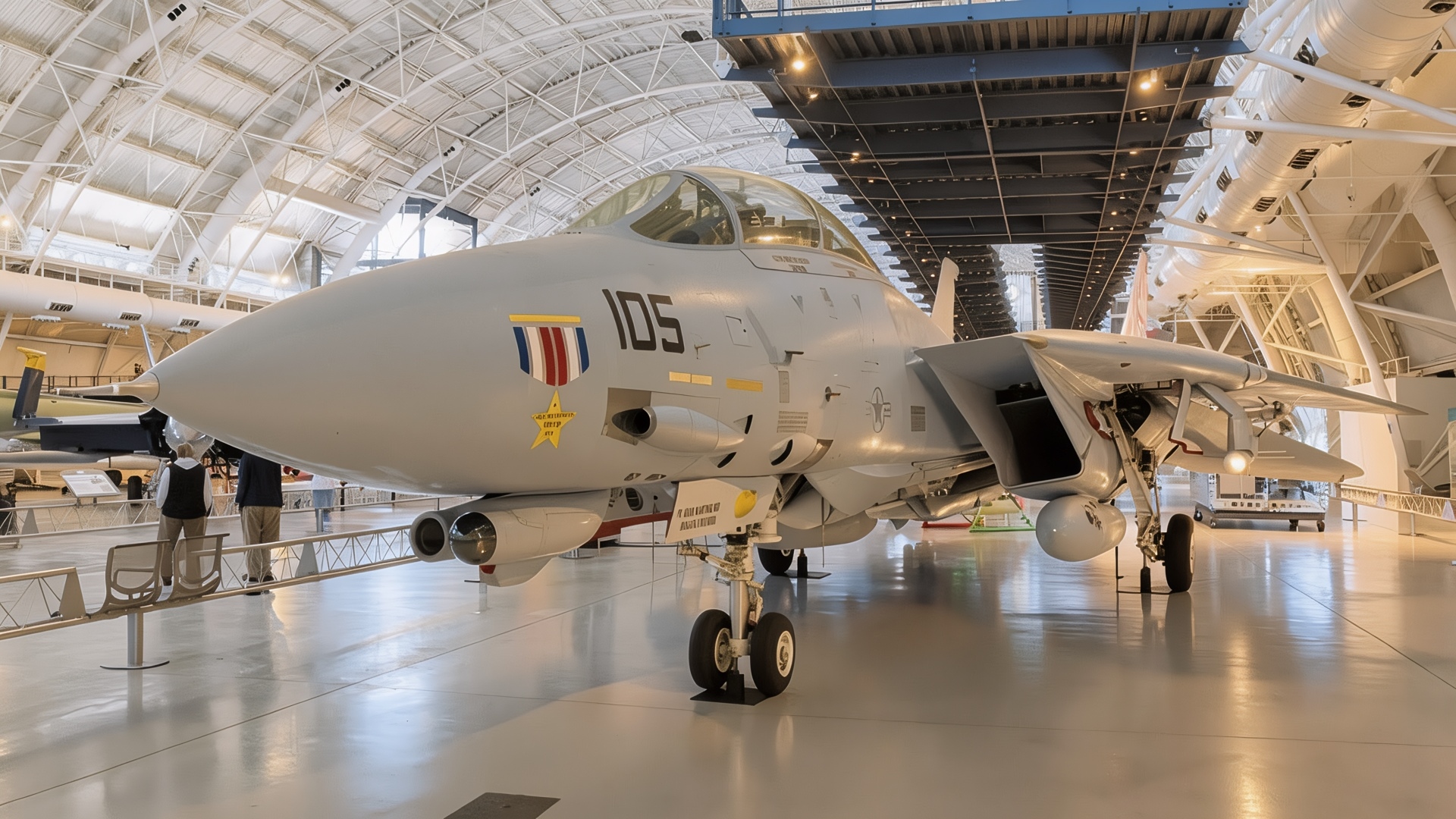
F-14 Tomcat Fighter at the Smithsonian
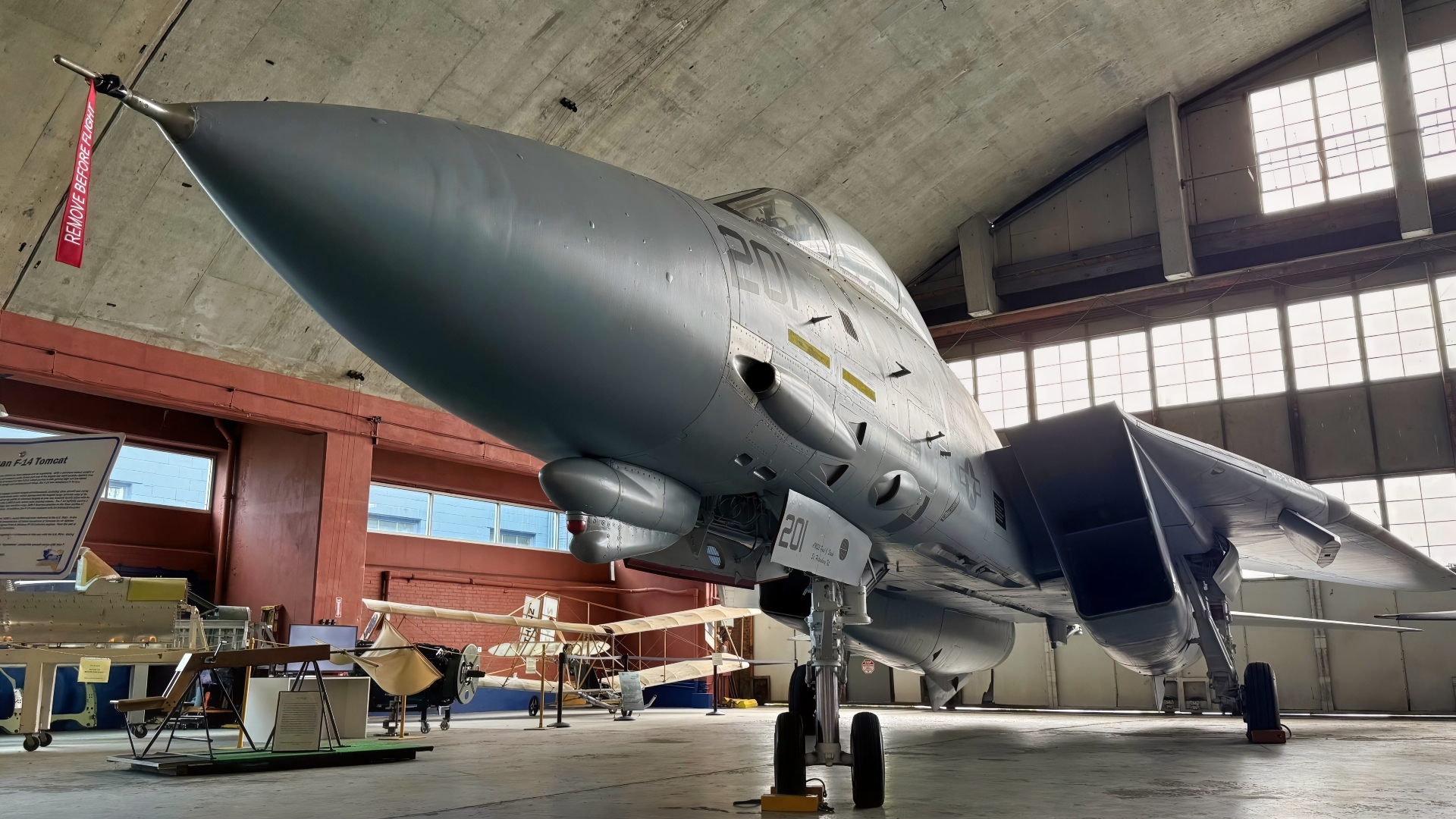
F-14 Tomcat Museum Photo 19FortyFive Photo Taken September 2026
By 1972, Grumman had already answered the US Navy’s call for a fleet defense fighter that could intercept Soviet bombers and cruise missiles at long range.
The first F-14 training squadron was months away from receiving aircraft and training pilots, while Grumman assembly lines in New York cranked out the Navy’s order of 557 aircraft.
Grumman saw an opportunity in the Air Force proposal to sell F-14s before competing brands like McDonnell-Douglas, Lockheed, and Boeing could get their slide rules out.
While Grumman had effectively captured the Navy as a customer for decades, it had sold only one aircraft type to the Air Force: 8 surplus OA-12 Ducks it bought from the Navy in 1948 as rescue planes.
Beyond that small second-hand purchase, Grumman was effectively locked out of supplying the Air Force.
Hundreds of F-14s sold to ADCOM to defend the US from Soviet bombers would change all that. Grumman dressed an F-14 Tomcat as an Air Force interceptor with paint, markings, and tail insignia, down to an imaginary “Buzz Code” painted near the nose (The Buzz Code on military aircraft was a way of discouraging hot dog pilots from making low-level passes over towns with an identifying mark that civilians could report to authorities).
The Air Force Version of the F-14 Tomcat Was Mission Adapted For Defending North America
The Air Force’s F-14 Interceptor proposal included some interesting modifications over the Navy version.
The Air Force version added four large drop tanks to give the F-14 long-range endurance over the vast North American continent.
Engine power would be increased with Pratt & Whitney F-100 turbofans that the Navy planned to upgrade its Tomcats with.
The 20 mm M61 Vulcan rotary cannon would be replaced with a Vulcan GAO-7, a 25 mm gun firing caseless ammunition, increasing firepower while reducing weight.
The Air Force Tomcat would retain the superb AN/AWG-9 Hughes search-and-fire-control radar but would have its weapons loadout modified to carry a mix of Phoenix AIM-54s and much shorter-range missiles like the Sparrow and Sidewinder.
The F-14 Tomcat Was Superior To The F-15 Eagle In The Mission The Air Force Called For
The Air Force did not dismiss Grumman’s efforts out of hand and began testing and evaluating the F-14 against the F-15 offered by McDonnel-Douglas. In that head-to-head testing, the F-14 proved itself to be the superior platform.
At long range, the AN/AWG-9 radar directing the Phoenix missile could detect bomber formations at 150 miles, fire its missiles, and was expected to hit 70% of Soviet bombers madly ejecting radar decoys.
The ADCOM F-14 could then close to medium range, fire Sparrow missiles at ranges under 20 miles.
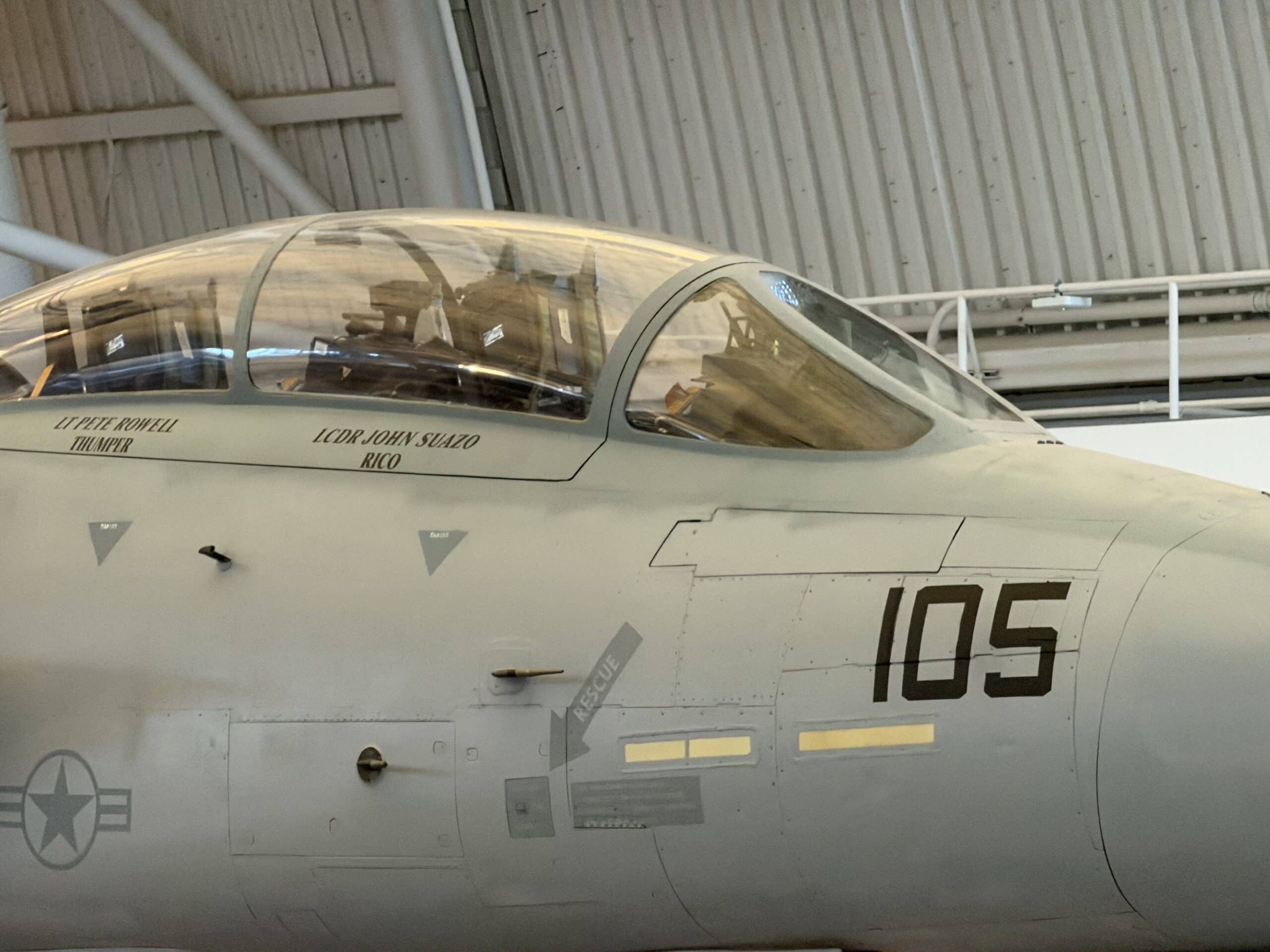
F-14D image taken by Christian D. Orr at the Smithsonian. 19FortyFive.com Image.
Finally, it could engage the surviving bombers at close range with its cannon.
By contrast, the F-15 had two-thirds of the Tomcat’s range. It would then have to close to about 20 miles to use its radar-guided Sparrow missiles, or to 2-5 miles for Sidewinders, before switching to its 20 mm cannon.
The Air Force estimated that the Tomcat’s range, sensors, and Phoenix missile meant 170 Tomcats could provide the same level of continental defense against Soviet Bombers as 290 F-15 Eagles.
The F-15 Eagle Proved To Be The Better Close-In Fighter Than The F-14 Tomcat
In close-in dogfighting, the F-15 had a decided advantage. While the F-14 could outturn the F-15 after the merge, the lighter F-15 recovered its lost airspeed faster and gained a significant advantage over the Tomcat.
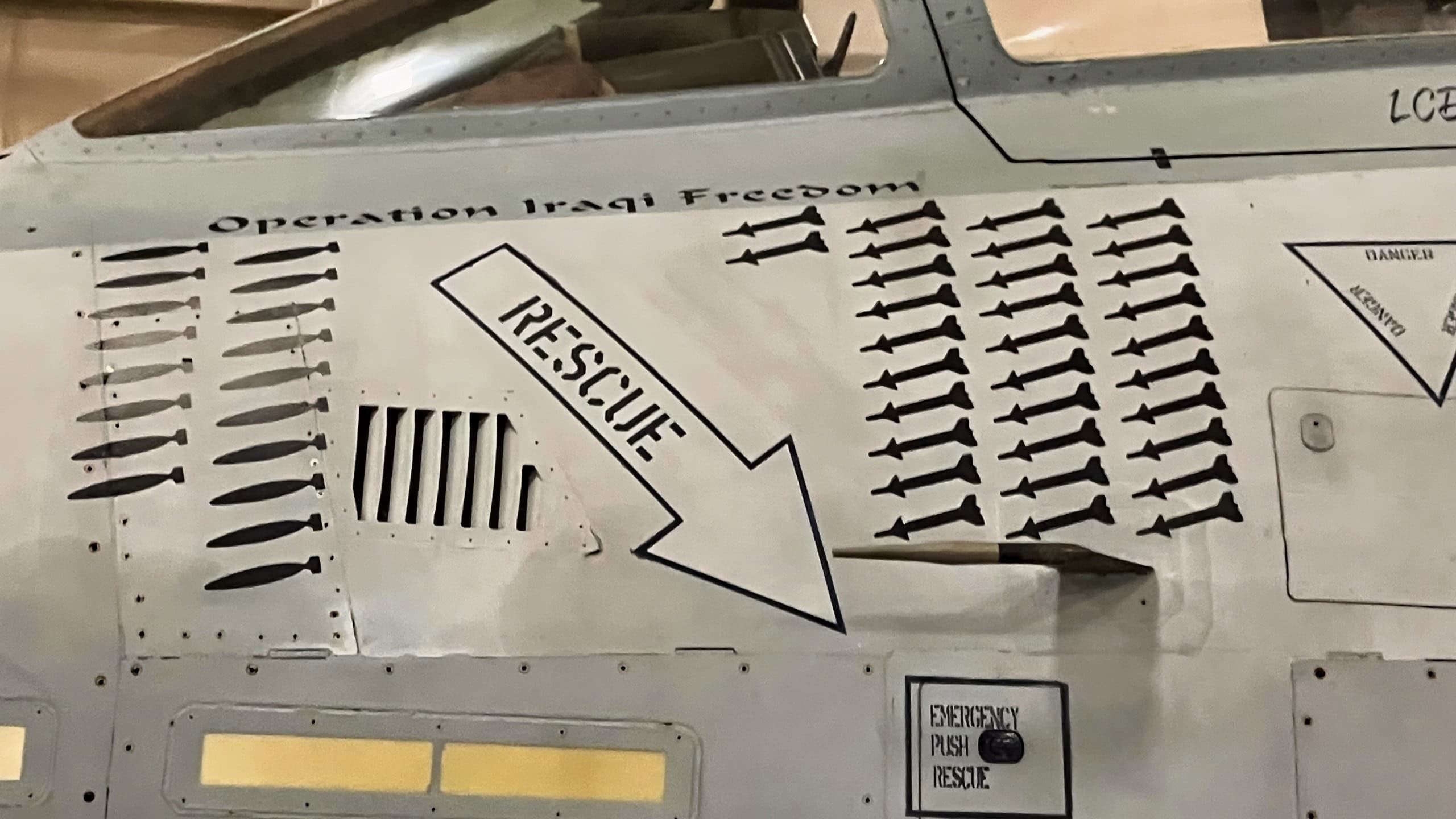
F-14 Tomcat at Aviation Museum of Kentucky. Taken on March 1, 2026. By Christian D. Orr.
Grumman might have told the Air Force that they asked for a plane to shoot down Soviet bombers, not F-15 Eagles.
The Commanding General of NORAD Wanted The Tomcat
General Daniel “Chappie” James, commanding both NORAD and ADCOM, was extremely impressed and recommended that the Air Force buy the F-14 Tomcat over the F-15.
Likely thinking the bomber defense mission was more important than dogfighting Soviet fighters.
The Air Force still picked the F-15 Eagle over his preference for the Tomcat.
The reasons offered were varied.
The F-14 Tomcat Would Cost Twice As Much As The F-15 Eagle
The Tomcat cost twice as much as the F-15 Eagle.
Even if the Tomcat could meet continental bomber-defense needs, the Air Force reasoned that 290 Eagles would still cost less to buy, fly, and maintain than Tomcats.
Those costs would include the F-14’s back-seater.
The Eagle was a single-seat aircraft.
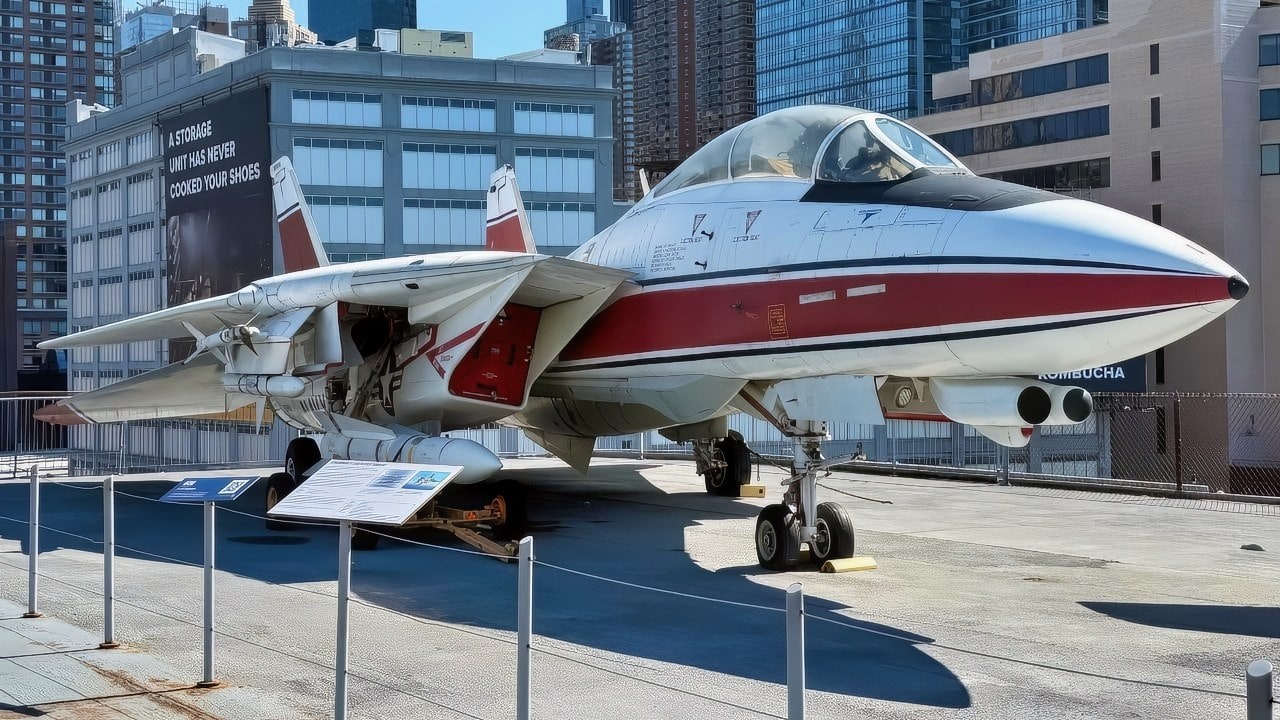
F-14 Tomcat Fighter in USS Intrepid Deck. Image taken late on 2025 by Jack Buckby for 19FortyFive. All Rights Reserved.
To adopt the F-14 Tomcat, the Air Force would have to recruit, train, and pay radar intercept officers to fly in them.
The Navy did not have a single-seat doctrine carved in stone for its aircraft, while the Air Force just about did.
If flying a fighter required two crewmen to handle the workload, the Air Force preferred a less complex, single-seat aircraft.
The F-14 Tomcat Was Too Specialized For The Air Force
Another reason was that the Air Force would have to buy and maintain the Tomcat outside its usual in-house procurement system, and it viewed Grumman as an outsider to its way of doing things, while McDonnell Douglas had long experience as the maker of the F-4 Phantom.
Finally, the biggest factor in the Air Force’s decision to adopt the F-15 Eagle over the F-14 Tomcat was the Tomcat’s laser-like focus on mission specialization. The F-14 was a “Fleet Defense” platform.
It did not represent a Carrier Strike Group’s offensive capability in battle; strike aircraft and the missiles of the carrier’s escorts did.
The primary role of the Tomcat was to defend the CSG from attack by Soviet aircraft, not to sink ships or strike land targets.
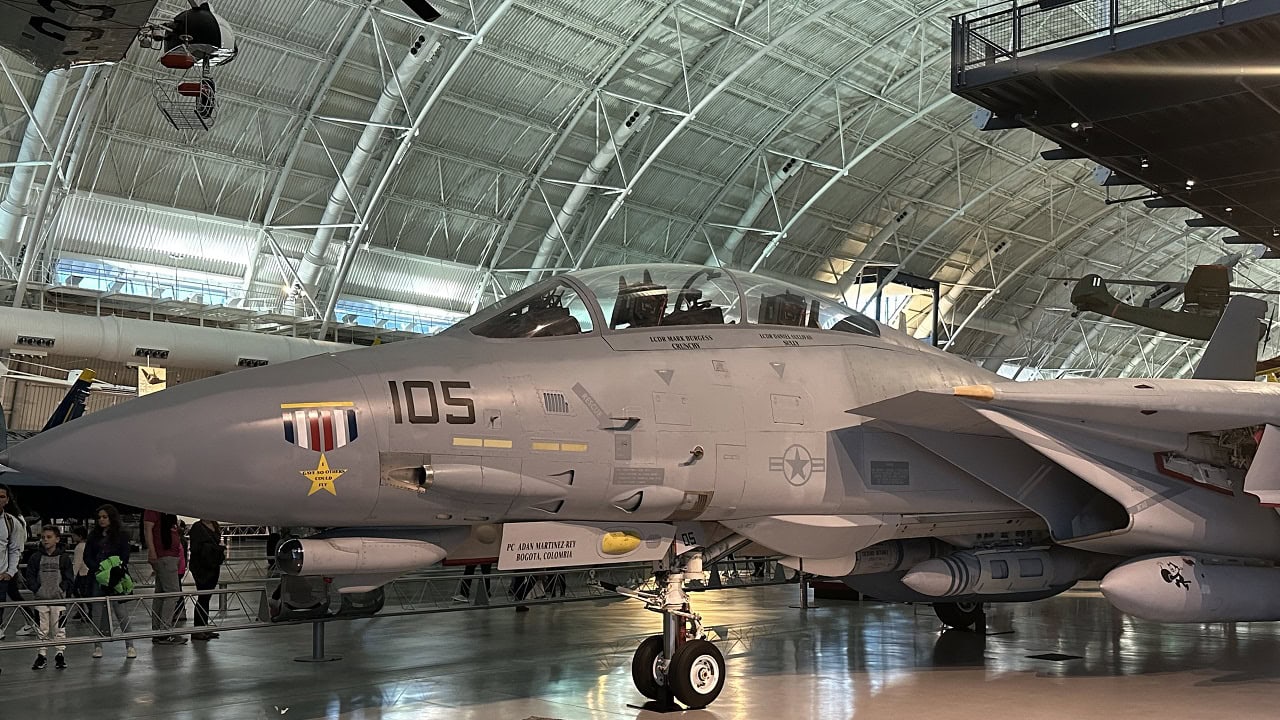
F-14 Tomcat. Image Taken at U.S. Air and Space Museum outside of Washington, D.C. Image Credit: 19FortyFive.com
Air Force doctrine was more offensively minded: first seek air superiority by wiping out enemy fighters, then establish air dominance by total control of the airspace, allowing bombers and strike aircraft to hit targets with little to no opposition.
For that mission, given the capabilities of air-to-air missiles and radars in the 1970s, you needed an offensive fighter that could win decisively against other fighters at medium to close range.
That fighter was the F-15.
The F-14 Tomcat was a victim of being outstanding in a single role at the expense of the versatility the Air Force believed it would need in a future war.
Eventually, The F-14 Tomcat Proved To Be Ahead Of Its Time
Eventually, the Air Force caught up to the F-14 Tomcat’s capabilities with the F-22 Raptor and F-35 Lightning II, which excel at long-range detection and targeting of aerial threats.
Like the Air Force Tomcat of 1972, both now receive criticism for not being as capable in a close-range dogfight as aircraft from China or Russia.
The Air Force answer is to say these aircraft are interceptors, not dogfighters.
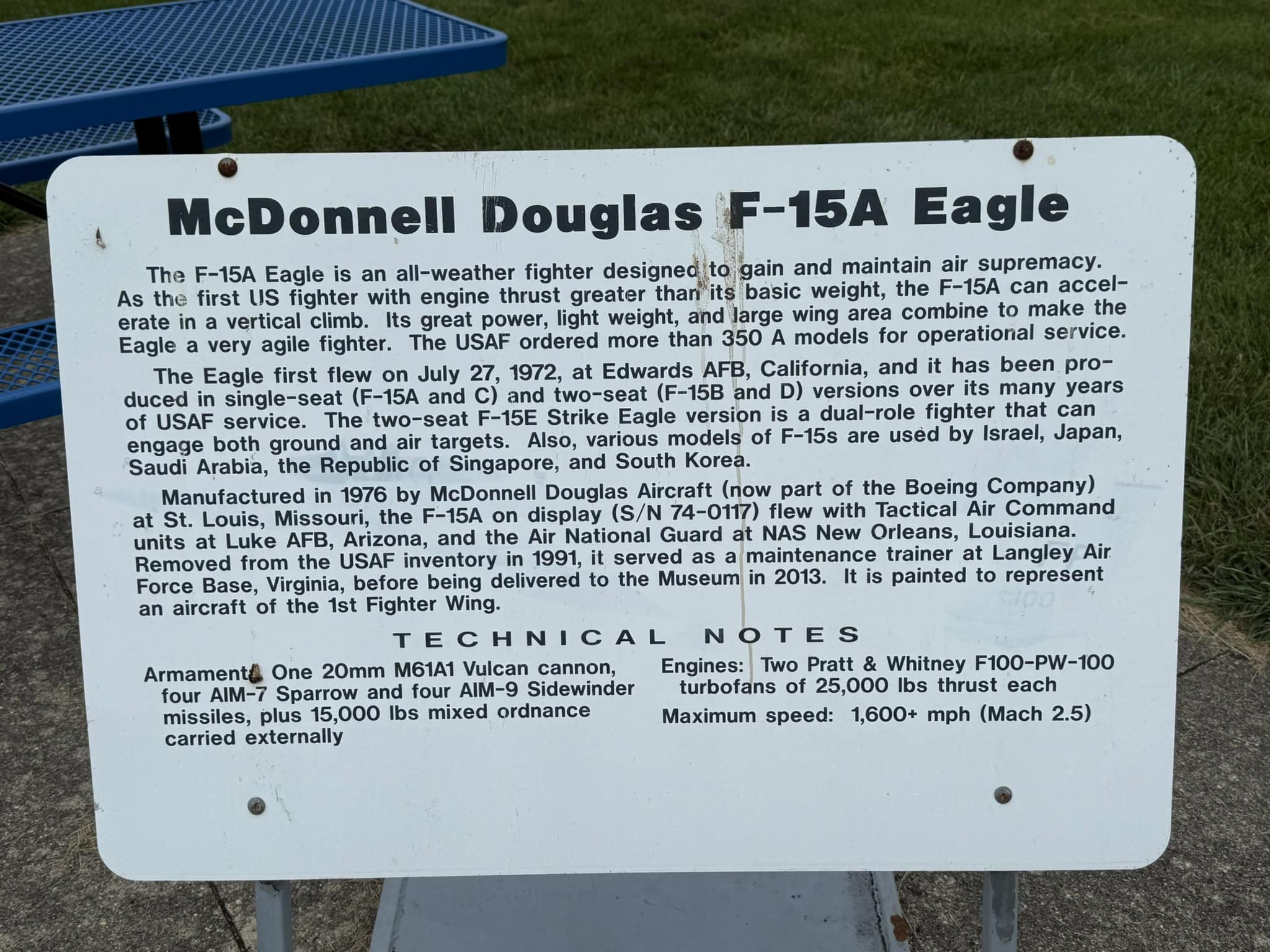
F-15A. 19FortyFive Photo Taken Outside of the National Museum of the U.S. Air Force.
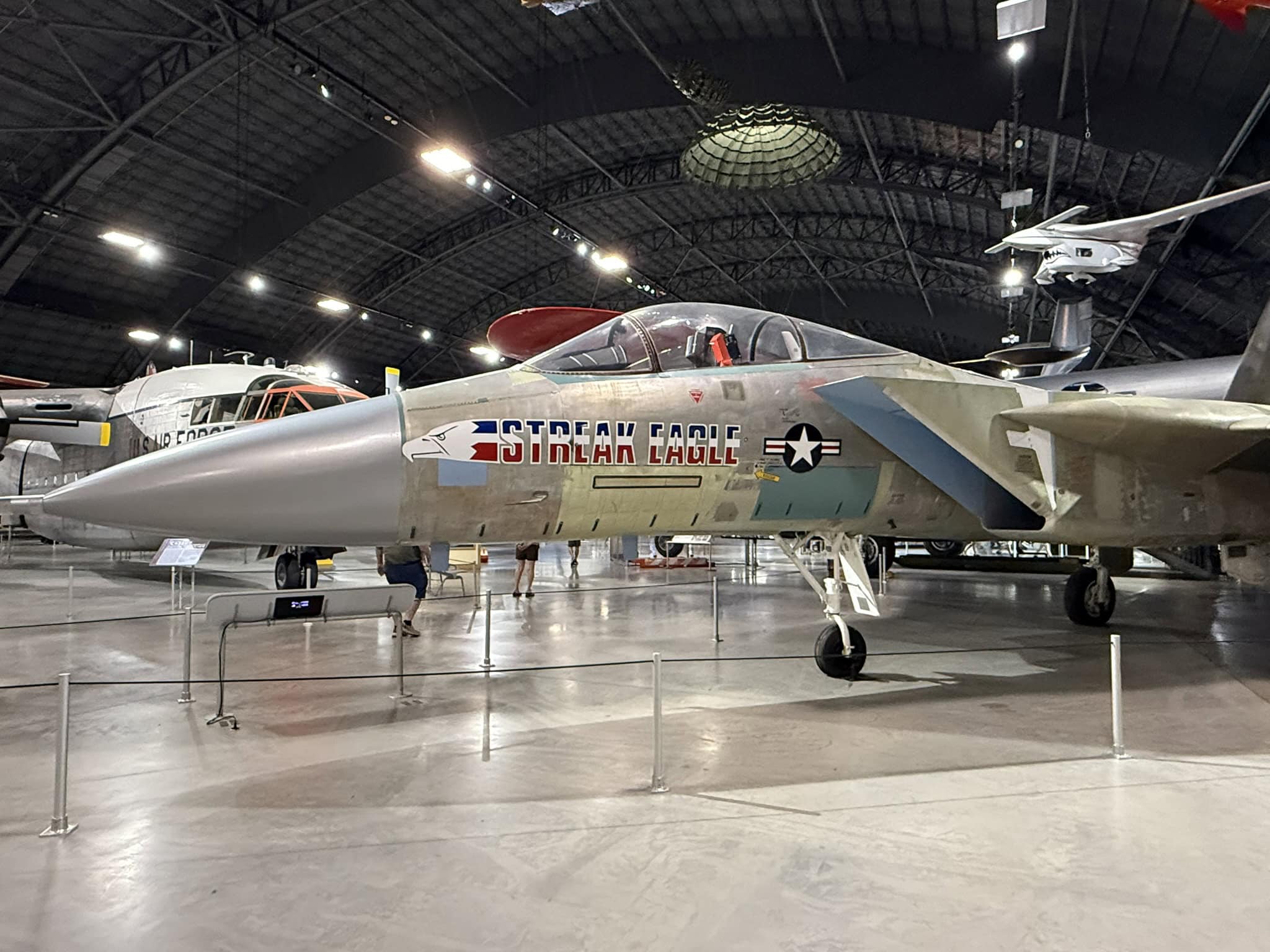
F-15A. 19FortyFive Photo
As for the F-15 Eagle, the Air Force is still ordering them but has changed their mind about the single-seat doctrine.
The F-15 EagleEX is now a multi-role fighter capable of carrying missiles, bombs, and electronic warfare gear, and it has two seats like the F-14 Tomcat it rejected in 1972.
About the Author: Sean Spoonts
Sean Spoonts is the former Editor-In-Chief of SOFREP.com. He is a military analyst, writer, and commentator whose work has appeared in Newsweek, CNS News, Ukrinform, and various military/veteran media networks and professional publications, including the Military Intelligence Professional Bulletin. He is a U.S. Navy veteran, having served as an Aviation Anti-Submarine Warfare Operator and Search and Rescue Helicopter Aircrewman.