
The US Army's New Pacific Brigade Still Cannot Sustain a Taiwan War
 Marcus Chen
The US Army's New Pacific Brigade Still Cannot Sustain a Taiwan War
The U.S. Army has reactivated the 45th Sustainment Brigade at Torii Station, Okinawa. That sounds like a force-management detail. It is actually a warning about the hardest problem in a Taiwan conflict: keeping dispersed forces supplied after China starts shooting at the logistics network.
The brigade replaces the smaller 10th Support Group and will provide a brigade-level headquarters for sustainment across the Pacific, not merely Japan. Defense One reported that the change brings only a small increase in soldiers and no additional infrastructure at Torii Station. The command structure is improving. The physical network it must command is not.
Okinawa Is a Command Node, Not a Logistics Solution
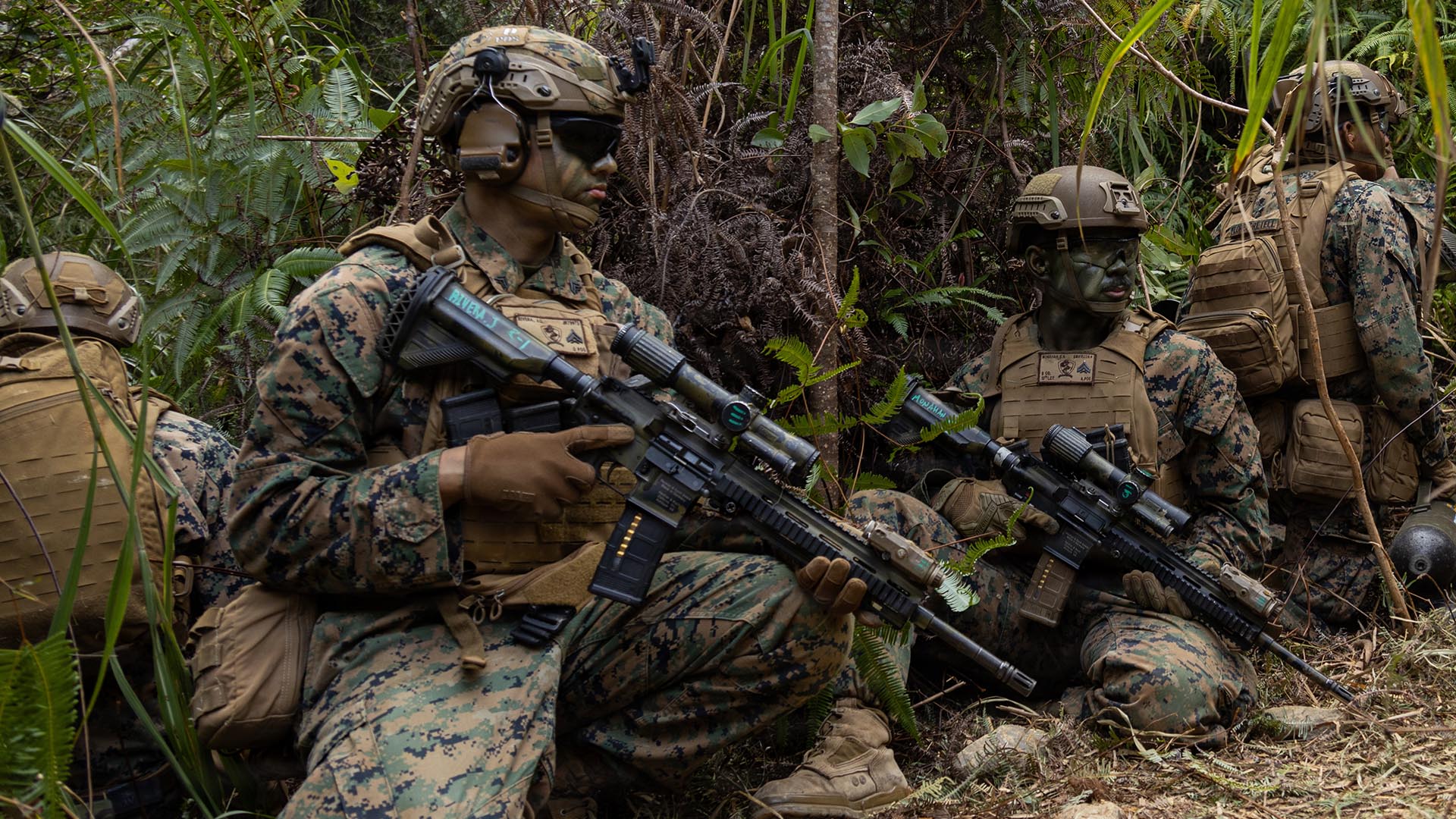
That distinction matters. A sustainment brigade headquarters can synchronize fuel, ammunition, maintenance, transportation, and medical support. It cannot create extra ports, harden fuel farms, repair a runway, or make a damaged undersea cable carry data again. Torii Station sits on Okinawa's western coast, inside the operating area of any Chinese campaign aimed at the first island chain. Its proximity is useful for command and control. It also makes the island a predictable target.
The Army's own wording is revealing. Col. Dennis Han said the brigade will spend the next several years building its staff and capacity. In other words, the reactivation is the beginning of a preparation cycle, not evidence that the theater can already sustain a high-end fight. If a crisis begins before that staff, its stocks, and its distribution agreements mature, Washington will have a headquarters with a larger map and the same old bottlenecks.
The Missile Network Is Growing Faster Than the Supply Network
The timing is not accidental. Defense News reports that the United States and Japan will use Keen Sword 2026 to demonstrate a distributed, ground-based sea-denial network around the Nansei Islands. The Marine Corps is sending the Navy-Marine Expeditionary Ship Interdiction System, or NMESIS, and the Marine Air Defense Integrated System to Yonaguni, roughly 110 kilometers from Taiwan. The exercise is scheduled for October 19–29 and will involve about 45,000 Japanese personnel, with troops from nine countries.
NMESIS can reach targets at approximately 115 miles. Japan's Type-25 surface-to-ship missile is reported to have a range of 1,000 kilometers. The operational idea is sound: replace a few vulnerable, high-value bases with mobile launchers spread across islands. But dispersion multiplies the demand for fuel, transport, reloads, spare parts, air defense, and secure communications. Every launcher that moves away from a major base becomes harder to find and harder to resupply.
This is where the carrier's absence becomes more than an exercise footnote. Defense News noted that the USS George Washington, present in earlier iterations, will not be part of this year's scenario after the carrier strike group was sent to the Arabian Sea. A land-based missile network can complicate Chinese naval movement, but it cannot replace the aviation, fuel, repair, and command capacity of a carrier strike group. The United States is increasing the number of firing points while operating with fewer obvious maritime enablers.
Cyberattacks Could Stop the Convoy Before the Missile Does
A recent Foundation for Defense of Democracies exercise in Taiwan exposed a second weakness. As Defense One reported, the scenario began with cellular disruption, information manipulation, and pressure on satellite connectivity, then escalated to damaged undersea cables, disabled electrical substations, and failing backup networks. The exercise was designed around coercion short of invasion, but its logistics lesson applies to war.
Ammunition does not move because a commander has a good plan. It moves when ports can schedule vessels, payment systems function, fuel inventories are visible, maintenance teams can communicate, and civilian contractors trust the network. If those systems fail together, a truck convoy can be physically intact and operationally useless.
“They’re speaking in minutes and hours, and my experience is days or weeks,” retired Rear Adm. Mark Montgomery said of recovery assumptions in exercises.
That gap is decisive. A Chinese campaign would not need to destroy every American depot. It would need to create enough uncertainty that commanders slow movements, hold reserves, and wait for authentication. The Pacific Forum's recent analysis of U.S.-South Korean-Japanese deterrence makes the same point from a coalition perspective: interoperability is not interchangeability, and none of the three countries has a unified stockpile or integrated industrial apparatus.
What the 45th Brigade Must Prove
The brigade should be judged against measurable wartime tasks, not the ceremony that reactivated it.
- Endurance: How many days can dispersed missile units operate without access to a major port or fixed fuel farm?
- Redundancy: Can the Army reroute supplies if Okinawa's main roads, ports, airfields, or communications links are degraded?
- Coalition authority: Can U.S., Japanese, and South Korean stocks be released under pre-authorized rules, or will every transfer wait for a political decision?
- Recovery: Can units restore logistics software, satellite links, and civilian payment networks after a coordinated cyberattack?
These are not abstract staff questions. A mobile launcher that fires six missiles on day one and waits two weeks for reloads is not a persistent sea-denial capability. A fighter squadron with fuel but no secure maintenance data is not combat power. A brigade headquarters that knows where supplies should go but cannot move them through damaged infrastructure is a control tower without aircraft.
The Math Still Favors the Attacker
The 45th Sustainment Brigade is a sensible correction to an obvious organizational gap. It recognizes that the Pacific is too large to manage through a Japan-only support group. But reactivating a headquarters does not solve the tyranny of distance, the absence of extra infrastructure, or the civilian dependencies exposed by the Taiwan cyber exercise.
Washington and Tokyo are building a credible first salvo of distributed missiles. They are not yet demonstrating a credible months-long resupply cycle under fire. The next Keen Sword will show whether the alliance can scatter weapons. The harder test is whether it can reload them after China attacks the networks and nodes that make dispersion possible.
The math is uncomfortable: more launchers create more combat power only when the logistics tail survives. Until the 45th proves that it can sustain the force across a damaged Pacific, the missile network remains a sharp opening move—not a durable Taiwan war plan.
Sources
- Defense One, “Army activates sustainment brigade as part of Pacific restructuring,” October 7, 2026
- Defense One, “Recent Taiwan simulation highlights US cyberdefense gaps against China,” October 7, 2026
- Defense News, “US Marine Corps anti-ship weaponry to see exercise action on remote Japan island near Taiwan,” October 5, 2026
- Pacific Forum, “The logistics test: Sustaining trilateral deterrence in Northeast Asia,” 2026
The U.S. Army reactivated the 45th Sustainment Brigade at Torii Station, Okinawa, to enhance logistics capabilities in the Pacific amid rising tensions over Taiwan. Approximately 45,000 personnel will participate in the Keen Sword 2026 exercise, showcasing a distributed missile network. However, logistical challenges remain, particularly regarding supply chain vulnerabilities and the impact of potential cyberattacks on operations.
- The 45th Sustainment Brigade was reactivated at Torii Station, Okinawa.
- The brigade aims to improve logistics for U.S. forces in the Pacific.
- The U.S. and Japan will conduct the Keen Sword 2026 exercise involving 45,000 personnel.
- The exercise will demonstrate a distributed missile network around the Nansei Islands.
- Cyberattacks could disrupt logistics and supply chains during a conflict.