

Summary and Key Points: A July 14 Pentagon memo doubled hostile fire pay to $450 a month for troops whose units or bases come under attack in the Iran War and raised imminent danger pay to $275. Troops cannot collect both in the same month, and hardship duty pay was cut from $150 to $100 at the same time. Brandon Weichert argues the raise reflects fear of a recruiting crisis, not the risks troops face.
A Pay Increase and a Pay Problem for the US Military?
The Iran War is entering its eighth month, and no end is in sight. Multiple news outlets have highlighted the difficulty that American service members have faced while under attack — from base personnel having to live in horrible conditions after their barracks were destroyed to sailors aboard the USS Abraham Lincoln and other warships running low on some food stocks.
That said, the Pentagon’s desire to increase recruiting numbers is likely in jeopardy as more of these stories reach the public.
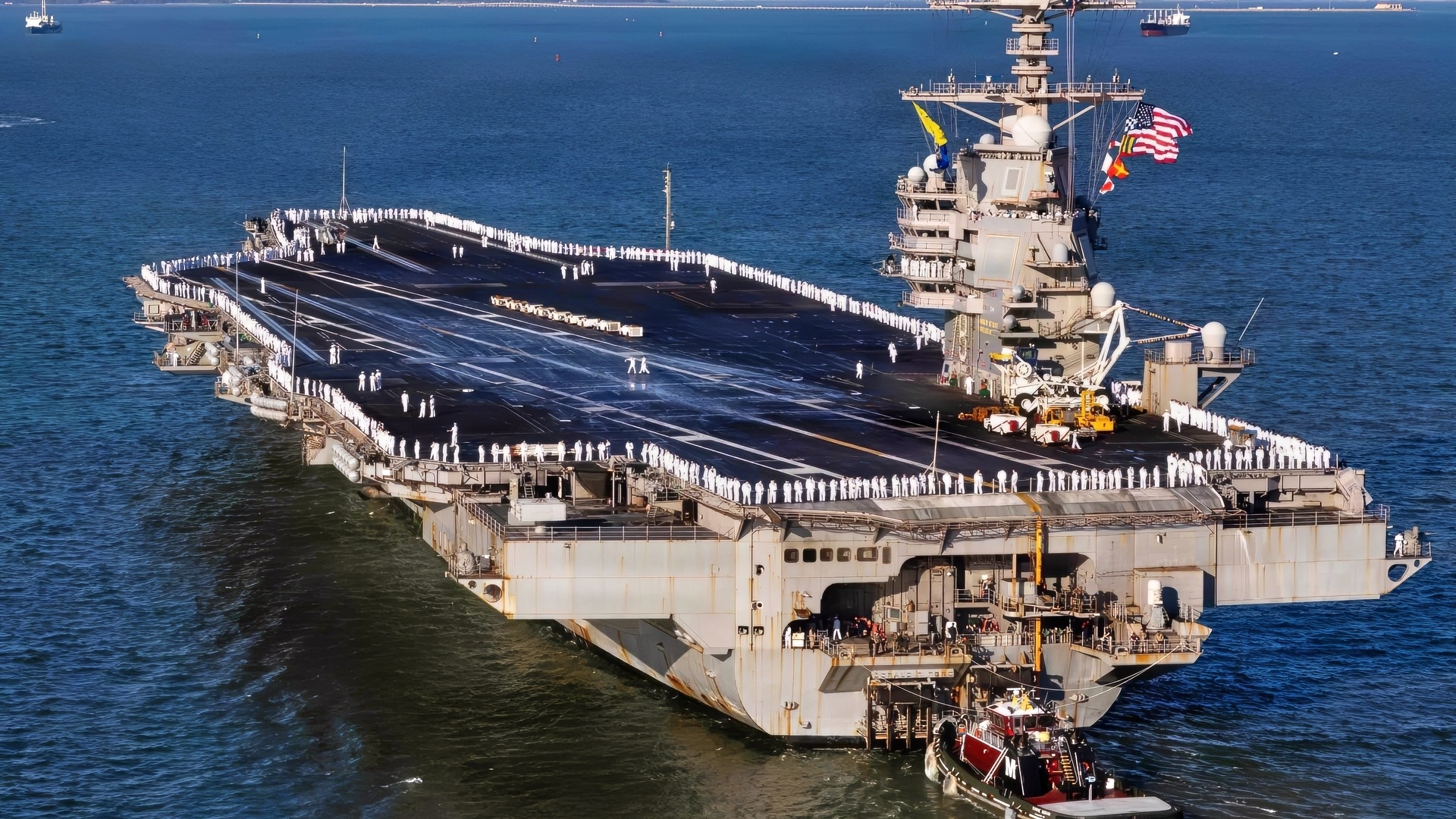
NORFOLK, Va. (May 16, 2026) USS Gerald R. Ford (CVN 78) returned to Naval Station Norfolk, May 16, 2026, following a historic 11-month deployment to U.S. 2nd, 4th, 5th, and 6th Fleets as part of the Gerald R. Ford Carrier Strike Group. Before returning to Norfolk after 326 days, the Gerald R. Ford crew conducted 23 replenishments-at-sea and sailed over 57,713 nautical miles. Embarked Carrier Air Wing 8 logged more than 5,760 flight hours and 12,200 flight launches. (U.S. Navy photo by Mass Communication Specialist 2nd Class Mike Shen)
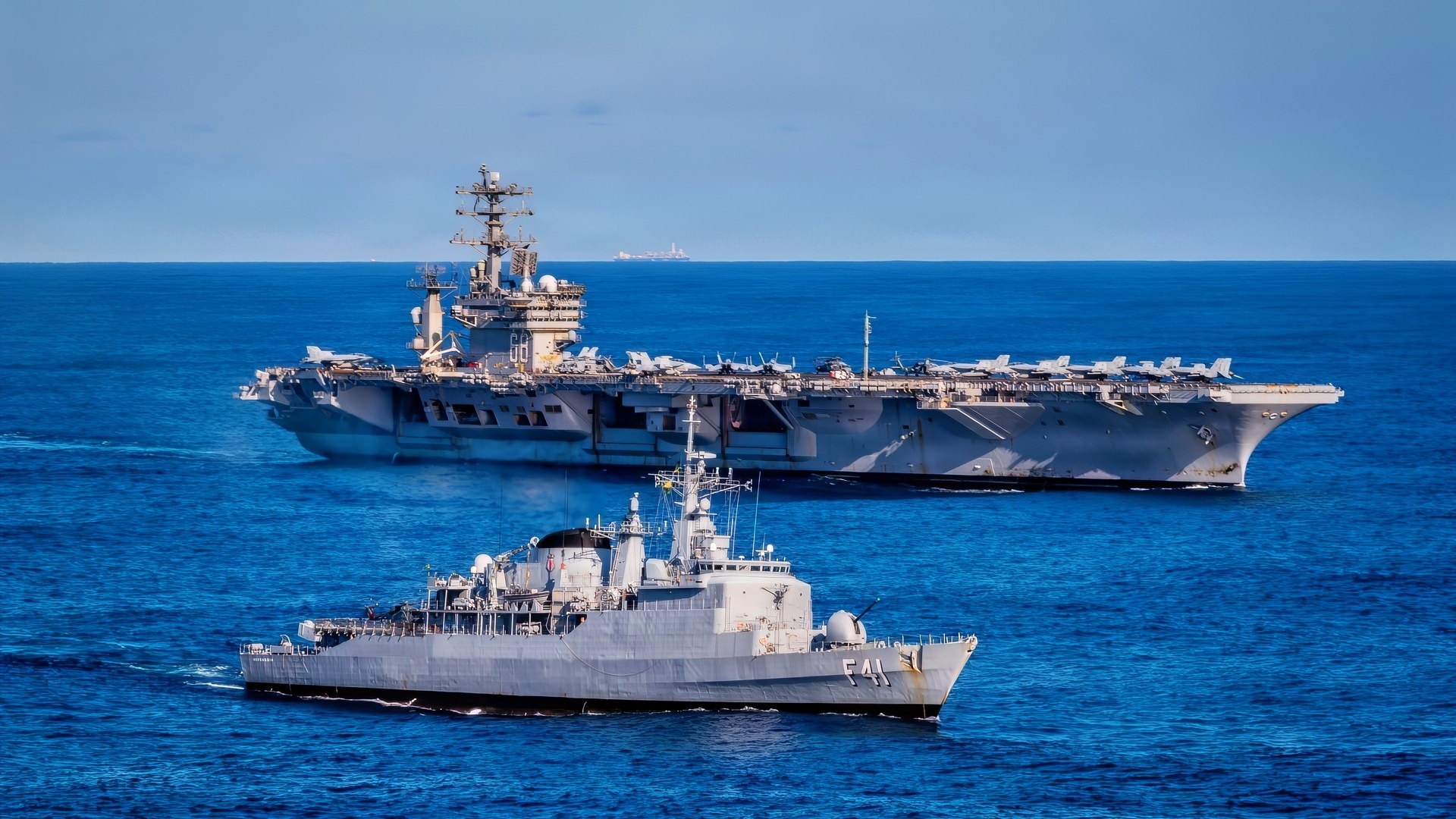
Brazilian Navy Niterói-class frigate Defensora (F 41), and U.S. Navy Nimitz-class aircraft carrier USS Nimitz (CVN 68), steam in formation alongside Nimitz-class aircraft carrier USS Nimitz (CVN 68), part of Nimitz Carrier Strike Group, during a bilateral maritime engagement in the Atlantic Ocean, May 13, 2026. Nimitz is deployed as part of Southern Seas 2026, which seeks to enhance capability, improve interoperability, and strengthen maritime partnerships with countries throughout the region through joint, multinational, and interagency exchanges and cooperation. (U.S. Navy photo by Mass Communication Specialist 3rd Class Gina Gallia)
Hostile fire pay will be $450 and imminent danger pay will be $275.
A recent Task & Purpose report highlighted changes outlined in a July 14 memorandum signed by Timothy Dill, the assistant secretary of defense for manpower and reserve affairs.
Previously, service members could receive up to $225 per month for either hostile fire pay or imminent danger pay.
The Pentagon is doubling that.
What We Know on the US Military Pay Increase
The two categories compensate military personnel for different levels of exposure to dangerous conditions.
Hostile fire pay applies to troops whose units engage enemy forces, whose installations come under hostile attack, or who suffer injuries from enemy weapons or explosions.
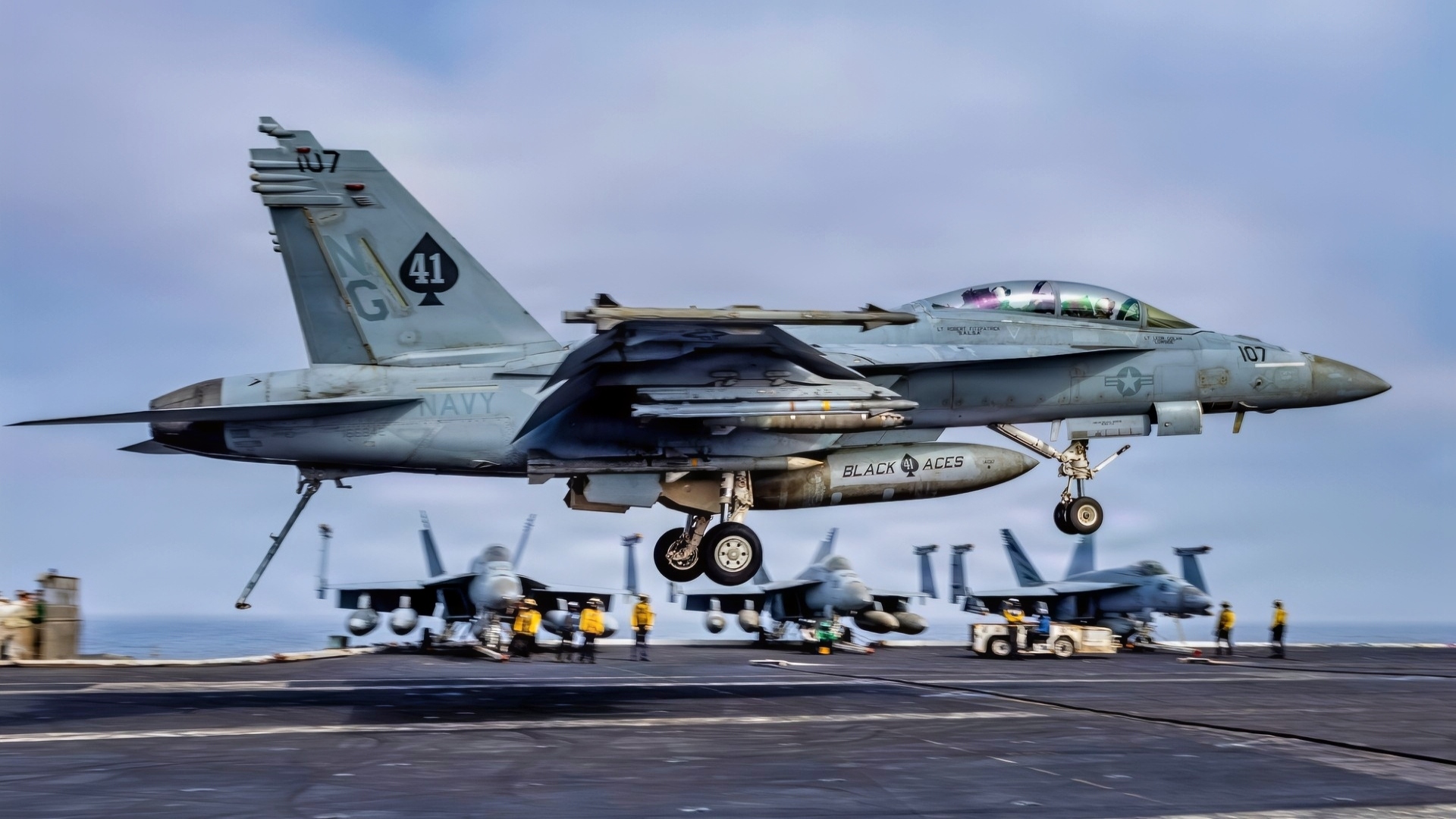
An F/A-18F Super Hornet, assigned to Strike Fighter Squadron (VFA) 41, prepares to make an arrested landing on the flight deck of Nimitz-class aircraft carrier USS Abraham Lincoln (CVN 72), Aug. 4, 2026. Abraham Lincoln is deployed to the U.S. 5th Fleet area of operations to support maritime security and stability in the Middle East. (U.S. Navy photo)
Imminent danger pay covers military pay.
For example, a soldier whose installation comes under enemy fire could qualify for the full $450 (even if the attack occurs on a single day).
Imminent danger pay applies to specified operational and geographic areas with elevated threats.
Service members cannot collect both hostile pay and imminent danger pay during the same month.
Why the Change?
Changing compensation packages help troops and their families, but they also highlight War Department officials’ underlying concerns about the impact of this endlessly expanding war.
Some troops qualify for installations that have already experienced attacks.
Others, by contrast, qualify because they are deployed in designated areas where hostile action remains a continuing threat.
In April, US Air Force officials initially proposed raising military pay in the FY2027 budget request.
Officials believed this would be a key move for enhancing military recruitment and retention during an extended period of overseas combat operations.
The final policy established different maximum payments for hostile fire and imminent danger, rather than increasing both categories to $450.
Not a Big Increase? And There’s A Catch
While that might be needed for American troops facing an ever-increasing arc of danger in the Middle East, it still doesn’t sound like much money for the risks these young men and women are taking for the country.
The maximum imminent danger pay for a full year is $3,300 (up from $2,700). Meanwhile, the maximum hostile pay is $5,400 per year. It was previously $2,700.
Given that the Pentagon is asking for a $1.5 trillion budget increase for FY27, it is stunning that it offers only a meager $450, plus an additional $225 for specific categories of young Americans in combat, especially as the war keeps expanding.
There has been a clear lack of planning for the dangers these young men and women have faced.
As the Pentagon increased the money available for imminent danger pay and hostile pay, the War Department also decreased hardship duty pay-location from $150 to $100.
In effect, that reduction will likely offset any increase troops receive in the other two domains.
Essentially, the Pentagon is playing games with American service members’ pay.
Reductions to base pay offset the increases.
Their families are used to receiving pay for their service to the country, while the Pentagon increases its overall budget (and refuses to give that extra money to the men and women in danger, preferring instead to blow it on administrative costs and increasingly obsolete legacy systems).
The Pentagon’s overall cost will depend on how many troops qualify for the revised rates and how long combat operations continue.
The increases do not constitute a general base-pay raise, though.
They apply only to personnel meeting established hostile fire or imminent danger requirements in the established hostile fire or imminent danger eligibility requirements.
A bigger problem the Pentagon should consider, though, is the implications for the force (yet again) waging an unpopular war of choice that appears to rest on bad strategic assumptions, poor tactical concepts, and faulty intelligence.
The Pentagon doesn’t have to increase pay simply because the military is now fighting a dangerous war.
They’re increasing pay because the military worries it will soon face a severe recruitment crisis driven by negative perceptions of the war.
About the Author: Brandon J. Weichert
Brandon J. Weichert is the Senior National Security Editor at 19FortyFive.com. He also manages The Weichert Brief on Substack. Weichert is the co-host for The Mario Nawfal Show on Twitter/X. He is the author of four bestselling national security books, most recently A Disaster of Our Own Making: How the West Lost Ukraine (Encounter Books). His next book, Fortress Americas: A New Monroe Doctrine (Tucker Carlson Books), is due out December 8. Follow him via Twitter/X @WeTheBrandon.