

The Essex-class aircraft carriers were incredible warships, serving as the backbone of U.S. naval power in the Pacific during World War II and continuing to serve for decades afterward.
Arguably, no other ship embodies the US Navy’s carrier as its strategic centerpiece than the Essex-class carriers.
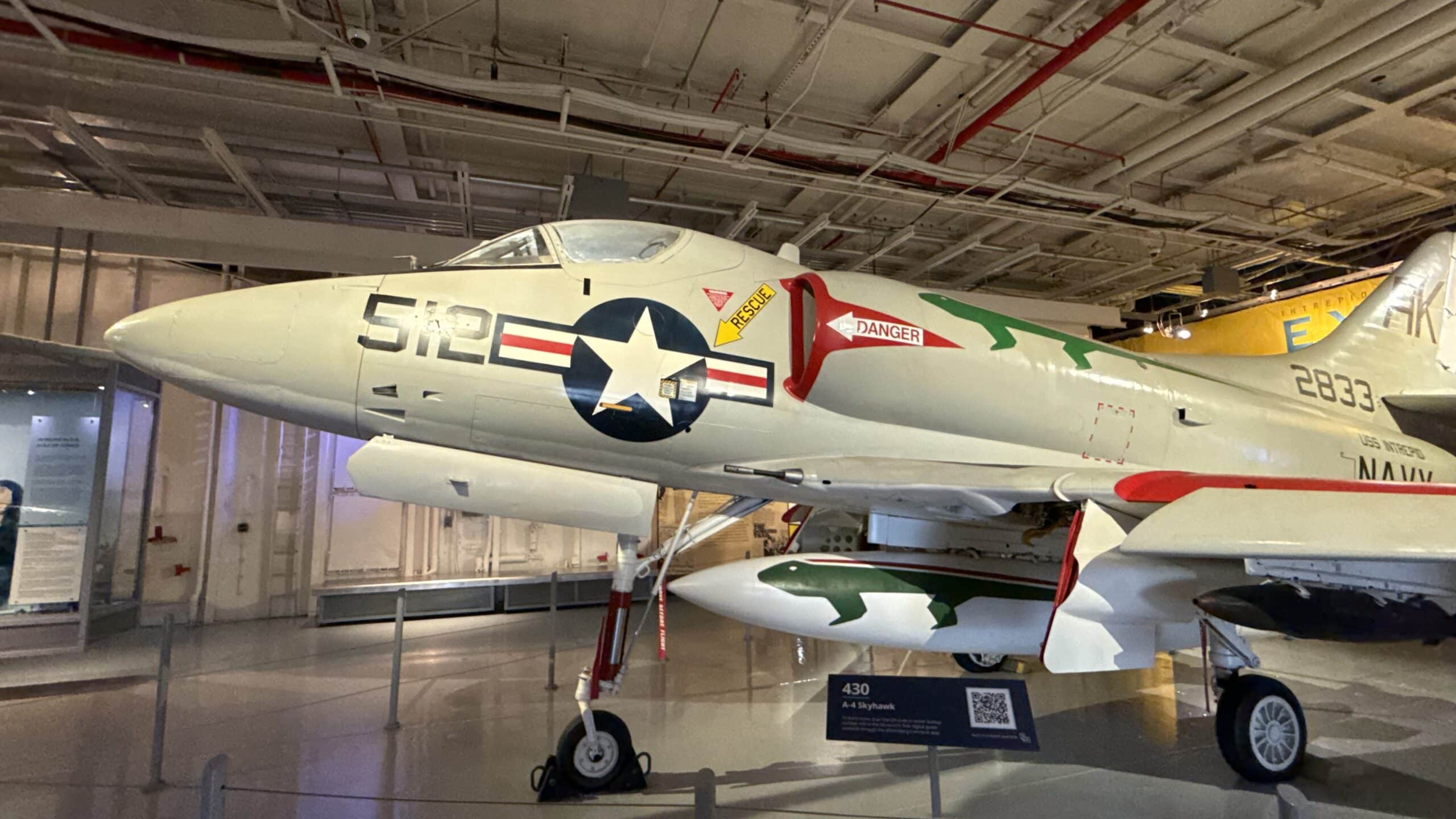
A-4 Skyhawk 19FortyFive Photo from USS Intrepid.
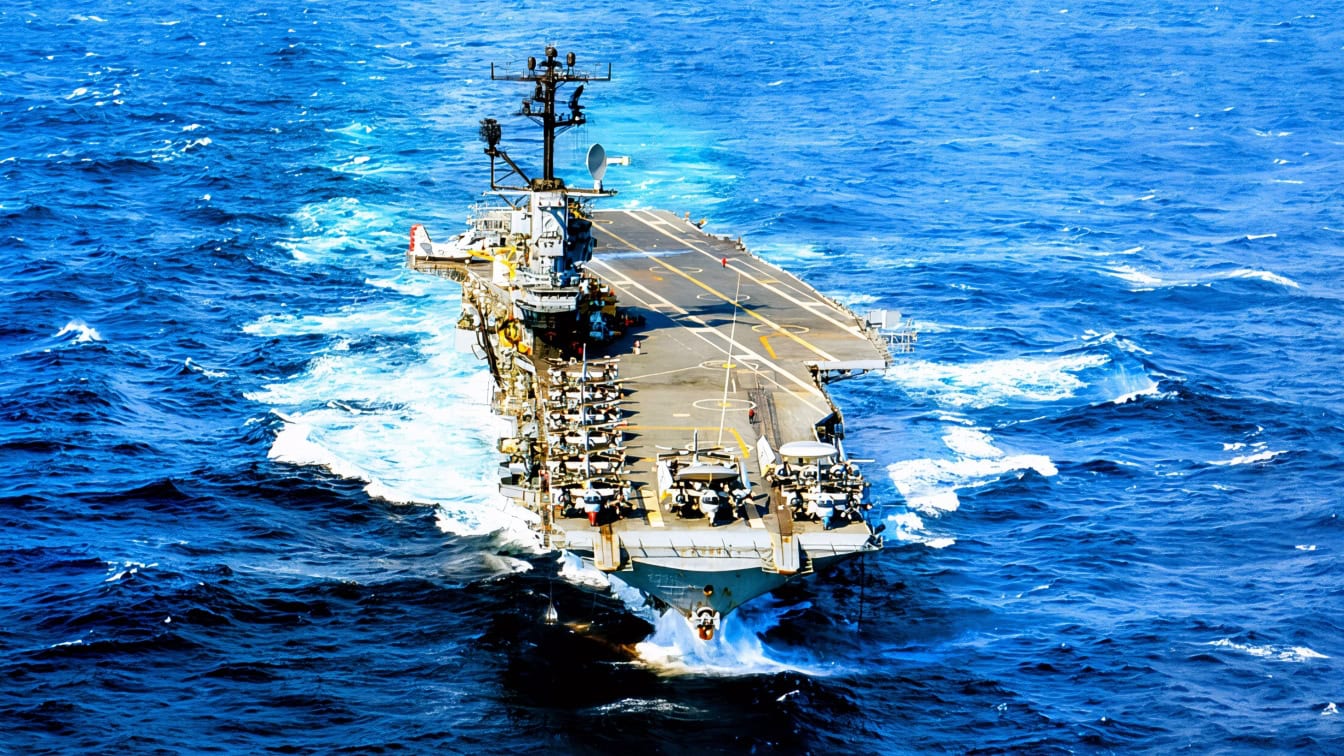
USS Intrepid Aircraft Carrier US Navy Photo
The Essex-class carriers were a significant upgrade from earlier designs, with larger flight decks, greater air-group capacity, and more anti-aircraft guns.
Their size, aircraft capacity, strong damage control, and adaptability helped shift naval power toward US carrier dominance.
Their robust design, adaptability, and sheer numbers — 24 were completed — proved critical to winning the war, and despite sustaining heavy damage, none were lost in combat.
During World War II, the US ordered 32 ships, canceled 8, laid down 24, completed 17 early enough to see combat, and saw 14 in combat.
As a testament to their armor and damage control measures, none were lost to enemy action during World War II.
However, some were heavily damaged, especially by kamikazes late in the war.
Four remain in existence today as museum ships: the Yorktown, the Hornet, the Lexington, and the Intrepid.
The Essex-Class Carriers Were Freed From Treaty Limits
After Japan withdrew from the Washington Naval Treaty in 1936, the U.S. realized it needed to bolster its maritime strength, and Congress passed the Naval Expansion Act on May 17, 1938, raising the aircraft carrier limit to 40,000 tons; the “escalator clause” also applied to battleships.
This extra tonnage allowed the Hornet to be built as a copy of the Yorktown, and the new USS Essex to become the lead ship of a new class.
The Essex class was designed to surpass previous carriers, offering a good balance of speed, armor, and striking power. The class included both “short-hull” and “long-hull” versions, with 24 ships completed from an initial order of 32.
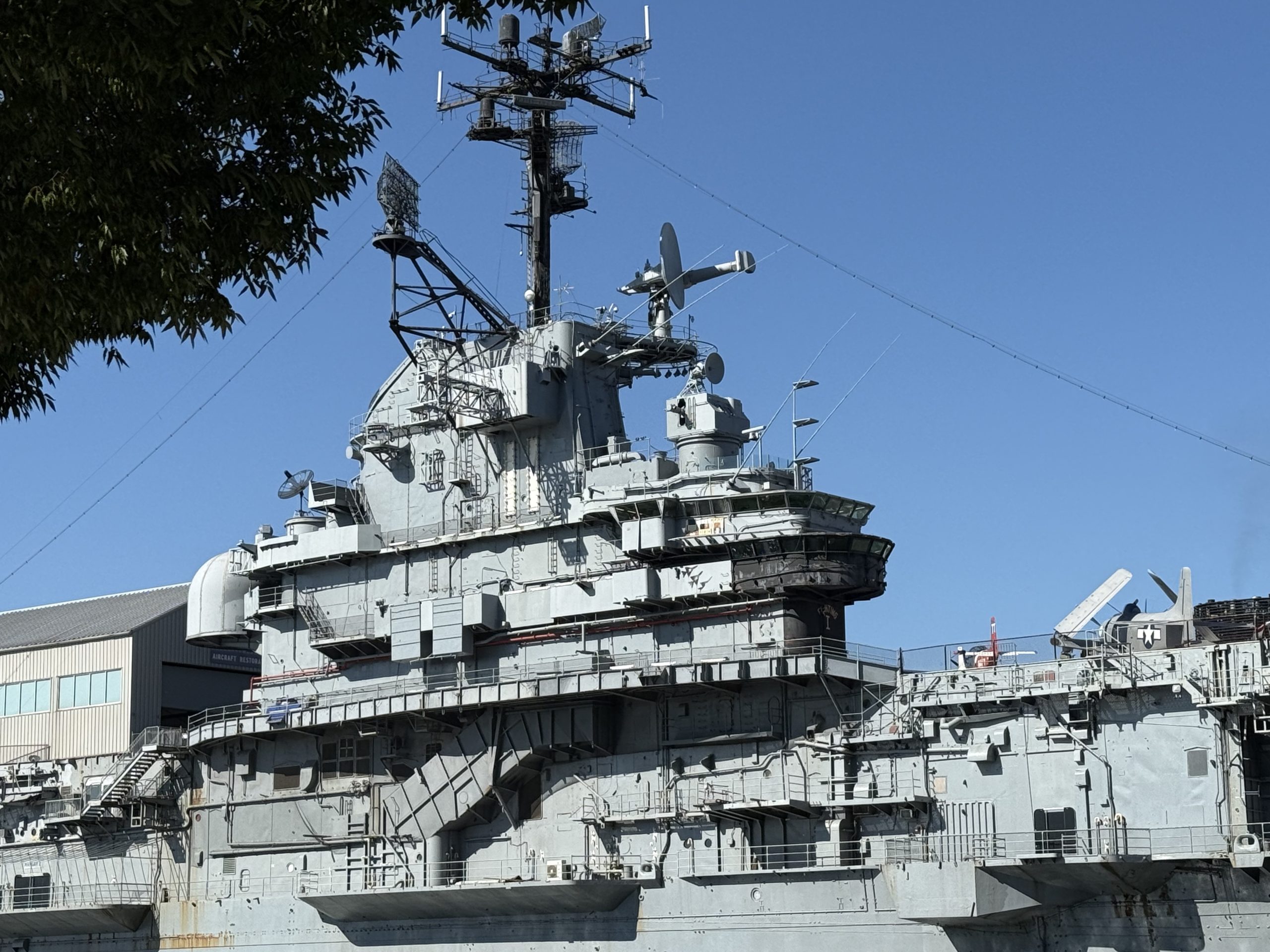
Essex-Class Aircraft Carrier USS Intrepid Tour from 2025. 19FortyFive Original Image.
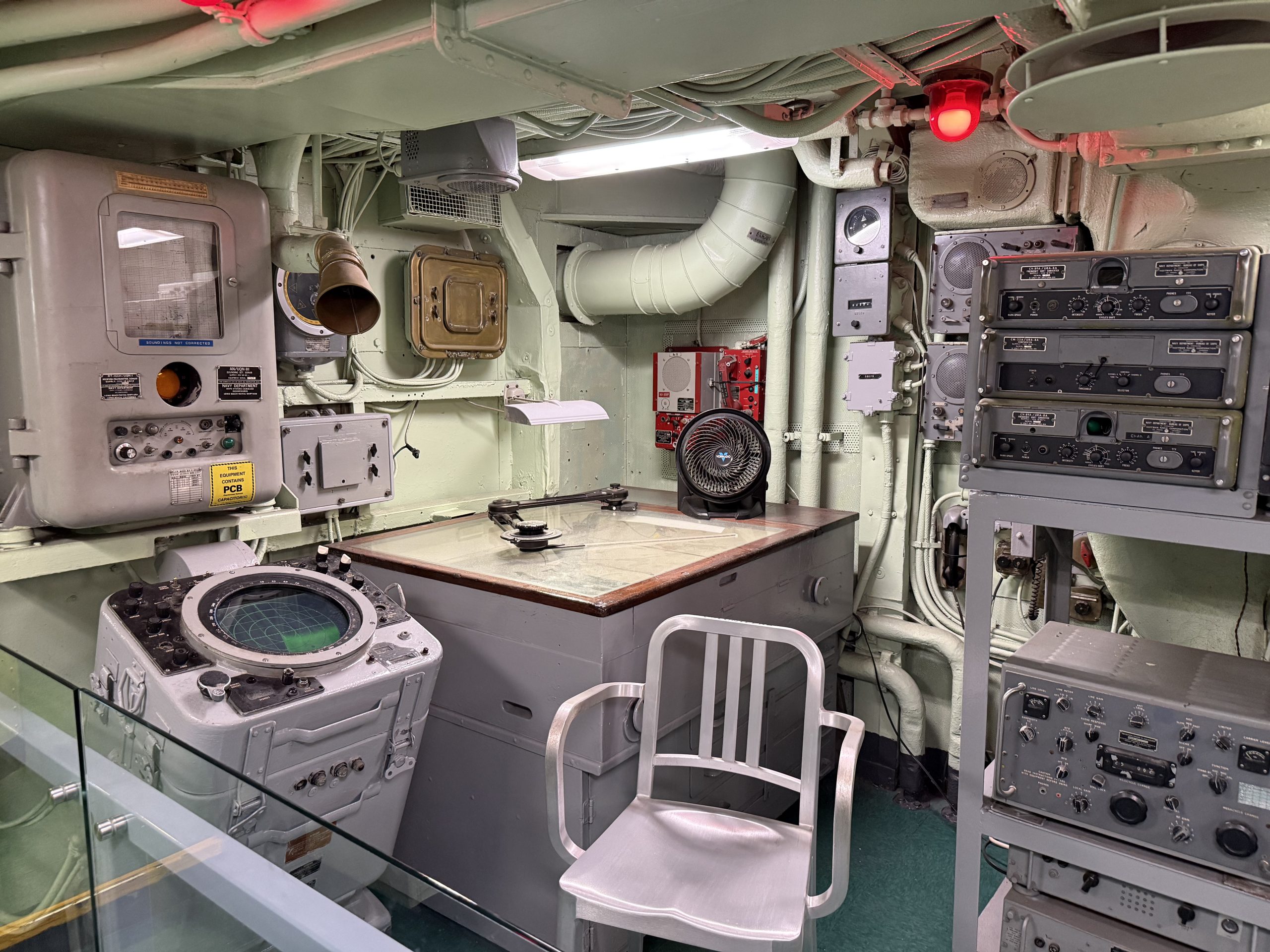
Essex-Class Aircraft Carrier USS Intrepid Tour from 2025. 19FortyFive Original Image.
The Essex-class carriers were crucial to the U.S. victory in the Pacific theater during World War II, operating in major battles and surviving kamikaze attacks.
The Essex carriers swept the Japanese navy from the Pacific, giving the US the firepower to bring an unbeatable force to bear anywhere in the Pacific, something the Japanese could not hope to match.
After the war, the carriers underwent multiple modernizations and upgrades to handle the new jet aircraft and helicopters of the jet age, including angled flight decks.
They remained a significant part of U.S. naval air power into the Korean and Vietnam Wars before larger supercarriers gradually replaced them.
The Essex-Class Carriers Were Designed For Success
The Essex-class carriers were over sixty feet longer (888 feet), nearly ten feet wider (147.5 feet), and more than a third heavier (36,960 tons full combat load) than Yorktown-class carriers.
A longer, wider flight deck and a deck-edge elevator (proven successful on the one-off USS Wasp) enabled more efficient aviation operations, enhancing the ship’s offensive and defensive air power.
The Essex carriers had better armor protection than their predecessors, improved ammunition-handling facilities, increased fuel capacity, and more effective damage-control equipment.
Yet, these ships were also designed to limit weight and the complexity of construction, for instance, incorporating extensive use of flat and straight metal pieces, and of Special Treatment Steel (STS), a nickel-chrome steel alloy that provided the same protective qualities as Class B armor plate, but which was fully structural.
The Essex class was powered by eight Babcock & Wilcox boilers, 150,000 shp (110,00 kW), and propelled by Westinghouse geared turbines with four screw propellers. It had a top speed of 33 knots (38.6 mph). They had a range of 20,000 nautical miles.
Essex-class Carriers Were Loaded For War
The carriers mounted twelve 5-inch (130 mm) 38-caliber guns (in four enclosed twin mounts near the island on the starboard side and four single open mounts on the port side, forward and aft).
These guns had a maximum range of seven miles and a rate of fire of fifteen rounds per minute. The 5-inch guns could fire VT shells, proximity-fuzed shells that detonated when they came within range of an enemy aircraft.
The 5-inch guns could also aim into the water, creating waterspouts which could bring down low-flying aircraft such as torpedo planes.
The ship also carried seventeen quadruple Bofors 40 mm anti-aircraft guns and 65 single Oerlikon 20 mm cannons.
The Bofors 40 mm guns were a significant improvement over the 1.1 in/75-caliber guns mounted on the earlier Lexington and Yorktown classes. Mark 51 optical directors controlled them, with integrated gyro gun-sight lead-angle calculators.
The Essex-class aircraft carriers carried 90 aircraft: 36 F6F Hellcat fighters, 36 Douglas SBD Dauntless dive bombers (later replaced by the inferior Curtiss SB2C Helldiver), and 18 Grumman TBF Avenger torpedo bombers.
The Essex Class Dominated In the Pacific Theater
By the end of 1943, Essex-class aircraft carriers, along with Independence-class carriers, dominated the seas and skies in America’s favor during the Pacific War, starting with the recapture of the Gilbert Islands.
The carriers ensured US Navy air superiority, marking the beginning of the end of Japanese supremacy in the Pacific.
The deployment of the Essex-class carriers was a key factor in Japan’s defeat.
Japanese losses in carriers and, more importantly, the trained aircrews earlier in 1942 were never adequately replaced.
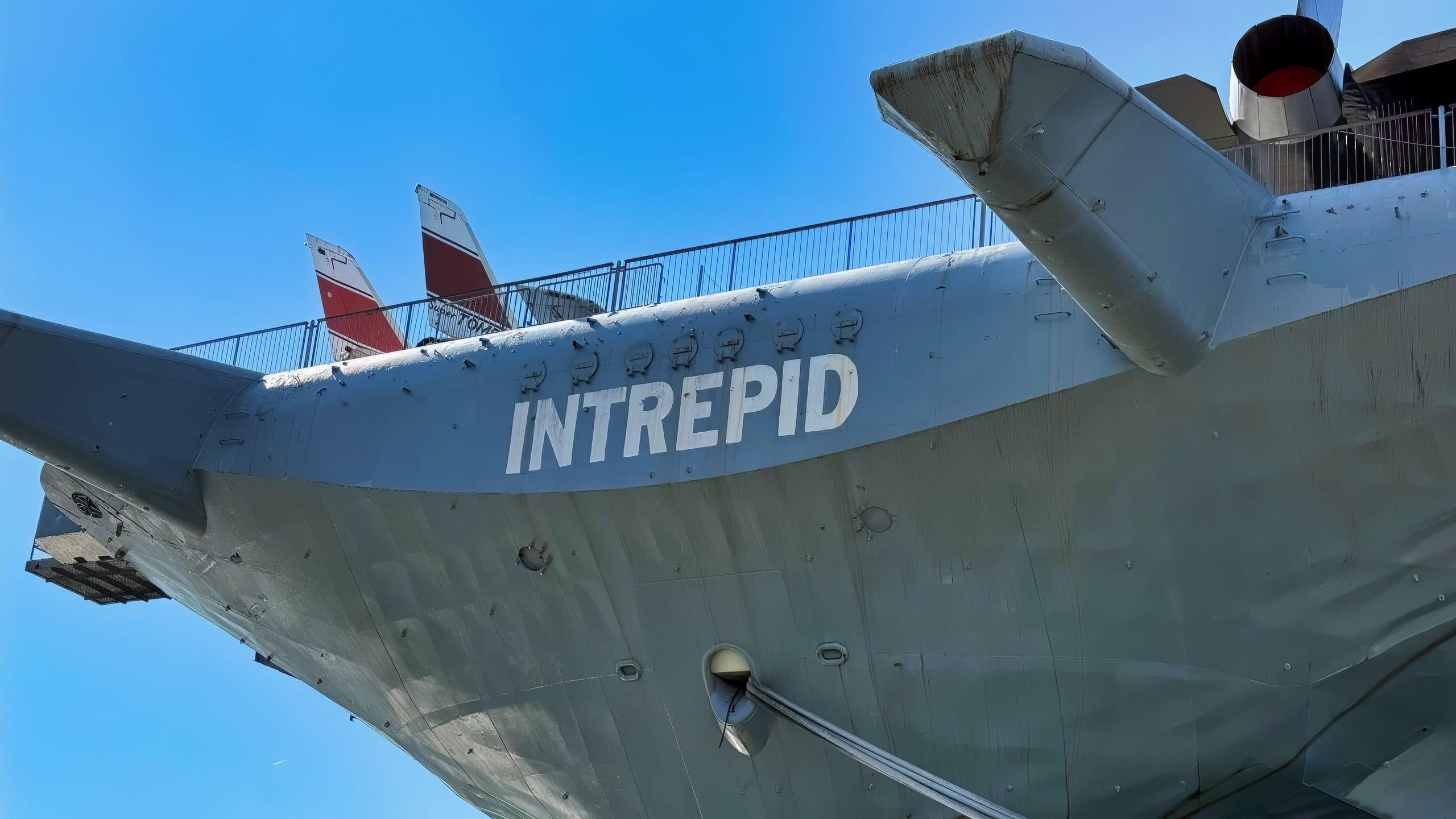
USS Intrepid of the Essex-Class Aircraft Carriers. Image Credit: 19FortyFive.com Original Photo.
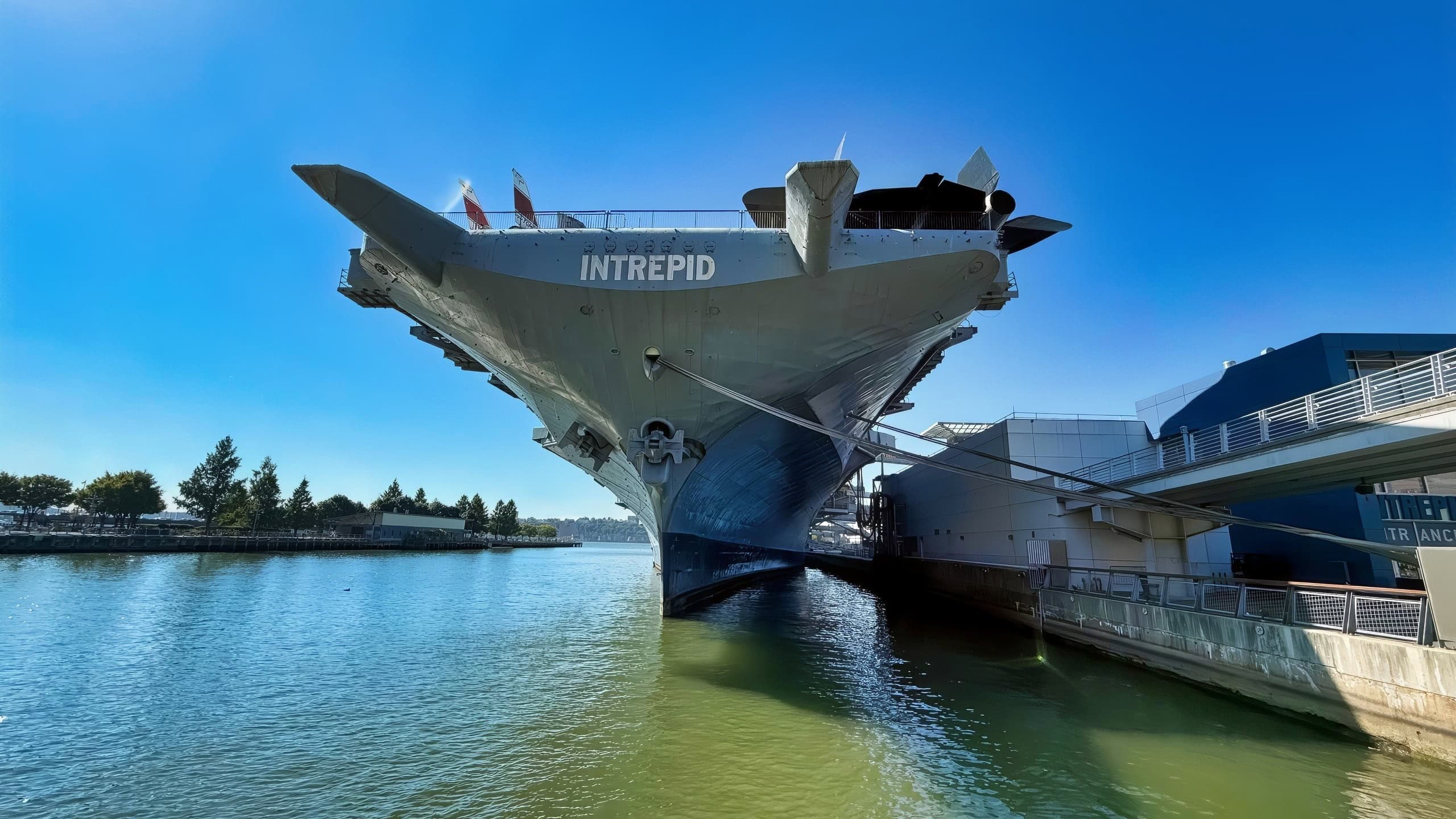
USS Intrepid Essex-Class Aircraft Carrier 19FortyFive.com Photo.
With the massive influx of American carriers and highly trained aircrews, the US dominated the Pacific naval war.
The Essex-class carriers conducted air raids on Japanese-occupied islands, in the reconquest of these islands by protecting the invasion forces, and in the transportation of hundreds of fighter aircraft and thousands of troops.
From late 1944, the Essex-class aircraft carriers were used primarily to attack Japan itself, but the B-29 long-range bombers later took over.
Kamikazes Over Leyte Gulf Changed The War
On October 30, 1944, during the Battle of Leyte Gulf, the Japanese first used kamikazes, as three of them attacked the USS Franklin.
One hit the flight deck with such force that it penetrated to the hangar deck, igniting a massive fire that killed 56 crew members and injured 60 others.
After repairs, the Franklin returned to action and was later hit by Japanese high-altitude bombers in March of 1945, with her flight deck loaded with 30 aircraft warming up and combat-loaded.
That killed 796 crew members, bringing the total of USS Franklin fatalities during the war to nearly 1,000, which was second only to the USS Arizona, which was sunk at Pearl Harbor.
Essex-Class Carriers in The Korean And Vietnam Wars
After World War II had ended, the Essex-class carriers were upgraded to carry larger, heavier jet aircraft. These modifications included jet-blast deflectors (JBDs), greater aviation fuel capacity, stronger decks, and elevators.
They also included British innovations such as an optical landing system, steam catapults, and, ultimately, an angled flight deck.
Twenty-two Essex-class carriers saw extensive use during the Korean War.
The aforementioned Franklin and the USS Bunker Hill, which also suffered massive kamikaze damage, were repaired but never recommissioned.
Thirteen Essex-class carriers saw action during the Vietnam War.
Several Essex-class carriers saw use in the NASA space program as recovery platforms for space aircraft returning from lunar missions.
They were all retired by the late 1970s, except for the Lexington, which served as a training carrier until 1991.
Four of the Essex carriers, the Yorktown, the Lexington, the Hornet, and the Intrepid, serve as museum ships.
Their decades of service highlight the class’s excellent design.
The Essex-class carriers represent arguably the most successful ship design in US Navy history.
About the Author: Steve Balestrieri
Steve Balestrieri is a National Security Columnist. He served as a US Army Special Forces NCO and Warrant Officer. In addition to writing on defense, he covers the NFL for PatsFans.com and is a member of the Pro Football Writers of America (PFWA). His work was regularly featured in many military publications.