
The U.S. Pressures for Escorting the Strait of Hormuz, Allies Respond Coldly
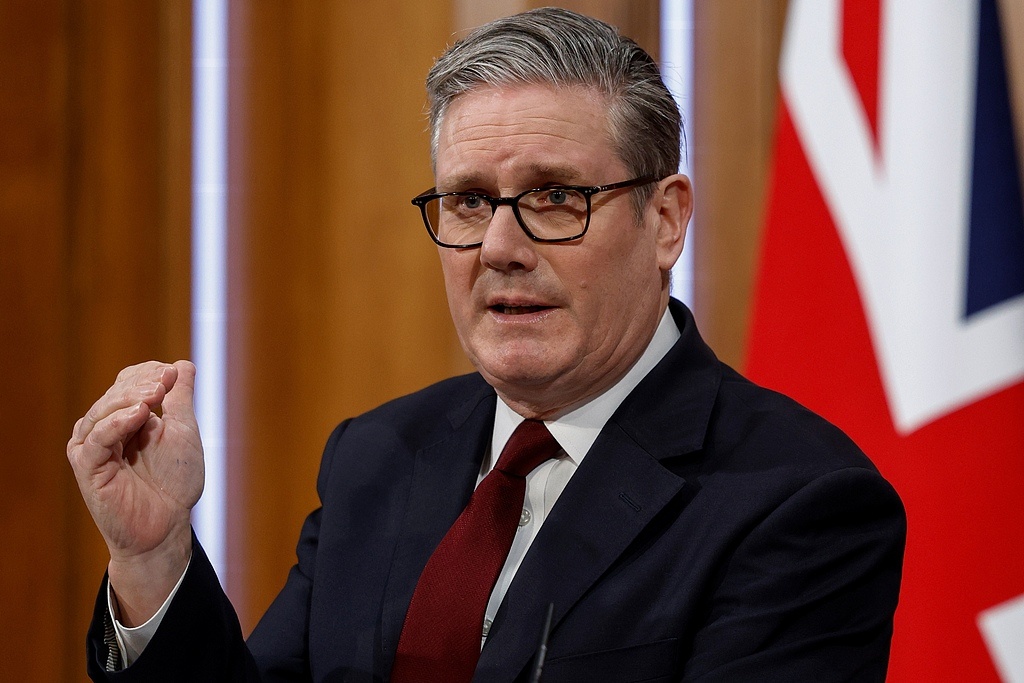
[Global Times Special Correspondent Li Yong, Global Times Special Correspondent Pei Ming] During a phone interview with the Financial Times on the 15th, U.S. President Trump warned that if NATO allies do not take action to assist the U.S. regarding navigation in the Strait of Hormuz, NATO will face a "very bad" future. He believes that Europe is a key beneficiary of navigation in the Strait of Hormuz and "should help ensure that nothing untoward happens there." On the 16th, America's European allies responded. According to AFP, British Prime Minister Starmer stated that any plans aimed at reopening the Strait of Hormuz would not be NATO's action. A spokesperson for German Chancellor Merz said, "NATO is an alliance aimed at defending territory," and the conflicts occurring in the Middle East "have nothing to do with NATO." The New York Times reported that countries have reacted cautiously to the U.S. call to send warships to the Strait of Hormuz for "escort" operations, with some even not responding.
U.S. media: The U.S. government is expected to announce this week that multiple countries have agreed to form an "escort alliance."
During the interview with the Financial Times on the 15th, Trump stated that if allies do not "respond" or respond negatively to the U.S. requests regarding navigation in the Strait of Hormuz, "I think this will be extremely detrimental to NATO's future." National Public Radio (NPR) described that the U.S. has issued a "threat" to NATO allies.
The Financial Times noted that despite Trump's warning, he holds a negative attitude about whether allies will comply. He stated that he has long said the U.S. would provide support to allies, but allies may not necessarily come to the U.S.'s aid when needed, "I have always believed that NATO is a one-way street."
According to the Associated Press, Trump said on the evening of the 15th aboard Air Force One that he has requested "about seven countries" to send warships to ensure the safety of navigation in the Strait of Hormuz. When asked which countries have expressed willingness to assist, Trump said, "It's too early to say." Regarding countries that refuse to assist, he said, "We will remember." Additionally, the Wall Street Journal reported exclusively on the 15th that the U.S. government plans to announce as early as this week that multiple countries have agreed to form a so-called "escort alliance" for the Strait of Hormuz. However, whether the escort operations will begin before a ceasefire between the U.S. and Iran is still under discussion.
British officials: This is not NATO's war, but a U.S.-Israeli action.
The New York Times reported on the 16th that countries are responding cautiously to the idea of sending warships to the Strait of Hormuz. Australia's Minister for Infrastructure, Transport, Regional Development and Local Government, Catherine King, stated on the 16th that Australia does not plan to send warships. AFP reported that countries like Poland and Spain have ruled out the possibility of military involvement. According to reports from Japan's Kyodo News and Britain's Reuters, Trump is expected to meet with Japanese Prime Minister Kishi Nobuo at the White House on the 19th, where he will likely directly request the dispatch of ships. On the 16th, Kishi stated in a Senate budget committee meeting that they are exploring response measures, "No decision has been made regarding the dispatch of escort ships; we are continuing to study what actions Japan can independently take within the legal framework." NPR reported that Japan has hinted that military deployment in the Strait of Hormuz may not comply with its legal provisions.
The Times reported on the 16th that the UK is prepared to use mine-sweeping drones and anti-drone weapons to assist the U.S., but will not send warships to ensure smooth passage through the Strait of Hormuz as called for by the latter. The report stated that this decision may anger the U.S. The BBC quoted Employment and Pensions Minister Pat McFadden on the 16th as saying that the current conflict "is not NATO's war," but rather "a U.S.-Israeli action."
According to AFP, German Defense Minister Pistorius stated on the 16th that Berlin will not participate militarily but is ready to support relevant diplomatic efforts to ensure the safe passage of vessels through the Strait of Hormuz. He said, "The situation we are facing is not of our making... This war broke out without any negotiation." Pistorius also said, "What does Trump expect a few European frigates to do in the Strait of Hormuz, something that the powerful U.S. Navy cannot accomplish alone? This is a question I have been asking myself."
On the 16th local time, foreign ministers of EU member states held a meeting in Brussels, expected to discuss expanding the scope of the EU's original "Shield" escort operation deployed in the Red Sea and other waters to the Strait of Hormuz. According to AFP, countries like Germany, Spain, and Italy have expressed skepticism about this.
The options before the White House are "all extremely challenging."
The New York Times reported on the 16th that the U.S. seems to be struggling with the choice of "to stay or to leave." Trump sometimes hints that the war is almost won, while at other times he seems to acknowledge that fierce battles still lie ahead. Some U.S. and Israeli officials interviewed stated that after the war entered its second week, the U.S. government realized that Iran's willingness and ability to "block" the Strait of Hormuz and impact the global economy exceeded officials' expectations.
"The energy crisis triggered by a war against Iran could further worsen." The Wall Street Journal reported on the 15th that this was the "grim message" conveyed by executives of U.S. oil companies to White House officials recently. Insiders revealed that during a White House meeting last week and recent discussions with the U.S. Secretary of Energy and Secretary of the Interior, CEOs of major U.S. oil companies like ExxonMobil, Chevron, and ConocoPhillips warned that disruptions in energy transport through the Strait of Hormuz would continue to cause fluctuations in the global market. Chevron CEO Wirth said last week on a podcast that, "When we conduct crisis management exercises, the worst-case scenario is always the closure of the Strait of Hormuz in the Middle East. Now the market is very uneasy, hesitant, unstable, and unpredictable."
The Wall Street Journal stated that data from the American Automobile Association shows that the average price of gasoline in the U.S. on the 15th was $3.70 per gallon, up 26% from a month ago, while diesel prices rose from $3.66 per gallon to $4.97 per gallon during the same period. CNN reported that Brent crude oil futures prices surpassed $105 per barrel on the 15th. A senior U.S. official stated that the government knows oil prices will continue to rise, but there is not much that can be done at the moment.
"Continue fighting or find a way to withdraw?" The New York Times article on the 16th stated that as the war enters its third week, Trump faces a severe choice. The White House has found that both options are extremely challenging. Continuing to fight would put more American lives at risk, increase financial costs, and could lead to further fractures in ally relationships. Iran has already proven that it can impose economic costs on the U.S. and its allies. If a withdrawal occurs, many of the U.S.'s objectives—including ensuring that Iran never again has the capability to produce nuclear weapons—remain unachieved.
U.S. President Trump pressured NATO allies to assist in securing the Strait of Hormuz, warning of dire consequences if they do not respond. Allies, including the UK and Germany, expressed reluctance to engage militarily, with some countries outright rejecting participation. Trump indicated he has requested naval support from around seven nations, while discussions about forming an 'escort alliance' are ongoing.
- U.S. President Trump warned NATO allies about the consequences of not assisting in the Strait of Hormuz.
- NATO allies, including the UK and Germany, have expressed reluctance to participate in military actions in the region.
- Trump indicated that he has requested naval support from approximately 7 countries.
- The U.S. plans to announce a coalition for a 'escort alliance' in the Strait of Hormuz soon.
- Concerns about rising oil prices and economic impacts due to potential conflict in the region were highlighted.