
The War of Commercial Ship Drones is Becoming Normalized: The Mechanism Gap in Maritime Security in the Black Sea on NATO's Southeastern Flank
 Dmitri Volkov
The Drone Warfare Against Merchant Ships is Normalizing: The Mechanism Gap in Maritime Security in the Southeastern Flank of NATO's Black Sea
Dr. Klaus Weber|Europe/NATO Line Analysis|October 29, 2026
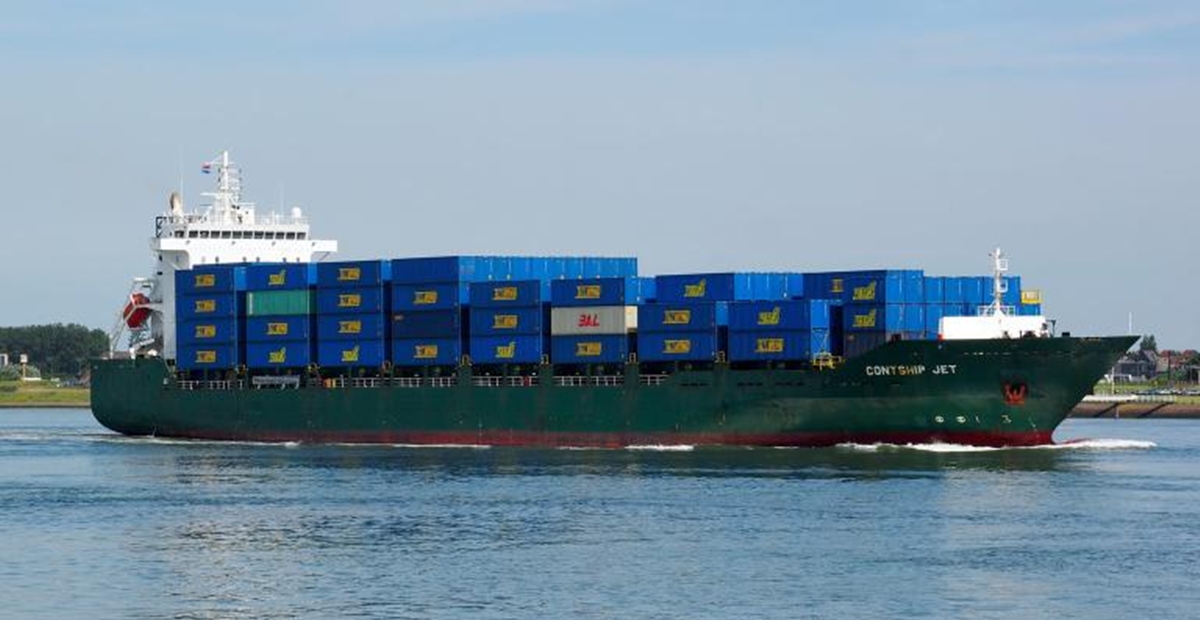 Cover image: VesselFinder, published by Sofia Globe.
Confirmed Facts: On October 28, the Liberian-flagged container ship Contship Jet was attacked by drones while en route from Haifa, Israel, to Constanța, Romania, off the northern coast of Bulgaria. Bulgarian Defense Minister Stoianov stated via national radio that three drones were involved; the Ministry of Defense later confirmed that the navy rescued 18 crew members. Media reports positioned the incident 16 nautical miles off Cape Kaliakra or 21 nautical miles off Shabla, both pointing to Bulgaria's Exclusive Economic Zone (EEZ), beyond the 12 nautical mile territorial sea. The ship caught fire, tilted, and containers fell overboard, as reported by media and a British shipping company; there has been no public attribution by the Bulgarian government regarding the attackers being Russian, so this cannot be concluded definitively.
The military value of this incident lies not in the tactical loss of a single ship, but in the question it raises about the "safety of approaching the Romanian-Bulgarian coastal shipping lanes," which is now embedded in the pricing models of shipowners, charterers, and insurers. Even if the target is not a direct route to Ukrainian ports, as long as the drone threat can spill over to the route leading to Constanța, logistics related to Ukrainian grain, metals, and energy will have to bear higher risks of war, detours, delays, and crew risks. Attacking merchant ships thus becomes a form of low-cost psychological warfare: there is no need to continuously sink vessels; it suffices to raise the friction costs of the entire supply chain through visible instances of abandoned ships, rescues, and operational halts. This strategic intent is an analytical judgment and does not equate to attributing actions to the perpetrators in this case.
The EEZ is indeed a gray area of threshold management. Coastal states enjoy resource rights and partial jurisdiction in the EEZ, which does not equate to sovereignty over territorial waters; the attacked vessel is a Liberian-flagged merchant ship, not Bulgarian armed forces, vessels, or aircraft. NATO's Article 5 conditions a response on "armed attacks" against allies, and the geographical and military applicability outlined in Article 6 does not automatically cover this situation. Therefore, this is not an automatic trigger for Article 5. On the contrary, Article 4 allows members to consult when their security is threatened, which is a more relevant political tool: it can be used to share evidence, unify attribution thresholds, coordinate escorts and air defense, but does not presuppose a collective military response. The effect of the gray area is that the risk is sufficient to alter shipping behavior, yet does not necessarily compel NATO to cross the escalation threshold.
On the same day, the defense ministers of Bulgaria, Romania, and Turkey pledged to strengthen intelligence sharing, situational awareness, and early warning, and condemned the attacks on merchant ships. This is a necessary starting point, but it remains a mechanism rather than immediate protection: the statement did not publicly share a common air situation picture, drone engagement rules, merchant ship warning corridors, or escort/rescue duty arrangements among the three countries. The unmanned mine-clearing vessel missions that the UK and France plan to deploy after hostile actions address mine clearance and post-war route restoration; they cannot detect, intercept, or attribute drones approaching merchant ships. Treating mine-clearing capabilities as a counter-drone solution precisely obscures the current capability gap.
Turkey's restrictions on the passage of warships through the straits under the Montreux Convention have reduced the space for naval reinforcements and Russian rotations in the Black Sea, but this does not equate to closing the merchant shipping lanes. The actual consequences are dual: merchant ships can still enter and exit, but under insurance pressure, they are more likely to reduce their routes close to the northern coasts of Bulgaria and Romania, diverting to transshipment and multimodal transport around Constanța; NATO also finds it difficult to quickly supplement nearshore low-altitude defenses solely with external surface vessels. What is needed next in the southeastern Black Sea is not another principle statement, but a verifiable alert chain for civilian vessels, transnational low-altitude surveillance, counter-drone responsibility zones, and maritime and aerial rescue procedures.
Sources and Verification
- Sofia Globe, October 28, 2026, Drone attack on container ship off Bulgaria’s Cape Kaliakra (ship name, flag, course, location, 18 rescued, three drones, and uncertainties).
- Sofia Globe / Bulgarian Ministry of Defense post-meeting statement, October 28, 2026, Meeting of the three defense ministers and joint statement.
- NATO, Articles 4, 5, and 6 of the North Atlantic Treaty (legal framework).
- Turkish Ministry of Foreign Affairs, February 28, 2022, Implementation of the Montreux regime in the straits.
original_url:https://sofiaglobe.com/2026/10/28/drone-attack-on-container-ship-off-bulgarias-cape-kaliakra/
On October 28, 2026, a drone attack targeted the Liberian-flagged container ship Contship Jet off Cape Kaliakra, Bulgaria, resulting in the rescue of 18 crew members. The attack involved three drones, raising significant concerns about maritime safety in the Black Sea. Bulgarian officials have not officially attributed the attack to any party, although there are suspicions of Russian involvement. In response, defense ministers from Bulgaria, Romania, and Turkey committed to improving intelligence sharing and situational awareness regarding maritime threats.
- A drone attack occurred on the Liberian-flagged container ship Contship Jet off Bulgaria's Cape Kaliakra.
- The attack involved three drones and resulted in the rescue of 18 crew members.
- The incident raises concerns about maritime safety in the Black Sea region.
- The Bulgarian government has not officially attributed the attack to any party, though Russia is suspected.
- Defense ministers from Bulgaria, Romania, and Turkey pledged to enhance intelligence sharing and situational awareness.