

Summary and Key Points: Sean Spoonts, a former US Navy aviation ASW operator, argues the Russian Kilo-class ‘black hole’ reputation is unearned. Submerged, a Kilo is quiet only at 3 knots, then must snorkel for hours on diesels that quadruple its acoustic signature and leave it deaf without a towed array, while P-3 and S-3 radars spot the snorkel. Three Kilos have been hit pierside. The sub Spoonts truly feared was the Victor III, which struck USS Kitty Hawk.
The Kilo-Class Is No Black Hole Submarine:
The Russian Kilo-class submarine has been the subject of endless articles claiming it’s so quiet and stealthy it’s a “Black Hole” in the water, supposedly undetectable.
I thought it was a joke, as submarines go.
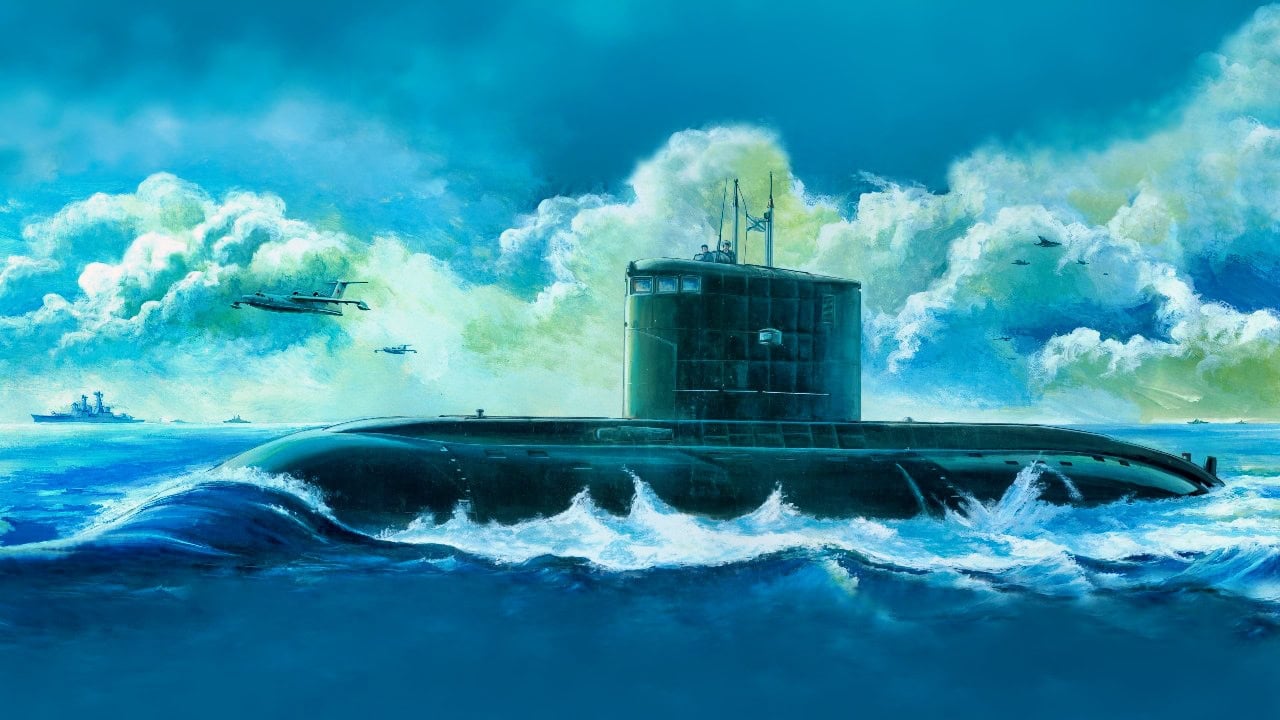
Kilo-Class Submarine
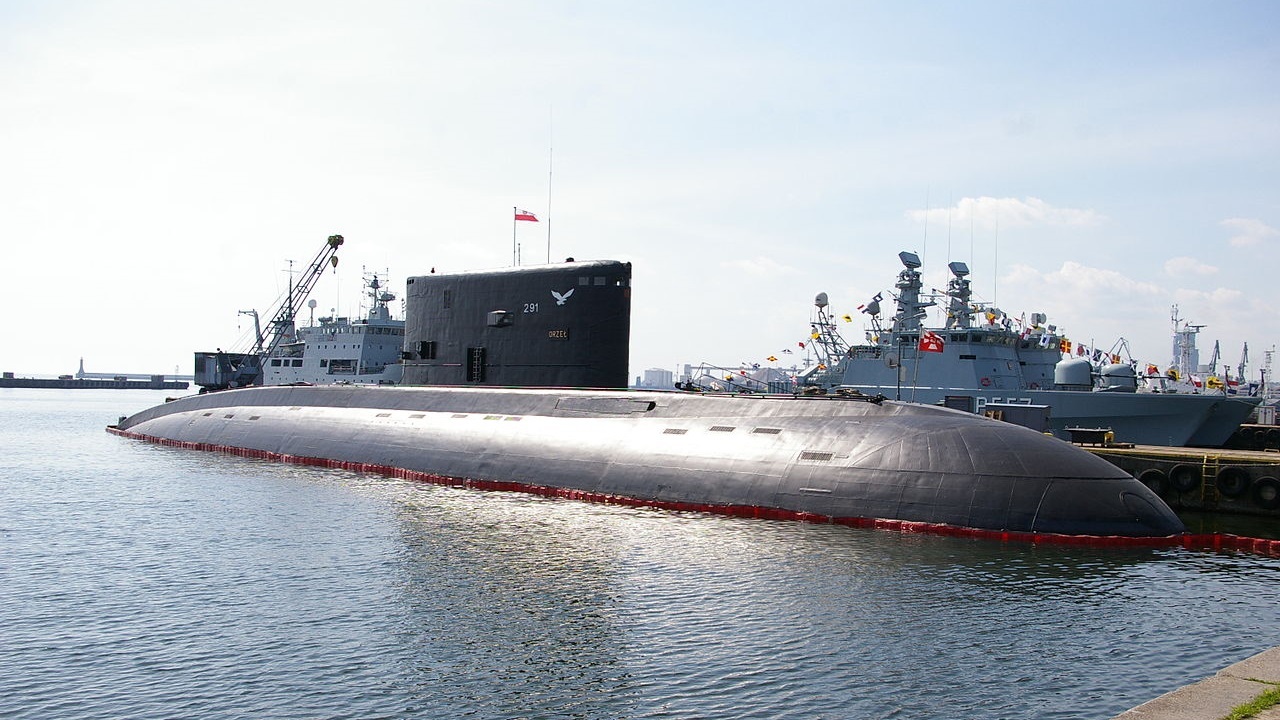
Polish Navy submarine, Kilo-Class.
I admit to some bias when it comes to submarines, having been an ASW operator myself and knowing a bit about what our own submarines could do, but I’ve always thought that the hype over the Kilo was unwarranted.
We Did Not Fear Or Respect The Kilo As A Serious Threat
In my experience, and among my peers, we respected some submarines, like the Project 670 Skat (NATO designation Charlie) class, which could fire eight medium-range cruise missiles at one of our carriers and still do a good job in anti-ship or anti-submarine warfare, and we feared others.
Submarines like the Project 671RTM/RTMK Shchuka (NATO designation Victor III).
Between 1974 and 1984, two US submarines and the aircraft carrier USS Kitty Hawk collided with Victor IIIs, and the collisions went undetected.
Before you chalk that up to poor seamanship, consider this.
The Russians captaining those subs were highly confident in the Victor III’s stealth to press that close.
We didn’t fear, or have much respect for, the Russian Kilo.
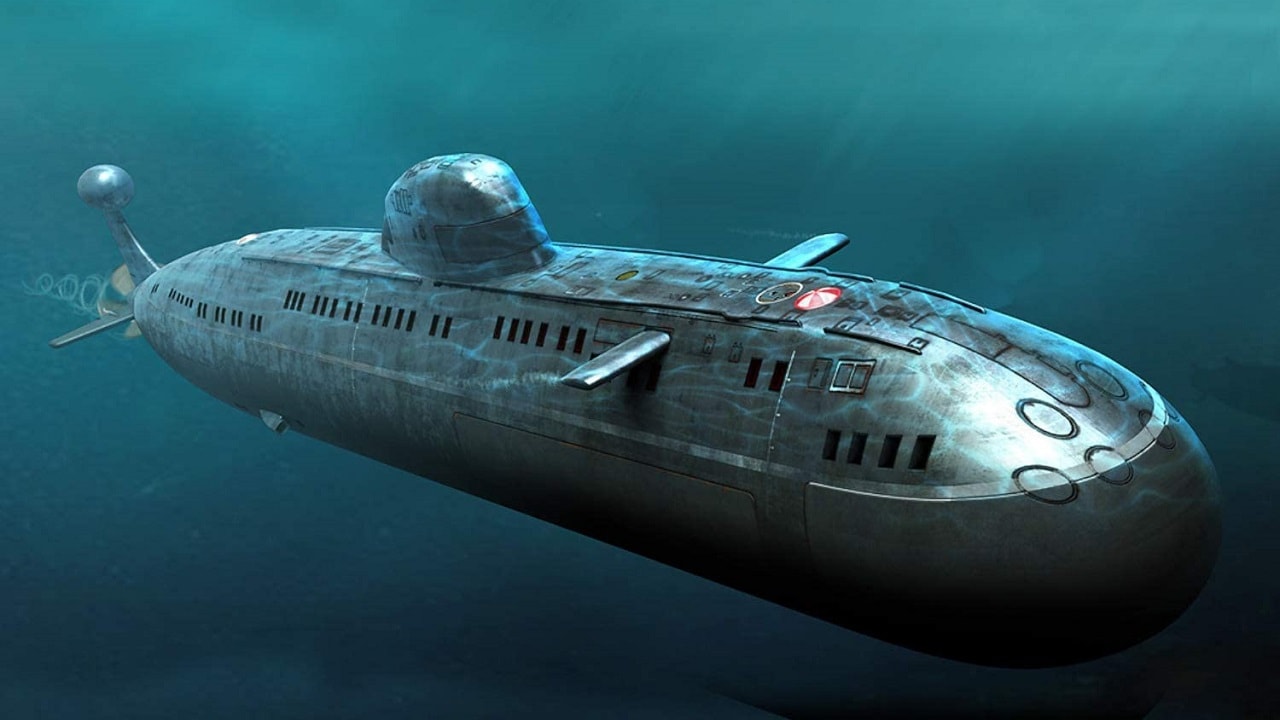
Victor III-class Submarine.
Diesel Submarines Like The Kilo Are Quiet, but That Comes at a Steep Price In Terms Of Combat Effectiveness
Diesel submarines were more of a nuisance than a real threat.
While it was true that a diesel submarine’s acoustic detection range while running submerged on its electric motors was about half that of a nuclear submarine, that stealth came with a dangerous trade-off for the diesel sub: submerged endurance.
A Kilo was said to spend up to 45 days submerged at 3 knts.
It would then have to come to periscope depth, raise a snorkel, and run its very noisy diesel engines for hours to recharge its batteries.
That noise would more than quadruple its acoustic detection range, and the snorkel would be visible on radar, along with the wake it leaves behind.
Near The Surface To Recharge Its Batteries For Hours, The Kilo Is A Sitting Duck
A US attack submarine would hear that Kilo from many miles away and could approach it at high speed to kill it.
I say high speed here because a Kilo running its diesel engines was effectively deaf.
The Russians didn’t give the Kilo a towed-array passive sonar system, and with its engines running, it puts so much noise into the water that its hull-mounted hydrophones hear little else.
From the air, the search radar on a P-3 Orion or S-3A Viking would see that snorkel and know exactly what it was. It would call it in, alerting every ship and sub in the area and attack it while it was shallow and relatively helpless.
The Kilo Had ‘Short Legs’ And Was Tied To Its Port
That lack of endurance has proved deadly to Kilo-class submarines in recent history.
At least two Russian Kilos and one Iranian Kilo have been damaged or destroyed while sitting at the pier.
A nuclear submarine that doesn’t need refueling for years and can stay submerged as long as the crew’s food supply lasts is far less likely to get caught at the pier and sunk.
Because of this limited submerged endurance, the Kilo is expected to operate within a couple hundred miles of its home port.
After leaving port, it would submerge, patrol, and then return in a couple of weeks as its batteries ran low, surface safely, and return to the pier.
That creates liabilities for the Kilo.
A clever US sub skipper has only to wait quietly outside that port for the Kilo to leave or return, then kill it with a torpedo it can’t evade.
No need to hunt it in the open ocean when you have a pretty good idea where it will be every two to three weeks. You will also have a pretty good idea of the time too.
The Kilo will set sail or return in the darkest hours of the night to avoid visual detection.
The Kilo Was Quiet By Russian Standards, Not By Ours
The Russians hailed the Kilo’s quietness while submerged, but remember that this quietness is measured by Russian standards and the capabilities of their ASW acoustic gear.
Which is nowhere near as good as the US Navy’s.
I can personally attest to the quietness of our own submarines against the standard set by superior acoustic detection systems.
Unless they wanted us to hear them in training exercises, we really couldn’t.
I’ve heard tapes of the Kilo operating underwater, and while relatively quiet, you can tell it’s a submerged diesel-electric submarine almost immediately by the slow revolutions of its propeller. That is a deadly “Tell” on the Kilo.
Any Submarine Can Be A “Black Hole”
About this “Black Hole” stuff.
Any submarine hovering at depth in neutral buoyancy with its engines not turning the screws is an acoustic black hole.
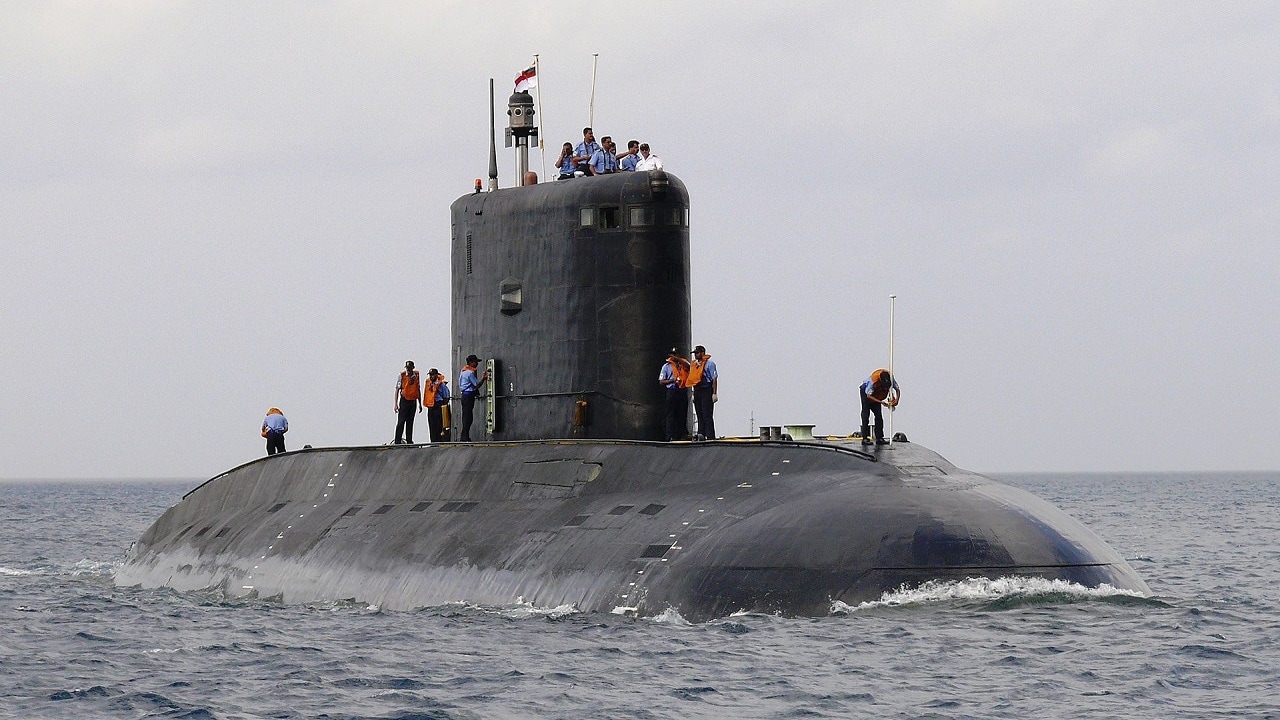
Kilo-Class Submarine.
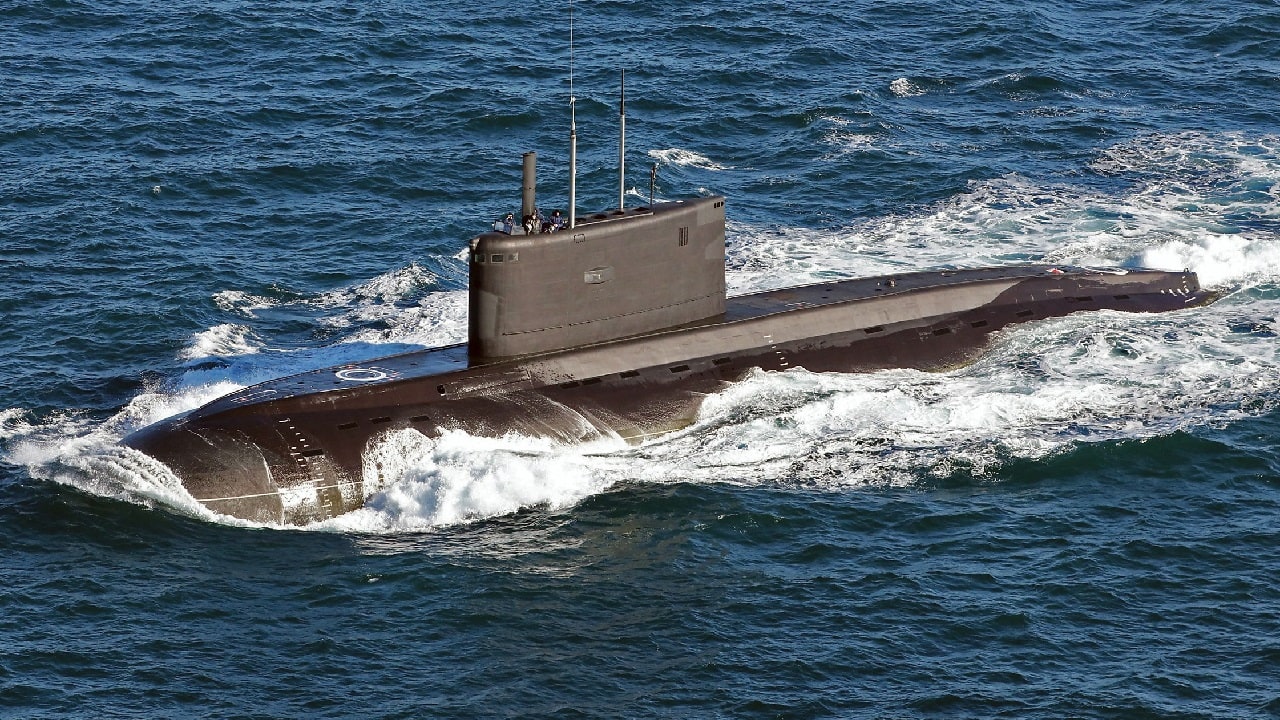
Pictured is a Kilo-Class Russian Submarine in the English Channel. The image was taken from Royal Navy Wildcat HMA2 Helicopter of 815 Naval Air Squadron. Kilo class is the NATO reporting name for the diesel-electric attack submarine.
It puts so little noise in the water that you’d have to be right on top of it to hear anything at less than 400 feet; beyond that, forget it.
For a Kilo to run quietly, it can only go about 3 kts submerged, which is about the average person’s walking speed. What good is that really in combat at sea?
A Kilo might sneak up on a stationary target, but its chances against a carrier task force or a US submarine all but require them to wander into front of a Kilo already waiting for them.
That is very unlikely
The Russians Sold Kilo Subs like Popcorn
Finally, for a submarine so dangerous and deadly, the Russians sure are loose with Kilos.
These submarines have been sold to eight countries outside of Russia.
By contrast, while the US has recently decided to sell Australia three Virginia-class submarines, previous sales have been old diesel subs of 1960s vintage or older. We don’t sell our best stuff to anyone.
The Russians have been saying the same about the forty Kilos they have wholesaled to other countries.
Oh, and Fly Navy!
About the Author: Sean Spoonts
Sean Spoonts is the former Editor-In-Chief of SOFREP.com. He is a military analyst, writer, and commentator whose work has appeared in Newsweek, CNS News, Ukrinform, and various military/veteran media networks and professional publications, including the Military Intelligence Professional Bulletin. He is a U.S. Navy veteran, having served as an Aviation Anti-Submarine Warfare Operator and Search and Rescue Helicopter Aircrewman.