
Three Powers Just Built a Nuclear-Armed NATO Without America
 S.W
S.WThree Powers Just Built a Nuclear-Armed NATO Without America
Something happened in Mecca on Thursday that should make every strategist in Washington stop and re-read their assumptions about the Middle East. While the Pentagon was issuing memos begging defence contractors to speed up weapons production for a war that has now dragged into its sixth month, the leaders of Saudi Arabia, Turkey, and Pakistan signed a mutual defence pact that looks an awful lot like Article 5 wearing different letterhead.
The Makkah Joint Defence Agreement — yes, they used the British spelling — contains the kind of language that alliance theorists spend careers debating. An armed attack against any of the three signatories "is to be regarded as an attack against all three." That is not a consultation mechanism. That is not a memorandum of understanding that expires after five years. That is, in every practical sense, a collective defence guarantee signed by a NATO member, a nuclear-armed power, and the world's largest oil exporter.
Let that combination sit for a moment. Turkey brings NATO's second-largest standing army and a defence industrial base that just sold Saudi Arabia its largest-ever drone export contract. Pakistan brings somewhere north of 150 nuclear warheads, combat-hardened troops already deployed in the Kingdom, and fighter squadrons. Saudi Arabia brings the money, the geography, and — critically — the motivation.
What This Pact Actually Does
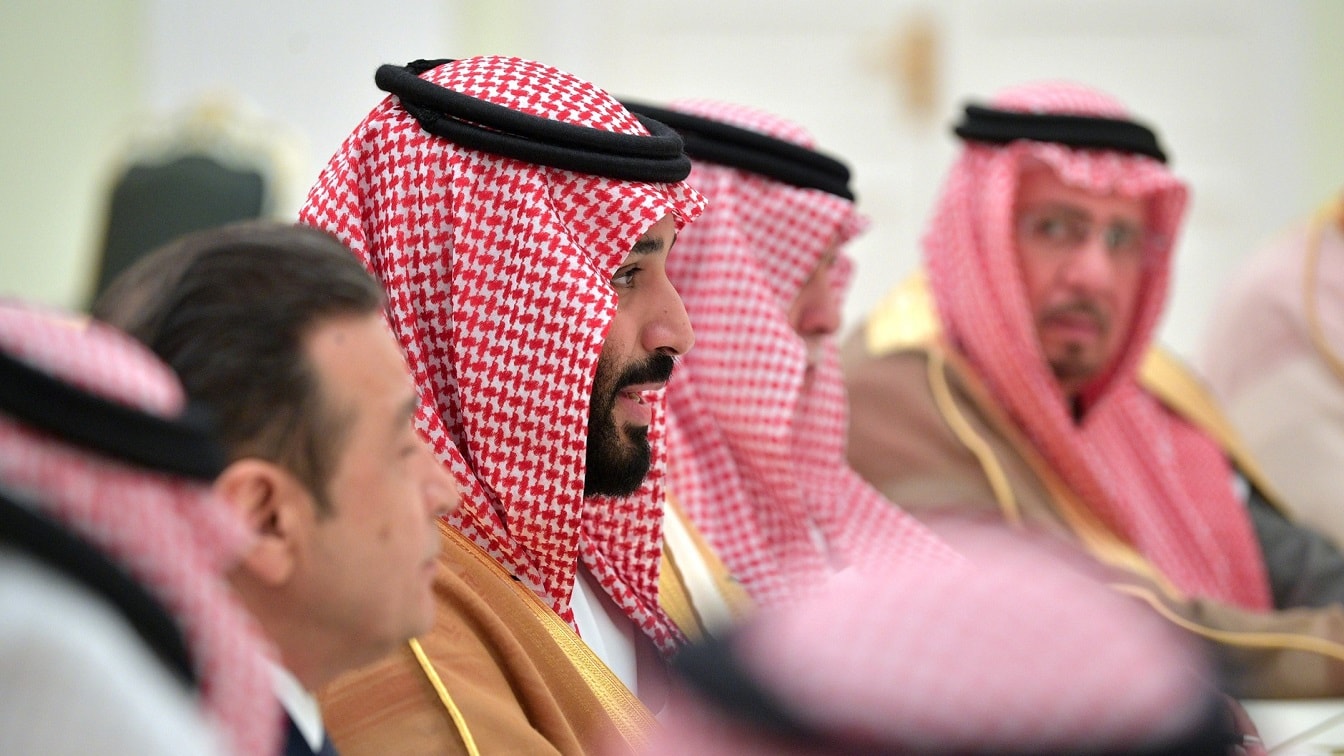
The agreement, signed by Crown Prince Mohammed bin Salman, President Recep Tayyip Erdoğan, and Prime Minister Shehbaz Sharif at Al-Safa Palace in Mecca, establishes a trilateral collective defence arrangement with a permanent secretariat based in Saudi Arabia. Turkish Foreign Minister Hakan Fidan told state-run Anadolu Agency that the mechanism could be triggered by a formal request from any member, with responses ranging from intelligence-sharing and logistics support to the "deployment of military units."
This is not a NATO clone — not yet, anyway. Analysts including Ozgur Unluhisarcikli of the German Marshall Fund have been careful to describe it as "a framework for closer strategic, military, and defence-industrial coordination" rather than a fully fledged mutual defence treaty. But the direction of travel is unmistakable. The pact builds on a bilateral Saudi-Pakistan defence agreement signed in September 2025 at Al-Yamamah Palace, which itself came just days after an Israeli airstrike on Doha that rattled every capital in the Gulf.
What was a bilateral arrangement is now trilateral. And Fidan has already signalled that Egypt — which he described as a "natural partner" — may join "at the next stage." Other nations, unnamed, have expressed interest.
Why Now — And Why Without Washington
The timing is not subtle. The US-Iran war, which began on 28 February 2026 after US-Israeli strikes killed Supreme Leader Ali Khamenei, has been going badly in ways that directly affect Saudi calculations. Riyadh hosts American military assets. Those assets have made Saudi Arabia a target. Iranian-backed Houthi fighters in Yemen and Shia militias in Iraq have struck Saudi territory repeatedly. On the same day the Makkah pact was announced, Houthis claimed attacks on Saudi forces in the Yemeni city of Mocha and on a major Saudi oil refinery on the Red Sea coast.
Meanwhile, the Pentagon is running through munitions faster than it can replace them. Deputy Defence Secretary Steve Feinberg sent a memo this week — obtained by the Washington Post — telling defence contractors that "years-long development cycles are not acceptable" and demanding plans for "significantly faster, more aggressive delivery schedules." For a country that has spent decades telling Gulf allies that American security guarantees are ironclad, watching Washington beg industry to speed up is not exactly reassuring.
Then there's the Strait of Hormuz. Iran has effectively blockaded it for months. On Saturday — the same day the pact was being digested by regional capitals — an Iranian missile struck a UAE-flagged ADNOC oil tanker transiting the strait. The UAE Foreign Ministry called it an "act of piracy." Iran's security council chief, Mohammad Bagher Zolghadr, laid out six conditions for reopening the waterway, including an end to "war and aggression against Iran and its allies in Lebanon, Palestine, Yemen, and Iraq forever." That is not a negotiating position. That is a demand for surrender.
The Saudis have watched this unfold and drawn a conclusion that should worry Washington deeply: the American security umbrella has holes in it, and when you're the one getting rained on, you buy your own.
The Math That Makes This Work
The alliance's complementary strengths are genuinely unusual in modern defence pacts. Turkey has spent the last decade building a defence industry that can produce everything from armed drones to corvettes — systems that Saudi Arabia needs and has been blocked from acquiring from some Western suppliers due to human rights concerns. Saudi Arabia has the financial depth to fund procurement at scale without having to ask a parliament for approval. Pakistan has the nuclear deterrent, the army size, and — in a detail that has gone under-reported — several thousand troops already deployed in the Kingdom alongside fighter aircraft, drones, and an air-defence system.
According to Al Jazeera, negotiations for the trilateral pact began after the 7 October 2023 Hamas attack on Israel and accelerated after the US-Iran war broke out. The foreign ministers of all three countries met in Riyadh in March 2026 to hammer out the framework. This was not a rushed document signed in a panic. It was built methodically, over nearly three years, as the region's security architecture crumbled around it.
The Tests Are Already Coming
No alliance survives its first test on paper. The Makkah pact is already being tested in real time. Houthi attacks on Saudi positions in Yemen have intensified. A fire broke out at Saudi Aramco's Jazan refinery, reported by the Energy Ministry on Saturday. Omani-mediated talks over the Strait of Hormuz are progressing, according to both Muscat and Tehran, but Iran's demand for a toll — possibly as high as seven percent of cargo value — amounts to a permanent taxation regime on global shipping that no major power has accepted.
Iran's response to the pact has been dismissive but revealing. MP Ebrahim Rezaei posted on X that "a paper agreement with Türkiye and Pakistan will not bring them security, just as years of one-sided dependence on the Americans did not bring them security." The language is condescending, but the fact that Tehran felt the need to respond at all tells you something. A nuclear-armed Pakistan in a formal alliance with Saudi Arabia changes Iranian threat calculus in ways that didn't exist a week ago.
Israel has been conspicuously silent. Neither the Prime Minister's Office nor the Foreign Ministry has commented. But the three signatories have not hidden their concerns about Israeli operations. Erdoğan said in July, standing next to Sharif in Istanbul, that Israel "must not be able to dynamite" a US-Iran deal. The Turkish leader described Israel's government as "war-addicted" — language that leaves little room for the kind of quiet security cooperation that once existed between Ankara and Jerusalem.
What Happens Next
The short answer is: we are about to find out whether three countries with very different threat perceptions, different relationships with Washington, and different domestic political pressures can coordinate defence policy in a crisis. Turkey is a NATO member. Pakistan is historically close to China. Saudi Arabia is still, formally, America's most important Arab ally. These are not natural bedfellows.
But necessity makes strange allies, and the necessity here is hard to overstate. The old order — American-led, Gulf-dependent, anchored by the assumption that Washington would always be the security provider of last resort — is not coming back in its previous form. The Saudis have read the room. They watched Washington nearly run out of Tomahawks. They watched Iran shut down a waterway that carries a fifth of the world's oil. And they decided, entirely rationally, to build an insurance policy.
The real question is not whether the Makkah pact will hold — it's too early to know that. The real question is whether Washington understands what just happened. Three of the most strategically significant countries in the Muslim world just signed a mutual defence agreement in Islam's holiest city, and they did it without asking permission, without seeking American endorsement, and without waiting for a green light from anyone. That is not a snub. That is a structural shift in who gets to design Middle Eastern security — and who gets left out of the room.
Saudi Arabia, Turkey, and Pakistan signed a mutual defense pact in Mecca, establishing a trilateral defense arrangement that includes a collective defense guarantee. This agreement allows for military unit deployment and intelligence sharing, reflecting a significant shift in regional security dynamics amid ongoing tensions related to the US-Iran conflict. The pact indicates a growing military cooperation among these nations, with Turkey and Pakistan contributing substantial military capabilities.
- Saudi Arabia, Turkey, and Pakistan signed a mutual defense pact in Mecca.
- The pact includes a collective defense guarantee similar to NATO's Article 5.
- Turkey has the second-largest standing army in NATO, while Pakistan possesses over 150 nuclear warheads.
- The agreement allows for military unit deployment and intelligence sharing among the signatories.
- The pact was signed amid ongoing tensions in the region, particularly related to the US-Iran conflict.