
Tiberius lands $500M deal for its ramjet artillery shell
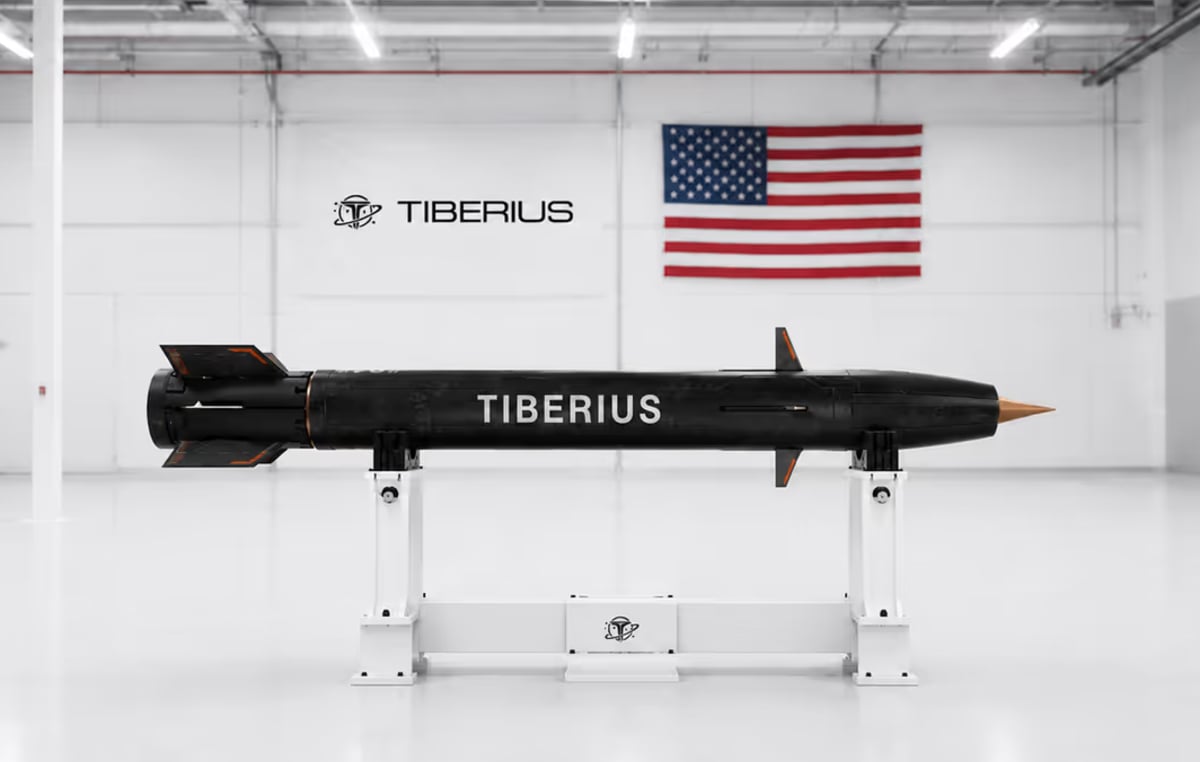
Tiberius Aerospace, the California-based developer of a ramjet-powered 155 mm artillery shell, said it has signed a $500 million contract to manufacture, license and distribute the round, called Sceptre, with a group of British technology partners.
The company announced the deal on Oct. 1. It did not name the U.K. partners or disclose the number of rounds covered, the end customers or the production timeline.
The cooperation runs under a Technical Assistance Agreement, the U.S. State Department authorization required under International Traffic in Arms Regulations before an American defense company can share controlled technical data with foreign partners. The agreement allows Tiberius and the British consortium to work together on engineering, technology development and manufacturing.
Sceptre is designed to give standard artillery much longer reach. Most extended-range shells use a short rocket burn after leaving the barrel. Sceptre instead carries liquid fuel for a ramjet, an air-breathing engine with no moving parts that keeps pushing the shell for much of its flight. According to Tiberius, the round can strike targets up to 150 km (93 miles) away at speeds of about Mach 3.5, flies above 19,800 meters (65,000 feet), and fires from existing NATO-standard 155 mm howitzers without modification.
In April 2026, Tiberius fired Sceptre from a NATO-standard 155 mm howitzer in New Mexico and achieved ramjet ignition in flight, which the company said was the first time a liquid-fueled ramjet projectile had been launched this way. Tiberius said the next phase of the program would move to larger ranges for further testing, validation and certification.
The company first unveiled Sceptre in May 2025 at the Future Artillery conference in London, after operating in stealth since its founding in 2022. Development has since included work under contract with the U.K. Ministry of Defence, support from the U.S. Defense Innovation Unit and a Cooperative Research and Development Agreement with the U.S. Army Combat Capabilities Development Command Armaments Center.
Tiberius describes the contract as the first scaled deployment of its Defense-as-a-Service model. Under that approach, the company develops, tests and validates a weapon, then licenses the technology to qualified manufacturers and partner nations so they can produce it locally. An AI-based platform the company calls GRAIL links requirements, engineering, suppliers, export compliance and manufacturing across those partners.
“The West’s greatest strategic advantage is the freedom to invent, compete and build,” said Chad Steelberg, founder and CEO of Tiberius Aerospace, who previously co-founded the artificial intelligence company Veritone. “Our ambition is to turn that advantage into our greatest weapon: the collective innovative power of the free market. GRAIL connects that ingenuity, while Defense-as-a-Service provides the commercial model to bring it into service. Sceptre is the first scaled manifestation of that vision.”
“Deterrence depends not only on having the right capability, but on maintaining a strong industrial and technological base that can respond rapidly to emerging threats. The collaboration on SCEPTRE demonstrates the value of bringing together UK and US technological expertise to explore advanced artillery technologies and strengthen transatlantic defence cooperation. Initiatives such as this help mature future concepts and reinforce the industrial relationships that underpin alliance advantage,” said Gen. Sir Roly Walker, Chief of the General Staff of the British Army.
“Modern conflict has reinforced a fundamental lesson: munitions capacity is essential to sustaining combat power. The United States is stronger when our allies and partners have the industrial capacity to produce interoperable systems at speed and scale, expand production when demand increases, and adapt as battlefield requirements change. Building greater depth, resilience, and responsiveness across the allied industrial base strengthens readiness and deterrence and gives the joint and coalition force the capacity to sustain combat operations and win,” said retired U.S. Navy Adm. Gary Roughead, the 29th Chief of Naval Operations.
Other manufacturers are also developing 155 mm ramjet rounds, including Norway’s Nammo, which has presented its own ramjet shell with a stated range of up to 150 km, and India’s Defence Research and Development Organisation, which has shown a ramjet projectile for its ATAGS towed howitzer.
Content preview only. Full article available at source. View Full Article
Tiberius Aerospace signed a $500 million contract on October 1, 2023, to manufacture and distribute the Sceptre ramjet artillery shell in collaboration with British partners. The Sceptre shell is designed to extend the range of standard artillery, capable of striking targets up to 150 km away at speeds of Mach 3.5. This initiative is part of a broader effort to strengthen transatlantic defense cooperation and enhance military capabilities.
- Tiberius Aerospace signed a $500 million contract for the Sceptre ramjet artillery shell.
- The Sceptre shell can strike targets up to 150 km away at speeds of Mach 3.5.
- The contract involves collaboration with British technology partners under a Technical Assistance Agreement.
- Sceptre was first unveiled in May 2025 and has undergone successful testing.
- The project aims to enhance the industrial and technological base for artillery systems.