
Trump orders Army to halt Iowa lead detonation plans until courts approve the plan
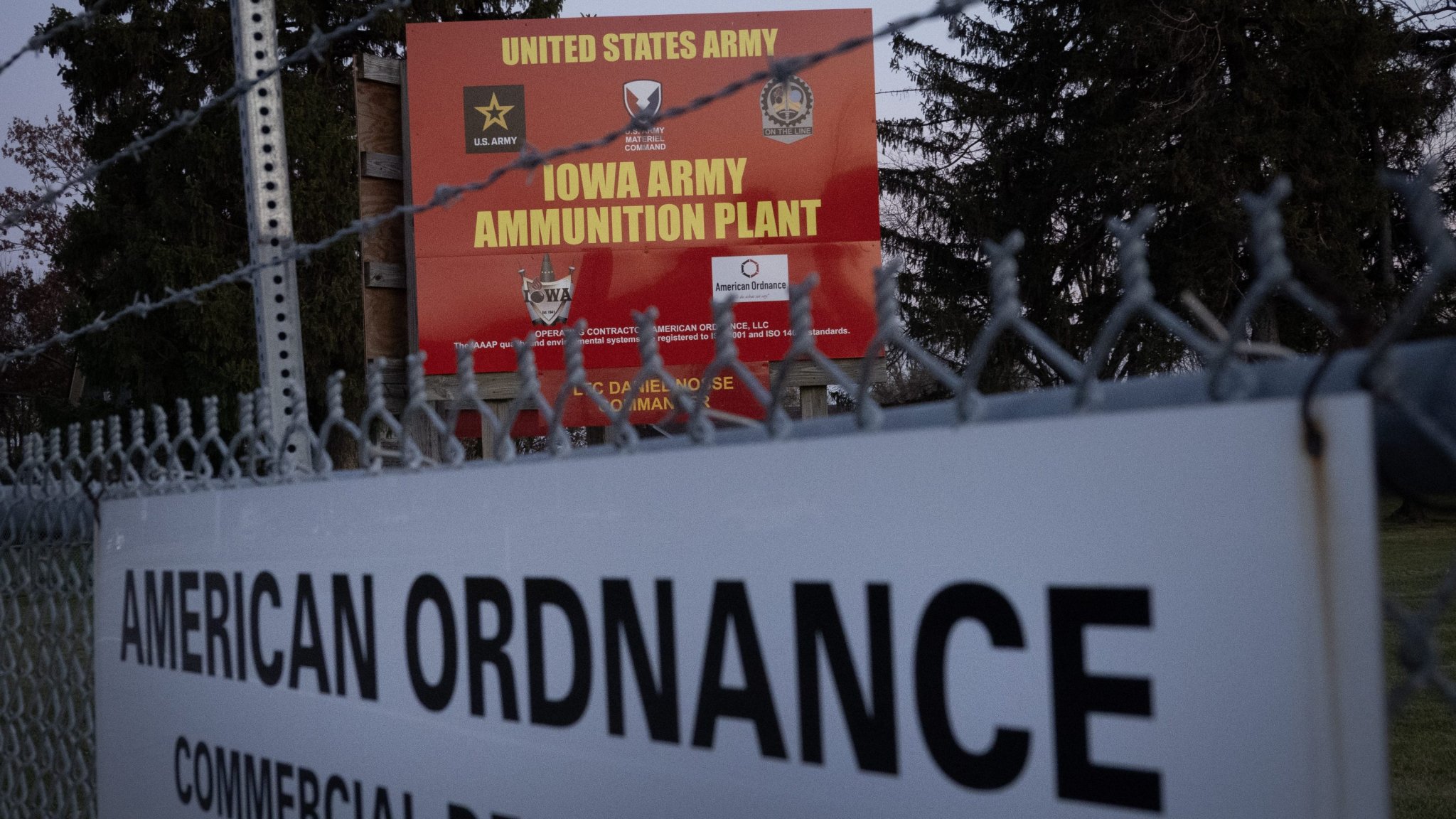
President Donald Trump ordered the Army to wait for court approval before detonating nearly five tons of lead azide. The directive comes after the acting Secretary of the Army set the controlled explosions for Wednesday, Nov. 25, in defiance of a court stay.
Writing on his social media app Truth Social, Trump said that he supports a controlled detonation of the 68 barrels of degraded lead azide at the Iowa Army Ammunition Plant, rather than the risk of an unplanned explosion due to unstable chemicals. However he ordered the Army to pause its plan “ until such time as the Eighth Circuit agrees that we can go forward.” He added that the decision is “fully subject” to Governor-Elect Rob Sand agreeing to the operation.
“If he or the Courts do not agree, we will have no choice but to not proceed with the controlled removal of these hazardous materials,” Trump wrote, adding that he will hold Sand responsible for any death or destruction caused by the lead azide.
The Army decision to blow up the lead azide barrels on Wednesday came after a federal appeals court granted requests from environmentalists and issued a stay on the detonation on Thursday, effectively pausing it.
The service announced late Sunday in a post on X that the controlled detonation of the Iowa Army Ammunition Plant is scheduled for Wednesday, Nov. 25, 2026 “to allow for optimal weather conditions and all mitigation measures to be emplaced.”
Dozens of barrels of lead azide — an explosive material used for weapons making at the plant — have degraded and according to the Army are at risk of spontaneous, uncontrolled detonation.
Army officials said in an advisory notice that they are taking steps to mitigate the size of the expected lead-filled dust plume by watering the ground and spraying water to contain as much dust as possible. The service is also planning to track the air monitors and take samples of the blast radius.
The Army originally scheduled the detonation to take place on Nov. 20, until an outcry from environmentalists and members of Congress sounded the alarm last week about the health risks to the local community and toxins that would be released onto the surrounding community’s water and air. The service responded by postponing it for the Army to “actively engage with state and local officials throughout the region to distribute accurate, up-to-date information.” Acting Secretary o the Army Adam Telle initially pushed the two blasts to Monday after pushback.
The Iowa Environmental Council, Sierra Club, and Earthjustice questioned the Army’s willingness to engage with the local community and broader public.
“The Army seemed more concerned over the weekend with finding a way to sidestep the judicial process than on meeting the public’s demands for greater transparency, notice to affected communities, and far stronger protection of people, property, and the environment from serious harm,” Earthjustice Attorney Thien Chau said in a statement Sunday.
In response to the court-issued pause, government lawyers said in court filings Sunday that moving ahead with the controlled demonstration was “necessary” to prevent an uncontrolled and unmanageable explosion.
“Under the delay that Petitioners seek with their delay request, the public faces greater risk of irreparable harm from lead inhalation and contamination, because no one can know when an uncontrolled explosion will occur,” lawyers said in the filings.
The government lawyers said that the delay also would limit the Army and EPA’s ability to provide real-time air dispersion modeling from the detonations. The filings warned that an uncontrolled explosion of the lead azide might happen in worse weapon conditions and cause a far greater dispersion of lead.
The service has said that lead azide has been stored at the facility for decades and is showing signs of deterioration. The chemicals have begun to crystallize which Army officials said make it more unstable and could potentially detonate on their own, with the risk increasing as cold winter weather approaches.
The Army first found the degraded lead azide in March and began plans to “neutralize and dispose of it,” plant leadership said at the time. Plans to do a controlled detonation were set by the fall, with then-Secretary of the Army Dan Driscoll making the final decision. Last week, Telle said in a post on X that the Army “immediately” communicated the “modeled impact area” and dangers with local stakeholders and the Middletown, Iowa community.
On Sunday, the environmental groups alleged that the “emergency” to detonate the material was “of the Army’s own making.”
“The Army has not publicly provided details about why the lead azide was not disposed of before it became so dangerous. The Army’s own storage and inspection practices allowed a primary explosive to sit until it reportedly degraded to the point that any alternative disposal method is now deemed too dangerous. The lack of transparency raises real questions about the scope and extent of potential impacts,” they said.
Update: 11/23/2026; This article was updated after Trump ordered the Army to hold off on detonating the lead azide.
The post Trump orders Army to halt Iowa lead detonation plans until courts approve the plan appeared first on Task & Purpose.
President Trump ordered the U.S. Army to pause the controlled detonation of 68 barrels of degraded lead azide at the Iowa Army Ammunition Plant until court approval is secured. This decision follows a federal appeals court's stay on the planned detonation, initially set for November 25, 2026, due to environmental concerns. The Army is implementing measures to manage the risks associated with the unstable chemicals.
- President Trump ordered the Army to halt detonation plans until court approval is obtained.
- The Army planned to detonate 68 barrels of degraded lead azide at the Iowa Army Ammunition Plant.
- Environmental groups raised concerns about health risks associated with the detonation.
- The controlled detonation was initially scheduled for November 20, 2026, but was postponed due to legal challenges.
- The Army is taking measures to mitigate risks associated with the lead azide.