
Trump threatens to bomb Oman after its agreement with Iran on the Hormuz crossing map as the understanding deadline expires.
 Ahmed Al-Rashid
Trump Threatens to Bomb Oman After Its Agreement with Iran on the Strait of Hormuz Crossing Map as the Understanding Deadline Expires
On the evening of Monday, August 17, U.S. President Donald Trump informed Fox News correspondent Trey Yingst that he is prepared to carry out "full-scale" bombing of Oman if it "stands in the way" of Washington's efforts to reach an agreement regarding the Strait of Hormuz. The network did not release an audio recording of the interview, but it is a repeated threat; in May, Trump stated in a Cabinet meeting that "Oman will act like any other country, or we will destroy it."
On the same day, Iranian Foreign Ministry spokesman Ismail Baghaei announced in Tehran that "an understanding has been reached regarding the crossing route map" between Iran and Oman, and that the two countries are working on drafting a final joint statement. This coincided with the expiration of the U.S.-Iranian memorandum of understanding signed on June 17, which set a sixty-day negotiation period, with neither party announcing an extension.
Agreement Between Neighbors at Whose Expense?
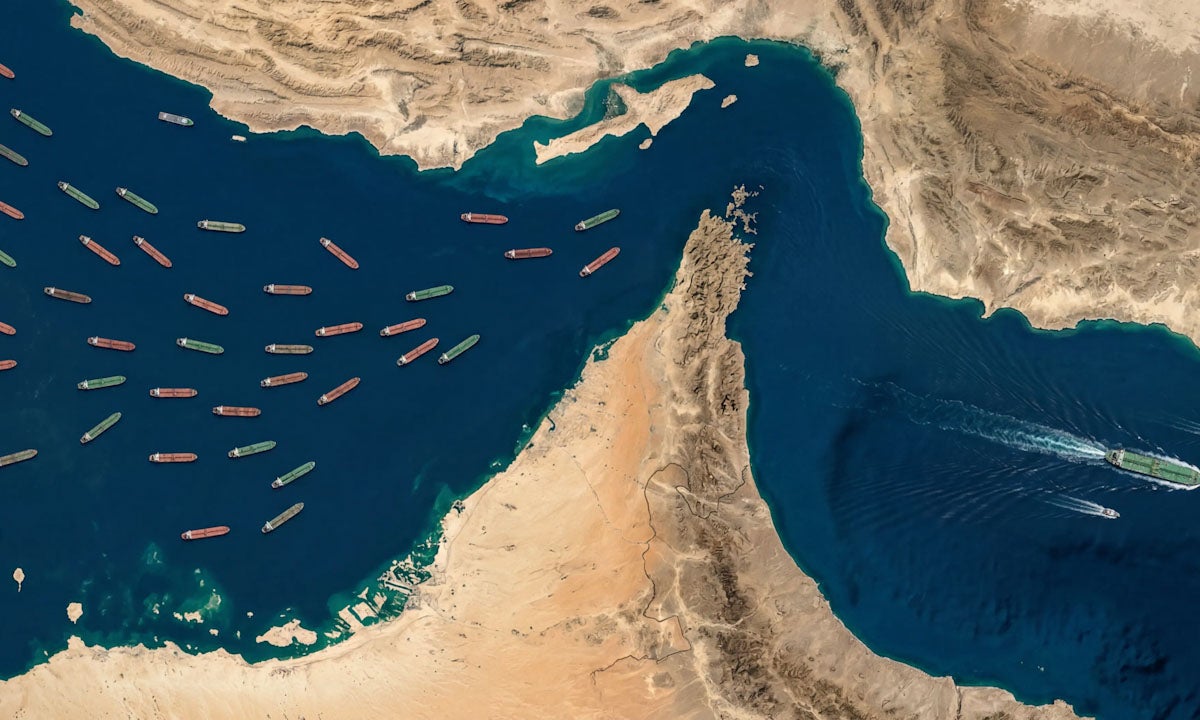
What exactly have the two countries agreed upon? According to leaked details, ships entering the Arabian Gulf will navigate a route close to the Iranian coasts, while exiting via a route near the Omani coasts, without fees during a transitional period. The proposed system divides traffic management: Iran coordinates incoming ships, while Oman oversees outgoing ones, within alternative shipping corridors that replace the system adopted by the International Maritime Organization in 1968, which was based on two routes and a safety zone between them.
However, the sticking point has not yet been resolved, which is the fees. Tehran is reportedly seeking to impose fees equivalent to about 5% of the value of the transported goods, which Washington has firmly rejected. Here lies the paradox: the "joint management" that both parties speak of is not a maritime management system as much as it is a delineation of Iran's role in the waters it itself closed on February 28 after the U.S.-Israeli strike, through which it halted about one-fifth of global oil trade.
Why is Trump Threatening an American Ally?
Oman is not just any country. It is the only Gulf state that maintains normal relations with both Tehran and Washington, hosting U.S. facilities for decades on Masirah Island and Thumrait Air Base, and has long been the most famous backchannel between the White House and the Islamic Republic. Any military officer who has served in the region knows that Muscat is the "mailbox" from which messages that no one dares to send directly arrive.
So why is Trump threatening it now? Because Washington has conditioned the complete reopening of the strait before lifting the blockade on Iranian ports, viewing the Iranian-Omani agreement as an attempt by Tehran to impose a fait accompli that makes it a partner in managing the waterway rather than a party subject to American conditions. More intriguingly, Trump himself claims to have a backchannel with the Iranian Revolutionary Guard; that is, he is secretly negotiating with Tehran while publicly threatening Oman for negotiating with it openly.
Oman's Military Capability Geography Does Not Buy Armor
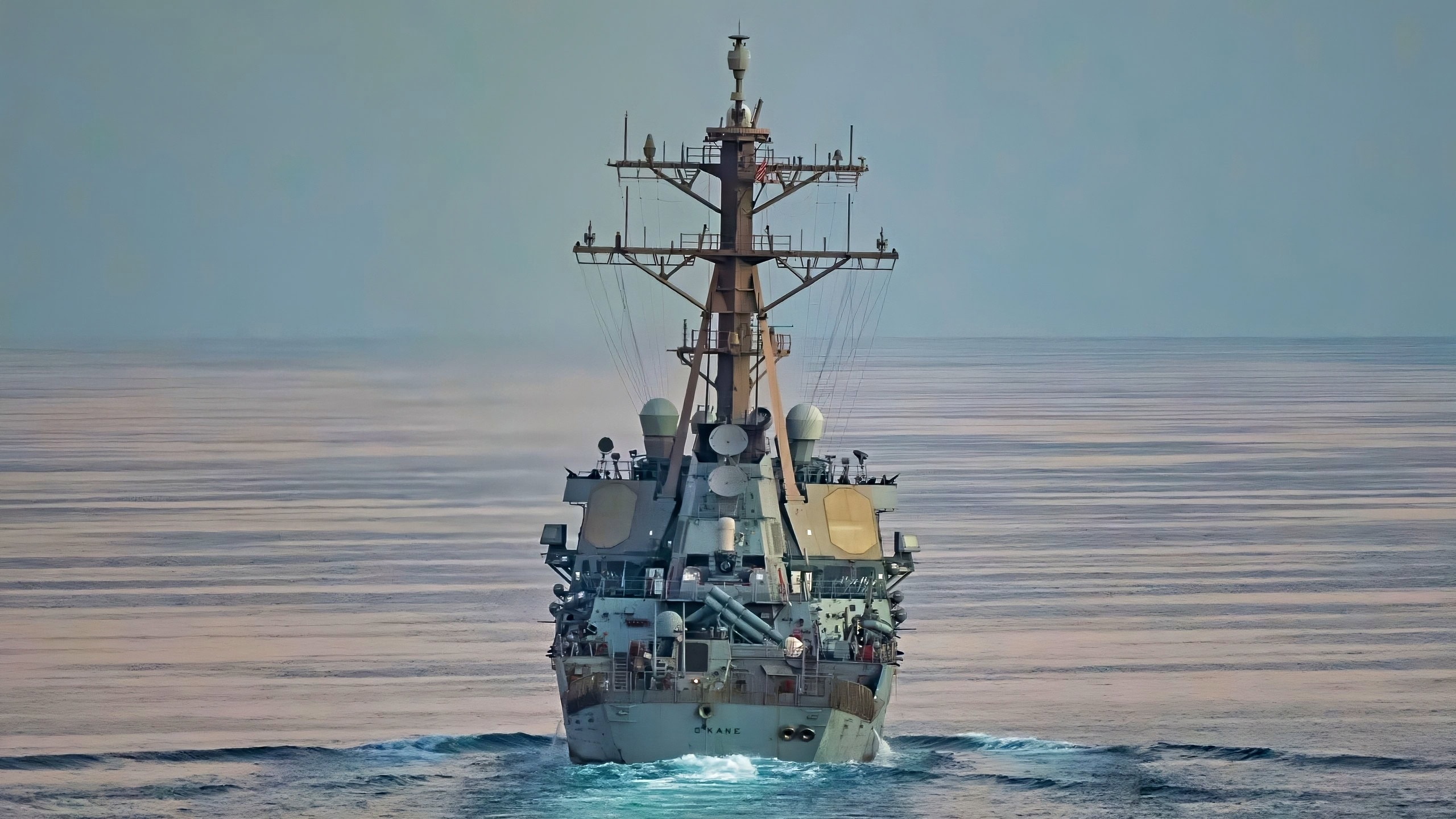
From a military perspective, the American threat to Oman is not just rhetoric. It is true that the Sultan's forces are relatively small and that they have never purchased the heavy air defense systems acquired by Riyadh and Abu Dhabi, but any comparison between armies overlooks the essential truth: Oman has built its security on geography and diplomacy, not on arsenals. The Musandam Peninsula overlooks the Strait of Hormuz itself, and the Duqm base on the Indian Ocean provides it with a depth that no other Gulf state possesses.
Here lies the flaw in the triangle of capability that I always talk about: equipment × training × institutions. Oman is content to be a force for benefit to all—Washington, Tehran, Riyadh, and Tel Aviv—not in its weapons. But Trump's threat reveals the limits of this model: when the guarantor becomes the threat, the state discovers that diplomacy alone cannot stop a missile, and that the American umbrella is not a written contract but a personal decision that can change at any moment.
Deadline Expired, the Strait Returns to Square One
The timing is not coincidental. With the expiration of the sixty-day deadline, maritime traffic in Hormuz has dropped to its lowest levels since the start of the war, and on the morning of August 18, the British Maritime Trade Operations reported that a passing vessel was struck by an unknown projectile, causing damage to the engine room and injuring one crew member. While UN Secretary-General Antonio Guterres calls for the resumption of negotiations because "there is no military solution," Trump responds that Tehran must "surrender."
What concerns me more is what no one is talking about: if the strait is reopened under Iranian-Omani management with fees of 5% of the value of the goods, it will not be freedom of navigation, but a toll gate. Tehran presents itself today as a partner in the system, but recent history shows that every temporary arrangement in Hormuz began as a corridor and ended as a monopoly.
Conclusion: Oman Between the Hammer of an Ally and the Anvil of a Neighbor
The structural dilemma facing Muscat today has no quick solution: to keep the strait open, it must cooperate with Iran, and to satisfy Washington, it must not cooperate. Small Gulf states pay the price for security but do not own it; the guarantor itself has become the threat, and the Iranian crossing map may move oil but redraws the rules of the most important waterway in the world, without anyone asking the countries over which the oil flows. This is the Gulf in 2026: everyone talks about joint management, and no one talks about who actually rules.
On August 17, 2023, U.S. President Donald Trump threatened to bomb Oman if it obstructs U.S. efforts regarding the Strait of Hormuz. This threat follows an agreement between Iran and Oman on a transit route through the Strait, which the U.S. has rejected due to proposed fees. The situation highlights the complex diplomatic relations in the region, particularly with Oman acting as a mediator.
- Trump threatened Oman with bombing if it obstructs U.S. negotiations regarding the Strait of Hormuz.
- Iran and Oman reached an agreement on a transit route through the Strait of Hormuz.
- The U.S. has rejected Iran's proposed transit fees for shipping through the Strait.
- Oman has historically maintained diplomatic relations with both the U.S. and Iran.
- The threat comes as a response to the expiration of a U.S.-Iran memorandum of understanding.