
Trump's Statement on Hormuz as American Territory Turns the Blockade into a Permanent System Against Iran
 Ahmed Al-Rashid
Trump's Statement on Hormuz as American Territory Turns the Blockade into a Permanent System Against Iran
On August 14, Donald Trump stated that he would soon announce that the Strait of Hormuz is American territory following Iran's defeat. The statement seems, legally, closer to a political theater than to a decision of a rational state. There is no provision in maritime law that allows a passage between Iran and Oman to be transformed into American territory by a declaration from the White House. However, the seriousness of the words lies not in their legal viability, but in the fact that they came on the same day that Defense Secretary Pete Hegseth spoke about a maritime blockade that could last indefinitely, and Treasury Secretary Scott Pisent promised "unprecedented" sanctions in the history of economic isolation.
This is not a mere slip of the tongue. It is three strikes in one sentence: a claim of sovereignty, a long-term blockade, and a package of sanctions announced before they are implemented. Any officer who has served in this region knows that the strait does not need to be occupied to become a battlefield. It is enough for passage through it to become a matter of permission, and for the tanker to become a number on a political list, for the practical meaning of freedom of navigation to end.
Declared Sovereignty Does Not Create a Safe Passage
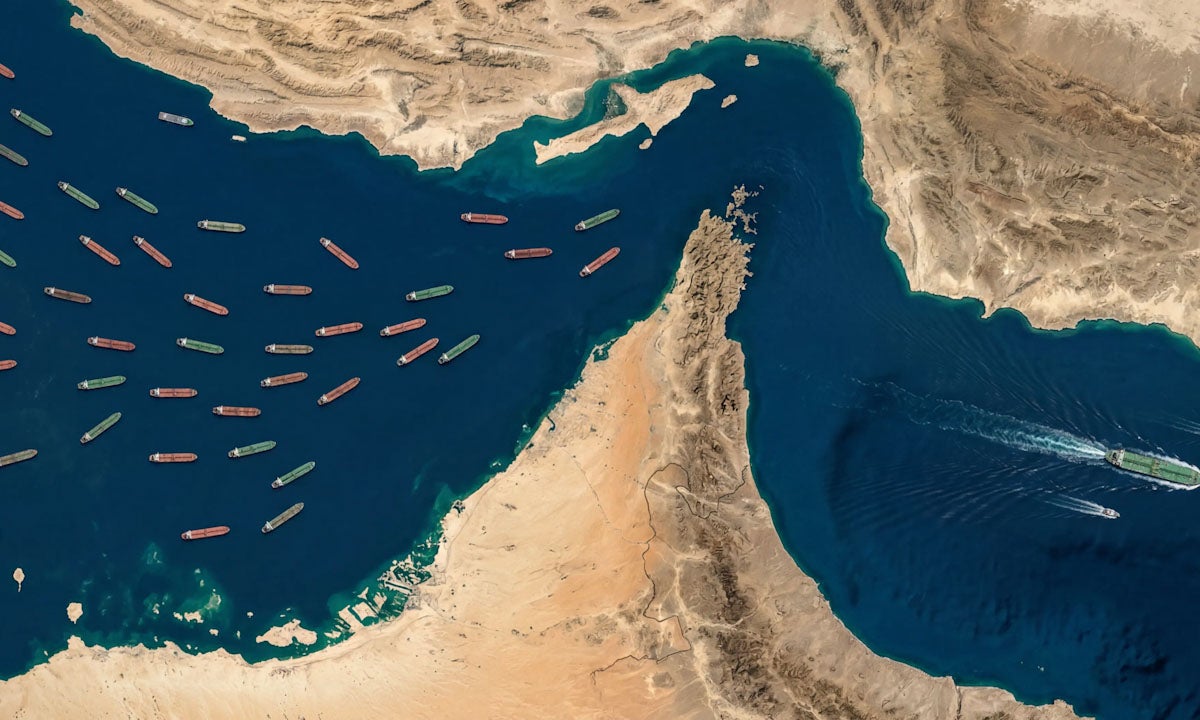
Legally, Trump's talk of turning Hormuz into American territory does not merit lengthy discussion. The strait is an international passage governed by the geography of Oman and Iran, and its political dispute is not nullified by an electoral declaration from Washington. However, politically, the statement sends a message to three republics at once: the American voter who sees fuel prices at painful levels, Tehran which bets on Washington's fatigue, and the Gulf states that still want American protection without an open war on their shores.
The irony is that Trump, despite his extreme language, has not yet done what one would do to seize the strait militarily. He has not sent ground troops, has not seized sensitive islands, and has not bombed desalination plants that everyone knows would cross the threshold of comprehensive regional war. Therefore, his statement should be read as a pressure tool rather than an operational plan. It raises the ceiling with words while keeping direct combat at a calculated level, shifting the center of gravity to blockade and finance.
Washington's New Triad
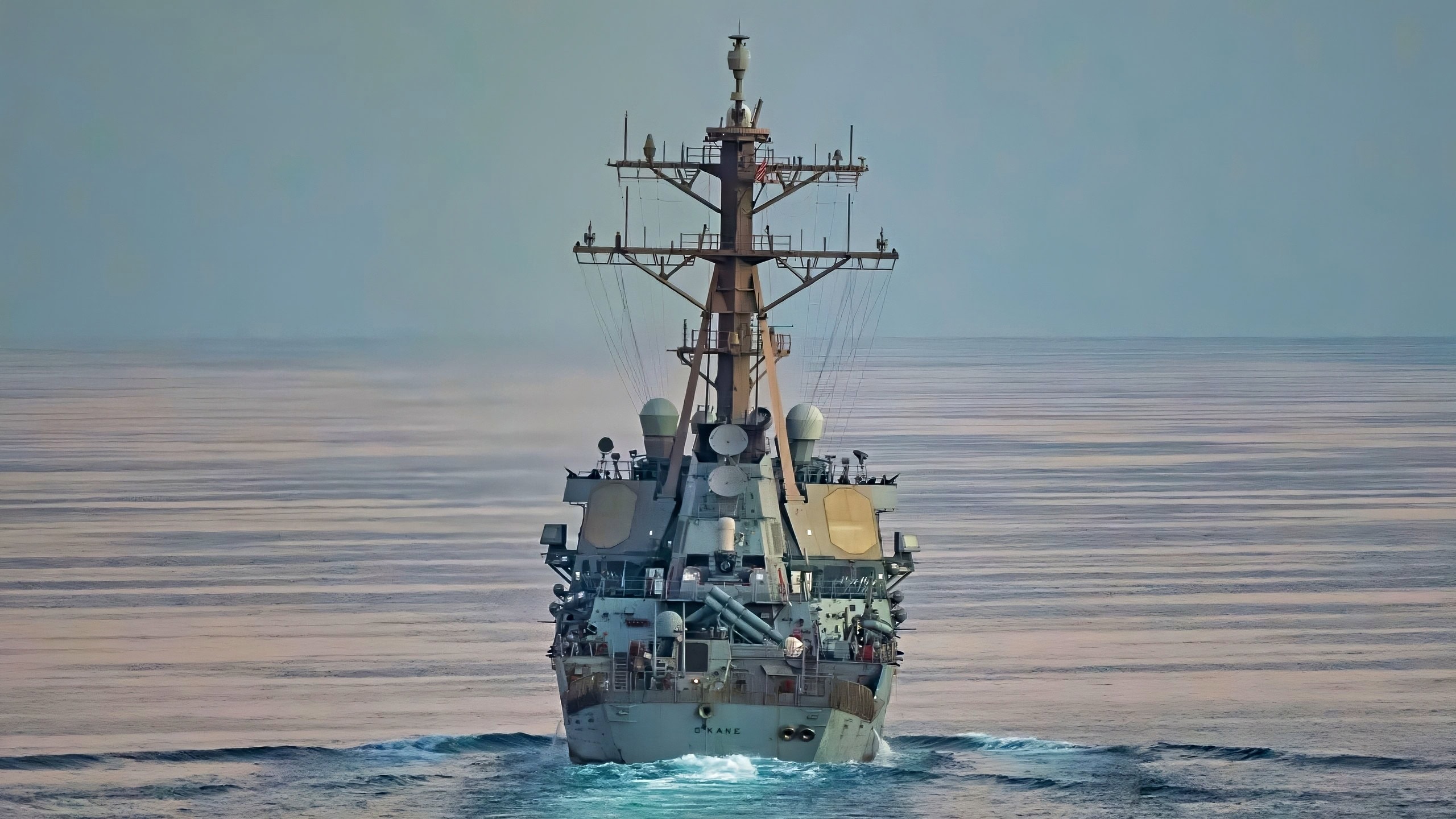
Hegseth told reporters in Panama that the U.S. Navy could maintain such a blockade "indefinitely" because it would rotate ships in and out. This is partially correct military talk and partially deceptive. Yes, the U.S. Navy is capable of rotating destroyers, cruisers, and aircraft carriers more than any other force. But sustainability is not just a number of ships. It involves tired crews, spare parts, support ports, daily political decisions, and the risk that a single bullet could kill an American sailor, turning economic blockade into retaliatory war.
Pisent, on the other hand, went to the financial front. In an interview with Newsmax, he stated that the coming week would bring measures unprecedented in the history of economically isolating a country. Here, the administration's intent becomes clearer than the noise of "American territory." Washington wants to make Iran a country blockaded by sea, financially strangled, and politically embarrassed before its people, without incurring the cost of direct occupation. This is Trump's preferred formula: maximum pressure, strong imagery, and a backtrack option for negotiation if the other party agrees to sit down.
However, combining these three tools creates a problem that language cannot solve. When Washington says the blockade is unlimited, and the Treasury says the isolation is unprecedented, and the president says the passage will become American, Tehran does not hear a "call to negotiate." It hears an attempt to turn the balance of war into a permanent system. At that point, Iranian retreat becomes harder, not easier.
Tehran's Response Turns the Dispute into Law
On the same day, a committee in the Iranian parliament approved, according to Tasnim news agency, a plan for the strait that includes preventing the passage of assets and equipment from the United States, Israel, and other countries that Tehran classifies as "hostile." This is not an emotional closure in the style of old slogans. It is an attempt to create a political passage system: who is allowed, who is prohibited, and who proves that their cargo is not serving the enemy.
The danger here is that both sides are writing the blockade into their institutions. The United States talks about a maritime blockade that can be sustained, while Iran responds with a selective passage law. Between the two, the window for Omani mediation, which was originally based on a simple idea: restoring commercial navigation in exchange for easing pressure, narrows. If every ship becomes a test of American sovereignty or Iranian dignity, the Omani negotiator will have nothing left but to count the wreckage.
The Numbers Indicate the Strait is Indeed Blocked
Kpler data reported by USA Today and Reuters make the verbal debate less significant. On Friday, only two ships crossed the strait: a grain ship entering Iranian waters and an empty bulk cargo ship going the other way. On Thursday, the number was nine ships, and on Wednesday five, with an average of about twelve ships per day for the entire month of August. Before the war that began in February, the average exceeded 130 ships per day.
Some ships may cross with identification devices turned off, which happens in every maritime crisis. But the difference between 130 and two ships is not a margin of error. It is practical closure. No clear crude shipments were reported on Friday, while Brent remained around $87 and West Texas around $81. The market has not exploded yet, as it still bets that politics will precede actual shortages. But this is a fragile bet; Asian refineries have begun looking for American crude, and India is increasing its reliance on Russian crude, with every alternative barrel adding political cost to shipping costs.
In the Gulf calculations, this is not just an Iranian-American crisis. Hormuz used to pass a critical portion of global oil and liquefied gas before the war. If the maritime route is choking, then the pipelines westward towards Yanbu and Fujairah are turning from commercial alternatives into lifelines. Therefore, every Gulf state that remains publicly silent today reads Kpler's numbers in their operations rooms.
The Houthis Link the Seas
The Houthi attack with drones on an Aramco facility in Saudi Arabia on August 14 added another layer. The danger is no longer just in Hormuz. The Red Sea, Bab el-Mandeb, and the Gulf of Oman have become a single system of mutual pressure. If the blockade on Iran intensifies in the east, parties linked to it can raise the cost for Saudi Arabia in the west. And if Washington exaggerates its rhetoric about controlling Hormuz, the Houthis can remind the market that oil does not only exit the Gulf, but also requires ports, refineries, and pipelines.
This is the lesson that rich capitals do not like: buying air defense does not mean possessing maritime security. Saudi Arabia and the UAE have expensive systems, but a cheap missile, a cheap drone, and a hesitant ship can disrupt the entire calculation. Military capability is not just a platform; it is training, a decision-making system, and long-term sustainability. At this point, Iran, despite its weak economy, seems more comfortable in a war of annoyance than its opponents in a war of sustainability.
Where the Threshold of War Stands
After the killing of Americans in Jordan in July, it was established that the threshold for American blood still drives the response machine. This is a factor Tehran cannot ignore. But it also reads that Trump, under pressure from fuel prices and the midterm elections, is publicly leaning towards economic warfare more than land adventure. Therefore, Iran may bet on patience: slowing down ships, rotating the danger through the Houthis, and leaving Washington to explain to its voters why gasoline has become more expensive while war is no closer to an end.
In conclusion, the statement "Hormuz is American territory" is not a legal plan, but a sign of a broader crisis: Washington wants to appear as the owner of the strait without paying the price of ownership, and Tehran wants to prove that it holds the key to passage without bearing the full responsibility for the economic disaster. The coming week will reveal whether Pisent's sanctions are a bridge to new negotiations or an additional brick in the wall of the blockade. As for the Gulf states, they know the old truth that does not appear in press conferences: those who do not own their maritime passage do not fully own their decision.
On August 14, Trump announced intentions to declare the Strait of Hormuz as U.S. territory following Iran's defeat, coinciding with discussions of an indefinite maritime blockade and unprecedented sanctions. This statement reflects a broader strategy to exert pressure on Iran without direct military engagement, while Iran responded by approving measures to restrict U.S. and Israeli access in the region. Shipping traffic has notably declined, indicating a potential crisis in maritime operations.
- Trump stated that the Strait of Hormuz would be declared U.S. territory after defeating Iran.
- U.S. Secretary of Defense discussed the potential for an indefinite maritime blockade.
- U.S. Treasury Secretary promised unprecedented sanctions against Iran.
- Iran's parliament approved a plan to restrict U.S. and Israeli assets in the Strait.
- Shipping traffic through the Strait has significantly decreased.