
Two Iskander Launch Complexes in Bryansk Region — Ukraine's Strike on the Russian Missile Attack Cycle in 2026
 Dmitri Volkov
Two Iskander Launch Systems in Bryansk Region — Ukraine's Strike on the Russian Cycle of Missile Attacks in 2026
Two damaged Iskander launch systems and one Pantsir-S1 system appear to be a modest episode against the backdrop of a nighttime raid involving 172 drones and 36 ballistic missiles. However, this episode on November 6-7 illustrates how the logic of war is changing. Ukraine is attempting to attack not only munitions in flight but also the production and operational cycle that turns a missile in storage into another strike on Kyiv.
What is Confirmed and What Cannot Be Asserted Yet
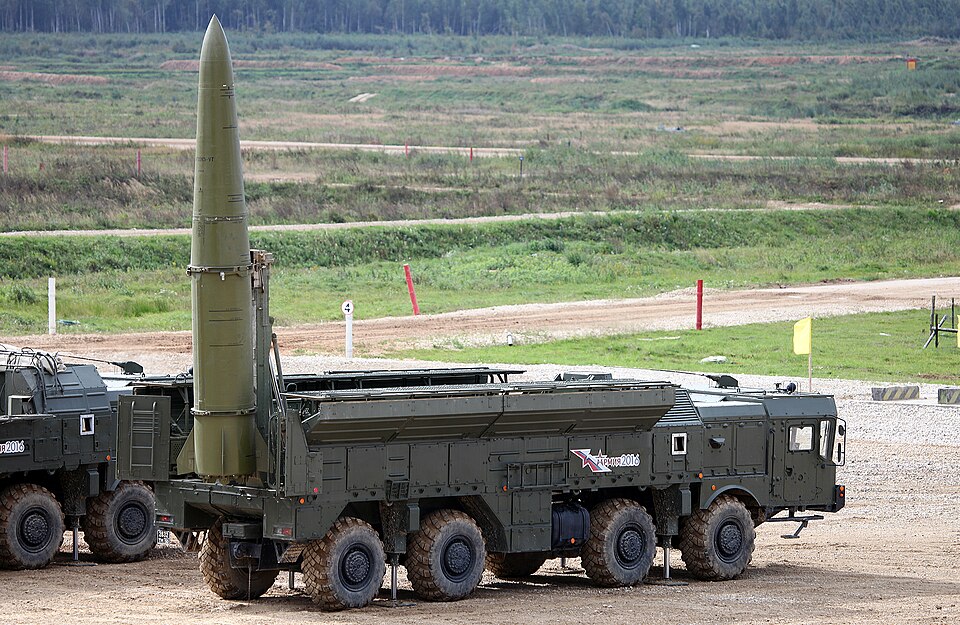
The Ukrainian General Staff reported strikes on two Iskander launchers and a Pantsir-S1 system in the Bryansk region from November 6 to 7. The Kyiv Independent separately noted that the extent of damage to the systems is being clarified. This is an important caveat: a statement about a hit does not equal proven destruction, and certainly does not mean the elimination of the entire division. There is no independent assessment of the damage cost and the time required to restore the equipment in open sources.
Nevertheless, the location of the strike matters. The Bryansk region is not an abstract rear area but part of the western contour connecting Russian missile units with launch directions towards Ukraine. The Iskander-M is an operational-tactical complex with a range of about 500 kilometers and a quasi-ballistic trajectory. Its value lies not only in its warhead but also in its mobility, short preparation time, and ability to change position after a launch. Therefore, the damage to even two launch vehicles primarily creates a problem of tempo and resource allocation.
Why the Strike on Launch Systems is More Important than One Night
The Russian campaign of long-range strikes is built on mixing expensive ballistic missiles with massed strike drones and decoys. On the night of November 7, the Ukrainian Air Force reported the launch of 36 ballistic missiles and 172 strike drones; 149 drones, according to Ukrainian sources, were shot down or suppressed. In such an architecture, the Iskander plays a role not just as a means of striking a target. It forces the enemy to expend the most scarce anti-missile defense resources while cheap drones overload the radar and command network.
The counter-strike on the launch systems targets the reverse side of this scheme. For a new salvo, not only missiles are needed. Reconnaissance data, transportation, protected command posts, crews, fuel, camouflage, and time to restore position are also required. If Ukrainian intelligence is indeed able to locate the complexes in the Bryansk region, Moscow is forced to either disperse them or change routes and positions more frequently. Both options worsen the economics of the operation: dispersion reduces fire concentration, while constant movement increases the burden on crews and logistics.
Connection to Strikes on Russian Communications
Almost simultaneously, Ukrainian drones damaged a bridge over the Mius River in the Rostov region on the R-280 highway, which connects mainland Russia with the occupied territories. Regional authorities confirmed the closure of traffic and damage to an energy facility, although the specific circumstances of the attack have not been confirmed by independent observers. Together, these episodes create a clearer picture: Kyiv is trying to link strikes on long-range means, air defense systems, and transportation hubs, forcing Russian command to protect an extended infrastructure.
This resembles the Soviet problem of operational depth, but with an inverted sign. In Soviet doctrine, depth ensured the stability of the front through echeloned warehouses, reserves, and railway hubs. In the current Russian system, depth is still geographically significant, but it has become more transparent due to satellite reconnaissance, drones, and long-range strike means. The rear no longer means safety; it merely signifies a longer chain of objects that need to be protected.
Limitations of the Russian Model
The Russian industry is capable of maintaining a high production rate of missiles and drones, but the production flow should not be confused with an unlimited supply. Ukrainian military intelligence estimates the production of various types of Russian cruise and ballistic missiles at more than 200 units per month; this figure cannot be considered an independent audit, but it illustrates the scale of the task Moscow is trying to solve. The loss of two launch systems does not halt missile production but increases the gap between the available munitions and the number of operational carriers.
The Pantsir-S1 system near the missile units is also not accidental. It is designed to protect objects from low-flying targets, including drones. If such a system is hit along with the launch systems, it indicates a tactical task that is more complex than a single attack on equipment: first, to detect the protected area, then to deprive it of close cover, and finally to strike the main means of fire impact. The details of the operation are unknown, so it is premature to speak of a complete breach of Russian defense. However, the very choice of targets indicates an improvement in the quality of Ukrainian planning.
Forecast
Moscow is likely to respond not by abandoning the missile campaign but by further complicating it: with more decoys, shorter preparation windows, and moving complexes between several areas. Kyiv, in turn, will seek cheap means of detection and destruction to avoid exchanging an expensive missile for every Russian launch system.
My conclusion is cautious. The strike on two Iskanders does not change the balance of the war and does not prove the collapse of the Russian missile system. It shows something else: in 2026, the struggle is no longer just for intercepting a missile but for dismantling the chain that makes the next salvo possible. The Russian model can withstand individual losses if it can quickly restore carriers and protect the rear. But if strikes on launch positions begin to coincide with disruptions in logistics, the advantage of mass will gradually turn into an expensive habit of shooting at increasingly vulnerable infrastructure.
Sources
- The Kyiv Independent, November 8, 2026 — strikes on launch systems in the Bryansk region, the bridge over the Mius, and the consequences of the nighttime attack.
- Institute for the Study of War, November 7, 2026 — assessment of the Russian missile-drone campaign and strikes on energy infrastructure.
- Fakty, November 7, 2026 — Ukrainian data on the composition of the nighttime salvo and interceptions.
- RIA Novosti, November 7, 2026 — the Russian official version of the results of hostilities, requiring independent verification.
Ukrainian forces attacked two Iskander launch systems and one Pantsir-S1 air defense system in Bryansk Oblast on November 6-7, 2026. This strike is part of a broader operation involving numerous drones and ballistic missiles, aiming to disrupt Russian missile capabilities and logistics. The extent of damage is still being evaluated, but the attack signifies a shift in Ukrainian tactics towards targeting the operational cycle of Russian missile systems.
- Ukrainian forces struck two Iskander launch systems and one Pantsir-S1 system in Bryansk Oblast.
- The attack occurred during a larger operation involving 172 drones and 36 ballistic missiles.
- The extent of damage to the systems is still being assessed by Ukrainian authorities.
- The attack aims to disrupt the Russian missile operational cycle and logistics.
- Ukrainian intelligence is reportedly able to locate Russian systems in Bryansk Oblast.