
Two Naval Aviators Killed in Action, Shortage of PLA Carrier Aviation Talent Emerges
 Li Minghui
Two Naval Aviators Killed in Action, PLA's Shortage of Carrier Aviation Talent Comes to Light
A detail revealed by the South China Morning Post is more thought-provoking than the news headline itself: the fallen aviator, Fang Ming, was only 38 years old and already a tactical commander in a naval aviation unit of the Southern Theater Command, holding the rank of colonel. Local government and media information indicate that he sacrificed his life during a flight training exercise on June 10, and another naval aviator also died in frontline training; Beijing has not publicly clarified whether the two were involved in the same incident. There is little public information, but the profile of such personnel already indicates a problem.
The current shortage in naval aviation is not about ordinary flight hours, but rather about individuals who can integrate complex subjects, tactical formations, and new equipment test flights. A 38-year-old tactical commander is typically in the golden phase of transitioning from a frontline elite pilot to an instructor or tactical leader. The loss of such a pilot cannot simply be calculated as "one less aircraft, one less pilot"; it is more akin to losing a small training node.
Why Training Risks Are Increasing
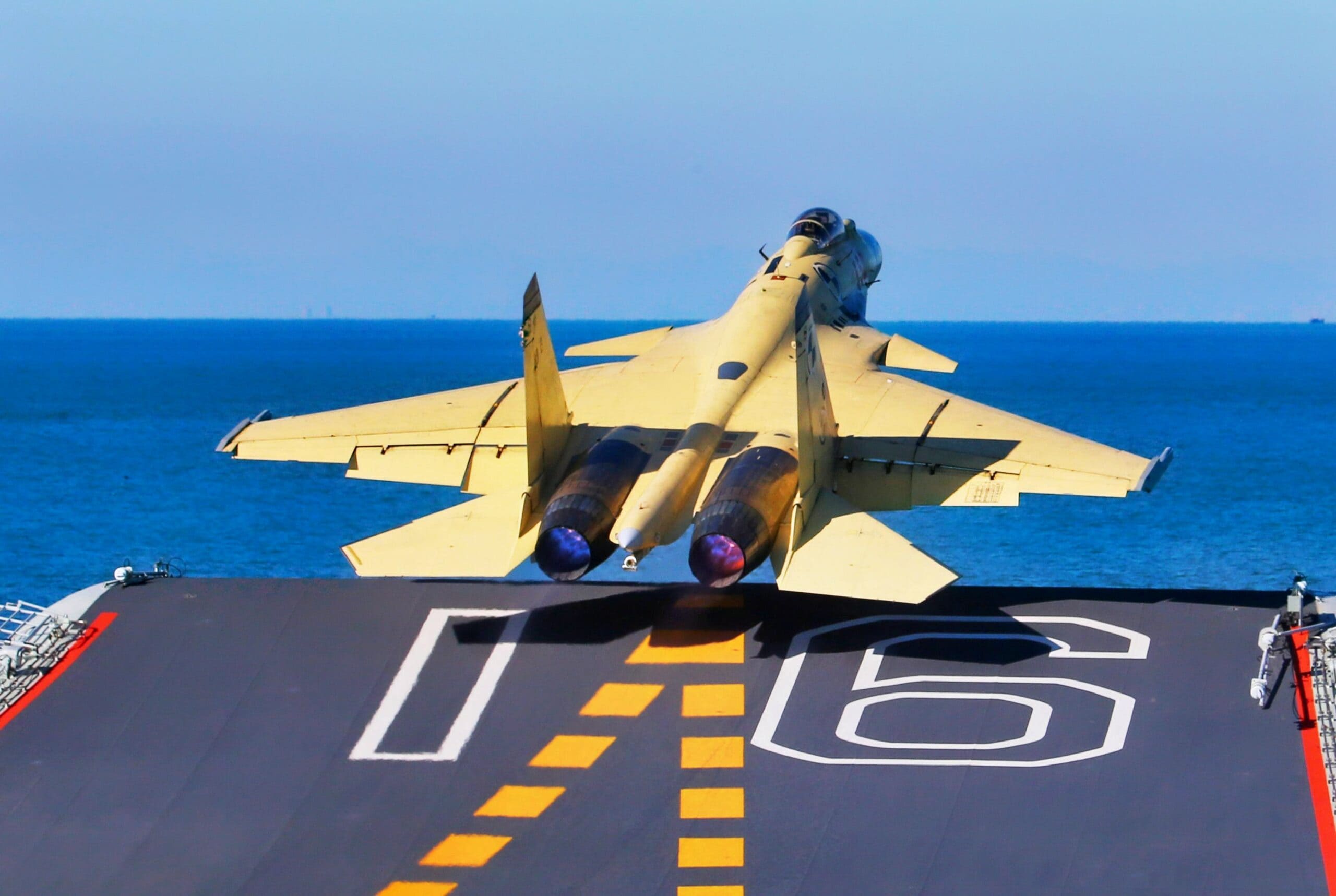
Over the past decade, the PLA Navy's aviation has accomplished several overlapping tasks: the transition from land-based aviation to carrier/blue-water operations, the J-15 achieving combat capability in batches, regular training of the Liaoning and Shandong aircraft carriers, and the Fujian aircraft carrier introducing electromagnetic catapults, fixed-wing early warning aircraft, and stealth carrier-based aircraft. Each of these can be gradually refined when viewed separately, but when pushed forward simultaneously, the training risks naturally increase.
Flight training accidents are not unique to China. The U.S. Navy, Indian Navy, and Japan Air Self-Defense Force have all paid a price during high-intensity training cycles. The difference is that the expansion rate of the PLA Navy's aviation is faster, and the publicly visible pool of mature instructors is smaller. Simply put, while aircraft can be delivered in production batches, people cannot be delivered in production batches.
The Real Shortage is in Instructors and Tactical Backbone
Another report by the South China Morning Post on aircraft carrier recruitment mentions that the International Institute for Strategic Studies believes the Chinese Navy is expanding its pilot recruitment channels, no longer primarily relying on drawing from active aviation units, but instead establishing long-term pipelines through high school graduates and local universities. This direction is correct, but the process of recruiting a trainee to cultivating them into a core capable of leading complex carrier-based missions typically cannot be resolved in three to five years.
- Heavy carrier-based aircraft like the J-15 require pilots to master carrier takeoff and landing with high thrust-to-weight ratios, low-altitude navigation over the sea, coordination in blue-water formations, and anti-surface strike missions.
- If the Fujian carrier is to carry the J-35, KJ-600, and electronic warfare aircraft in the future, pilots, landing commanders, deck coordinators, and maintenance support will all need to be re-coordinated.
- The Southern Theater Command's naval aviation also faces routine tasks in the South China Sea, which will compress training time and actual combat patrol time.
This is why information about tactical commanders like Fang Ming has caught my attention. He was not a novice pilot but rather the most difficult layer to replace in the training system. Public reports indicate that he had received a second-class merit award for training readiness, a record that typically means he participated in high-intensity subjects or complex task organization.
Do Not Equate Accidents Simply with Declining Combat Capability
A common interpretation is to view flight accidents directly as issues of equipment reliability. This judgment is too hasty. We do not know the aircraft type involved in the accident, the weather conditions, the mission, or the maintenance status, nor do we know if the two pilots died in the same incident. What can be more reliably assessed now is that the naval aviation is entering a high-risk training intensive period, rather than a specific type of equipment having exposed fatal flaws.
From an engineering perspective, there are two key indicators for a high-intensity training system: whether the accident rate is controllable as flight hours increase, and whether the processes for investigation, grounding, retraining, and modification after an accident are transparent and effective. The former is difficult for outsiders to obtain complete data on, while the latter can be observed from the subsequent training rhythm. If the relevant units quickly resume complex subjects, it indicates that the system's resilience is acceptable; if for a long time only low-intensity promotional footage remains, it indicates a deeper problem.
An easily overlooked reality is that China's aircraft carrier construction has moved from the stage of "whether there are ships" to "whether there are enough mature personnel." The launching of the hull can be captured by satellites, but the maturity of pilots is much harder to capture.
The Problems After the Fujian Carrier Are Just Beginning
The technical threshold of the Fujian carrier is not just in electromagnetic catapults. It truly tests a complete set of carrier aviation organizational capabilities: catapult rhythm, recovery windows, early warning aircraft airspace management, maintenance of carrier-based stealth aircraft, and shipboard safety control. Any link lacking mature personnel will reduce the carrier's operational availability.
Therefore, the recent incident involving the deaths of naval aviators should not be viewed in isolation. It is part of the same line as the expansion of aircraft carrier recruitment, the ongoing improvements to the J-15, and the advancement of the Fujian carrier's sea trials. What concerns me more is not whether the PLA will continue to expand carrier aviation, but whether it can cultivate a new generation of pilots, instructors, and deck support personnel simultaneously without significantly increasing training losses. This question may only be answered when the Fujian carrier truly conducts long-range training with a complete air wing.
Two naval aviators from the People's Liberation Army Navy died during training in the South China Sea on June 10. One of the deceased was a 38-year-old tactical commander, highlighting a critical shortage of experienced pilots. The incident underscores the increased training risks associated with the rapid expansion of naval aviation capabilities and the need for more qualified personnel.
- Two naval aviators died during training on June 10.
- One of the pilots was a tactical commander aged 38.
- The incident highlights a shortage of experienced naval aviators in the PLA.
- The PLA Navy is expanding its pilot recruitment channels.
- The training risks have increased due to simultaneous advancements in naval aviation capabilities.