
UK, Japan and Italy Buy GCAP Time for £4.6 Billion
 Alexandra Reeves
UK, Japan and Italy Buy GCAP Time for £4.6 Billion
Three governments just spent £4.6 billion to prove that their sixth-generation fighter programme is still alive. That sounds like a procurement milestone. It is also a warning label.
According to the UK Ministry of Defence, Britain, Japan and Italy have signed a jointly funded £4.6 billion contract with Edgewing, the industrial joint venture building the Global Combat Air Programme. The money is meant to push GCAP through the next design phase, set key requirements, and support the testing work needed before the partners can credibly promise an aircraft in service from 2035.
Defense News reported that the contract covers an 18-month advanced concept and assessment phase, after months of uncertainty caused by delayed British funding. The short version is this: the programme has bought time. It has not bought certainty.
The Contract Fixes a Cash Problem First
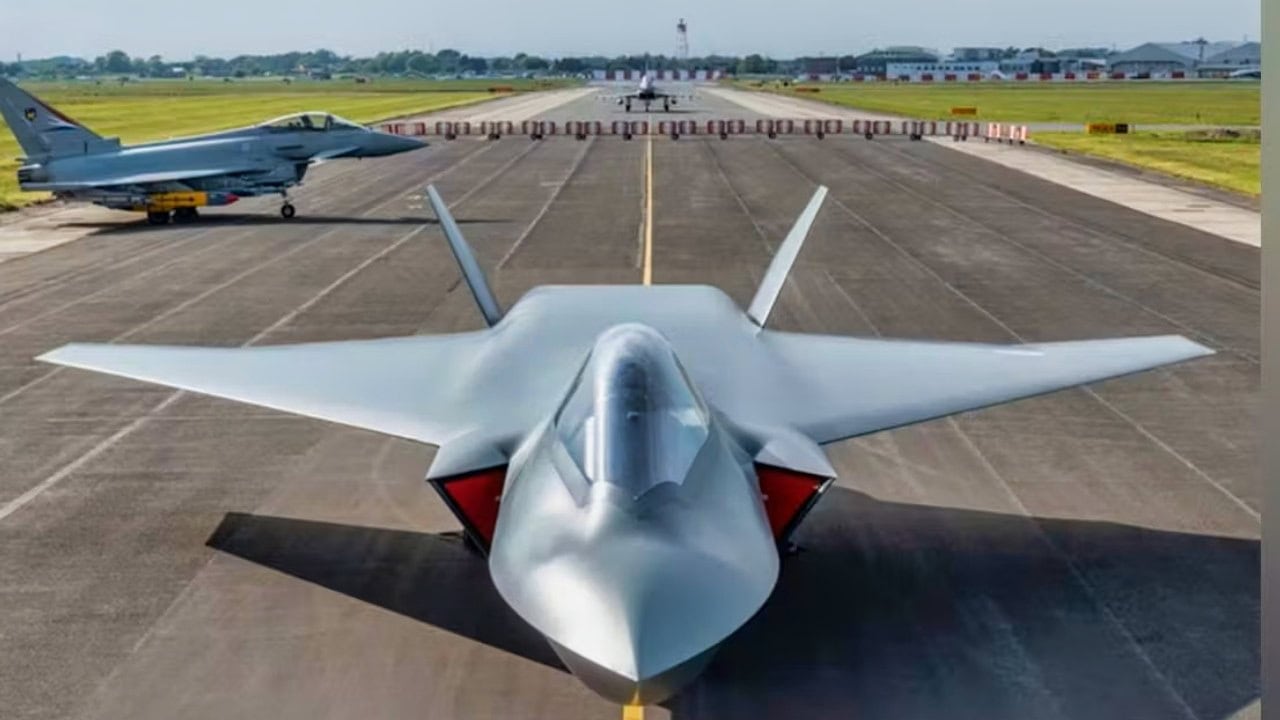
GCAP is the UK-Italy-Japan answer to a problem every serious air force now faces. F-35s and upgraded Typhoons can carry the 2030s, but they cannot define the 2040s. Russia is rebuilding long-range fires and air defence networks. China is forcing Japan to think about combat mass, range and survivability in the western Pacific. Europe is discovering that buying American solves some problems and creates others.
The contract matters because GCAP was drifting toward a credibility problem. Defense News reported that the partners had already used a £686 million stopgap contract in April to keep work moving while London sorted out its Defence Investment Plan. That plan, published this week, committed £8.6 billion over four years to GCAP, more than some expected and enough to calm Japanese and Italian frustration for now.
That phrase matters: for now.
The UK government says the new contract will support thousands of skilled jobs and strengthen a supply chain of roughly 600 organisations. It also says the broader future combat air system already supports 4,500 jobs across Britain. Those numbers are politically useful, but they also expose the programme's vulnerability. GCAP is not just a jet. It is an industrial bargain between three countries with different threat timelines, different budget cycles and different political pain thresholds.
What GCAP Is Supposed to Become
The aircraft is being described as a sixth-generation fighter, but that label is less important than the system around it. The UK says GCAP will work alongside Typhoons, F-35s and autonomous systems as part of a next-generation Royal Air Force. It is supposed to use complex digital engineering, artificial intelligence, advanced propulsion, sensors and data systems.
That is the right ambition. A 2035 fighter that is merely faster or stealthier will arrive too late. The useful version of GCAP is a combat air node: a crewed aircraft able to command uncrewed systems, absorb and distribute sensor data, survive inside dense air defences, and give allied commanders options when satellite links and airbases are under attack.
The industrial structure is equally important. Edgewing brings together BAE Systems, Leonardo and Japan Aircraft Industrial Enhancement Co. Ltd. Defense News says Edgewing is expected to award further tri-national contracts for electronics and propulsion. That is where the programme either becomes a genuine shared aircraft or collapses into three national workshare arguments wearing the same logo.
Europe Should Not Pretend This Is Only About Jobs
British ministers are understandably selling GCAP as an employment story. That is how major defence programmes survive domestic politics. But the strategic case is sharper than the press release language suggests.
Europe has learned from Ukraine that stockpiles disappear quickly, air defence is never enough, and exquisite platforms become liabilities if they cannot be produced, repaired or upgraded under pressure. Japan is learning a related lesson from China: distance and mass matter. A fighter programme built across the UK, Italy and Japan is therefore an attempt to solve two problems at once. It spreads cost and technology. It also tries to keep each partner from becoming fully dependent on Washington for the next generation of air combat.
That last point is the uncomfortable one. Everyone in NATO says interoperability with the United States is essential. It is. But interoperability is not the same as dependence. If Europe cannot design and field a high-end combat aircraft with Japan by 2035, then the continent's talk about strategic autonomy will remain mostly theatre.
The comparison with the F-35 is unavoidable. The UK government said its Defence Investment Plan also includes £2.2 billion for new F-35s, more than £1.1 billion to keep Typhoon viable into the 2040s, and £300 million to begin developing a UK autonomous combat aircraft. That portfolio makes sense. The RAF needs aircraft now, upgraded aircraft through the 2030s, and a future system after that. The danger is that all three bills arrive at once.
The 2035 Date Is the Real Test
GCAP's stated in-service target of 2035 is ambitious without being absurd. It is also unforgiving. A fighter that enters service late in the 2040s would still be technologically impressive, but strategically diminished. By then, the drone, missile and electronic warfare environment will have moved again.
That is why the new contract should be read as a political signal as much as an engineering step. Japan wanted proof that London was still serious. Italy wanted evidence that the programme was not being held hostage by British fiscal drama. Britain needed to show that its post-Brexit defence-industrial pitch still has substance. The £4.6 billion award answers those questions for the next 18 months.
It does not answer the harder ones.
- Can three governments hold requirements steady long enough to avoid cost growth?
- Can Edgewing integrate propulsion, electronics, sensors and software without recreating old European workshare dysfunction?
- Can GCAP arrive before autonomous combat aircraft change the economics of high-end air warfare?
The next thing to watch is not another ministerial quote. It is whether the electronics and propulsion contracts move quickly, whether Japan keeps pressing the 2035 deadline, and whether the UK protects GCAP funding when the Defence Investment Plan meets annual budget reality.
For now, GCAP has escaped the immediate funding trap. That is good news. But a sixth-generation fighter programme does not fail because nobody signs the first big contract. It fails when every partner assumes the hard choices can wait until the next one.
The UK, Japan, and Italy signed a £4.6 billion contract to fund the Global Combat Air Programme (GCAP) for the next 18 months. This contract aims to advance the design and testing of a sixth-generation fighter, addressing future air combat needs amid rising threats from Russia and China. The agreement is politically significant, demonstrating commitment to defense collaboration and job support across the three nations.
- UK, Japan, and Italy signed a £4.6 billion contract for GCAP.
- The contract aims to support the next design phase and testing work for a sixth-generation fighter.
- The program is intended to address future air combat needs against threats from Russia and China.
- The contract is politically significant for maintaining defense collaboration post-Brexit.
- The program supports thousands of jobs across the three nations.