
Ukraine $50 Billion Drone Deal Puts NATO Aid Politics on Trial
 Alexandra Reeves
Ukraine $50 Billion Drone Deal Puts NATO Aid Politics on Trial
Washington has spent three years treating Ukraine as a weapons customer with an unusually urgent delivery problem. Kyiv is now trying to flip the relationship. If President Volodymyr Zelenskyy is right that American testing of Ukrainian aerial and maritime drones is already underway, the question is no longer whether Ukraine needs Western technology. The more awkward question is whether the West needs Ukrainian technology badly enough to change how it does business.
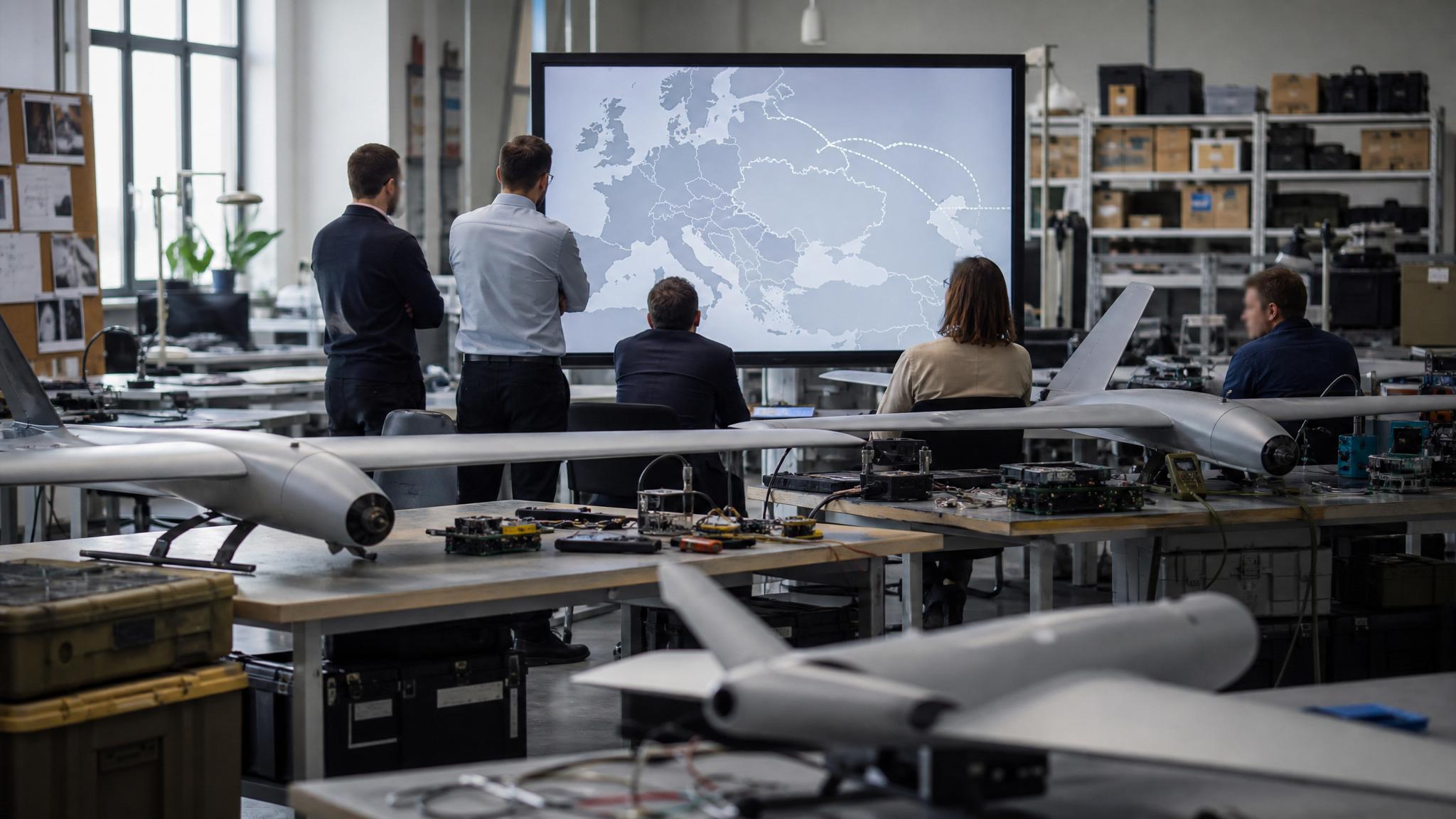
According to Defense News, Zelenskyy said on July 10 that the United States has received Ukrainian-made systems for testing and has given Kyiv very positive feedback. He named aerial drones, maritime drones and other technological items, while describing the testing as a step toward a larger drone deal. That proposed partnership has been valued by Zelenskyy at $35 billion to $50 billion and would reportedly involve a 50-50 production venture drawing on as many as 200 Ukrainian companies.
That is not a normal aid package. It is an argument about who has useful wartime knowledge.
The Deal Is About Leverage, Not Charity
The timing matters. One day before Zelenskyy described the testing, Defense News reported that President Donald Trump had pledged at the NATO summit in Ankara to give Ukraine a license to make Patriot interceptors. Trump framed Patriot as a defensive weapon, which makes the politics easier in Washington. Kyiv hears something more practical: local production is the only route out of permanent scarcity.
The Patriot issue and the drone deal are separate tracks, but they point in the same direction. Ukraine is trying to move from recipient to co-producer. That sounds like a slogan until Russia fires hundreds of drones and dozens of missiles in a single night and Kyiv has to decide what is worth a scarce interceptor. According to Ukrainian Air Force data cited by Defense News and Reuters reporting, Russia launched 351 drones and 68 missiles in a major strike before the NATO summit; another July attack included 23 ballistic missiles, none of which Ukraine intercepted. Ukrainian data cited in the same reporting showed only four of 49 ballistic missiles intercepted in July.
That is the brutal arithmetic behind the diplomacy. A Patriot interceptor is not a press release. It is a perishable political resource.
Ukraine Is Selling Battle Damage as Product Testing
The strongest Ukrainian pitch is also the most uncomfortable one. Ukraine can test weapons under conditions that no Western proving ground can reproduce. Electronic warfare is dense. Drones are jammed, spoofed, shot down, redesigned and relaunched at a speed that peacetime procurement systems rarely tolerate. Maritime drones have repeatedly forced Russia to change how it operates in and around the Black Sea. Cheap interceptor drones have become part of the defensive answer to Shahed-type attacks because expensive air-defense missiles cannot be wasted on every incoming airframe.
Zelenskyy told Defense News that the United States is already receiving Ukrainian systems for testing. That matters because it narrows the distance between admiration and procurement. Western officials have spent plenty of time praising Ukrainian innovation. Buying into it is different. It means accepting that a country under attack may have moved faster than the bureaucracies designed to help it.
Everyone in Washington likes innovation until it asks for a budget line, export permissions and industrial access.
Patriot Production Is the Harder Test
The Patriot license pledge is politically cleaner than the drone partnership, but technically harder. Patriot is a mature, tightly controlled air-defense ecosystem. Its interceptors sit inside a chain of radar, command-and-control, launcher and sustainment requirements. Transferring production rights is not the same as creating output. Ukraine would still need tooling, quality control, component access and protection for factories that Russia would immediately target.
Yet the pledge still matters. It is an admission that shipping from American stockpiles is no longer enough. The United States and its partners are being pulled in too many directions: Ukraine, the Gulf, East Asia and homeland missile defense all compete for interceptors. CSIS estimated that the U.S.-Israeli war with Iran burned through enormous air-defense resources, with Gulf defenses firing as many as 1,430 Patriot interceptors in 39 days. Even if that number is debated later, the strategic lesson is obvious. Missile defense inventories are not deep enough for simultaneous crises.
That is why Kyiv is pushing production rather than simply asking for another tranche. It knows the cupboard problem is structural.
NATO Has to Decide What Ukraine Is
The old NATO mental model put Ukraine outside the alliance but inside the aid pipeline. That made sense early in the war. It makes less sense now. Ukraine is not just consuming NATO-standard equipment. It is shaping NATO tactics, red-teaming exercises, forcing changes in drone defence and teaching allied militaries what a saturated electronic battlefield looks like.
The proposed drone deal would formalise that shift. A 50-50 venture would not make Ukraine a NATO member. It would, however, make Ukrainian firms part of the allied defence-industrial conversation in a way that is harder to reverse. That is precisely why the politics will be messy. American companies will worry about intellectual property and competition. European governments will worry about being left behind. Ukraine will worry, with reason, that partners will praise its ingenuity while slow-walking the decisions that make production real.
There is also a Russian vote in this process. Moscow has every incentive to strike factories, intimidate investors, sabotage logistics and collect intelligence on air-defense production. The recent Italian spy-ring allegations around Ukrainian air-defense vulnerabilities show how aggressively Russia is hunting this ecosystem. That makes dispersal, redundancy and foreign co-production more than business preferences. They are survival requirements.
The Bottom Line
The drone testing announcement is not a finished deal, and the Patriot license is not a finished factory. Both could get stuck in export controls, contracting fights and election-year politics. But the direction is clear. Ukraine is trying to trade battlefield adaptation for industrial sovereignty, and Washington is starting to test whether that trade is useful.
The next things to watch are concrete: whether U.S. testing produces procurement decisions, whether the $35 billion to $50 billion drone partnership gets signed, whether Patriot licensing includes actual production timelines, and whether European governments join or merely watch. If all this remains at the level of summit language, Russia will not be deterred by it. If it becomes factories, contracts and protected supply chains, then Ukraine stops being just the place where NATO sends weapons. It becomes one of the places where NATO learns how wars are now fought.
That is good news for Kyiv. It is also a quiet indictment of everyone who needed three years of war to notice.
Ukraine is negotiating a drone deal valued between $35 billion and $50 billion with the U.S., involving testing of Ukrainian-made systems. This shift aims to transition Ukraine from a recipient of military aid to a co-producer of military technology. The U.S. has received positive feedback on the systems tested, indicating a significant change in military cooperation between the two nations.
- Ukraine is negotiating a drone deal valued at $35 billion to $50 billion with the U.S.
- U.S. has received Ukrainian-made systems for testing and provided positive feedback.
- Ukraine aims to transition from a recipient of aid to a co-producer of military technology.
- Russia launched 351 drones and 68 missiles in a major strike before the NATO summit.
- The proposed partnership involves up to 200 Ukrainian companies.