
Ukraine develops new surface-to-air missile
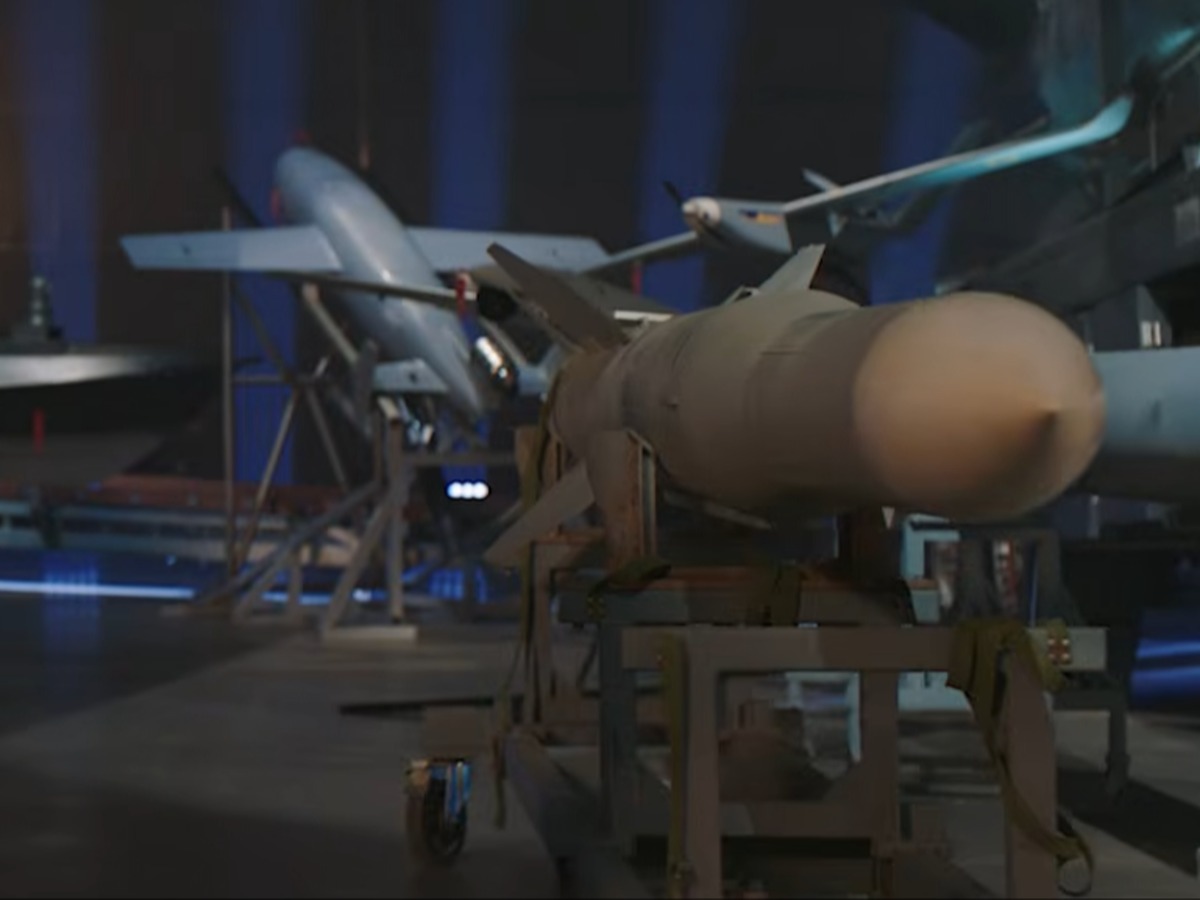
Ukrainian President Volodymyr Zelenskyy has, for the first time, publicly appeared alongside what is believed to be a new Ukrainian-developed surface-to-air missile during a video message marking the professional holiday of the country’s defense industry workforce.
The missile was shown in the background behind the president together with several weapons systems developed during the active phase of Russia’s full-scale war against Ukraine, which began in February 2022. Among the systems visible in the footage were the guided Vilkha rocket, the Neptune cruise missile, the Areion missile, and, for the first time, a previously unseen anti-aircraft missile.
The appearance of the new missile is one of the clearest public visual indications to date that Ukraine’s domestic air defense missile development program has moved beyond the concept and mock-up stage. Based on its external appearance and previously disclosed exhibition models, the missile is believed to be an industrial sample of the “Koral” missile, a project that has been kept largely out of the public eye.
No official designation was provided in the presidential video, and Ukrainian authorities have not released technical details, range figures, or the name of the air defense system for which the missile is intended. Even so, the missile’s design features visible in the footage offer important clues.
Most notably, the missile appears to be fitted with gas-dynamic control surfaces, allowing rapid maneuvering and orientation changes during flight. These control mechanisms are used to quickly adjust the missile’s trajectory, particularly during the initial and terminal phases of interception, when fast response is critical against maneuvering aerial targets.
This type of flight control solution has already been seen in Ukrainian precision-guided weapons, most notably the Vilkha guided rocket projectile. Its appearance on the newly shown missile suggests Ukraine is leveraging proven domestic design elements and already validated components in its next-generation air defense work.
Previous public descriptions of the Koral program have emphasized precisely that approach. Developers have stated that one of the missile’s defining features is the use of already tested and verified subsystems, including the motor, seeker head, pulse correction engines, inertial navigation system, and a non-contact radio or laser proximity fuze.
That reliance on mature components is particularly important for a country attempting to accelerate weapons development during wartime. Reusing existing propulsion, guidance, and detonation technologies can shorten development timelines and reduce technical risk compared with building a missile entirely from scratch.
The program itself remains highly classified. Ukraine has not disclosed whether the missile has entered serial production, completed live-fire testing, or been fielded with operational units. Exact performance characteristics also remain undisclosed.
However, earlier public display models shown at defense exhibitions and demonstrations suggested that the missile was being developed for engagement ranges between 30 and 50 kilometers. Those same presentations indicated the future system is intended to replace older Soviet-era air defense systems still in Ukrainian service, including the Buk and S-300PT.
If confirmed, that would place the missile in the medium-range air defense category, intended to defend military formations, infrastructure, and rear-area assets against aircraft, cruise missiles, and potentially some classes of drones.
Unlike older Soviet missiles that were designed decades ago, the newly shown interceptor appears to reflect lessons drawn from modern air warfare, where reaction time, maneuverability, and integration with contemporary sensors are increasingly decisive.
Its debut alongside other domestically developed missile systems signals Ukraine’s continued effort to modernize its air defense architecture with locally produced solutions.
Content preview only. Full article available at source. View Full Article
Ukrainian President Volodymyr Zelenskyy unveiled a new surface-to-air missile during a video message, indicating advancements in Ukraine's domestic air defense capabilities. The missile, believed to be an industrial sample of the Koral missile, features advanced maneuverability controls and aims to replace older Soviet-era systems. This development reflects Ukraine's ongoing efforts to modernize its air defense architecture amid the ongoing conflict with Russia.
- Ukrainian President Zelenskyy publicly displayed a new surface-to-air missile.
- The missile is believed to be an industrial sample of the Koral missile.
- The missile features gas-dynamic control surfaces for maneuverability.
- The Koral program aims to replace older Soviet-era air defense systems.
- The missile is intended for engagement ranges between 30 and 50 kilometers.