
Ukraine Killed a Russian Major General with a Drone Strike
 Alexandra Reeves
Ukraine Killed a Russian Major General with a Drone Strike
Russia is discovering that a promotion can make a commander easier to find. Ukrainian forces say they killed Major General Anton Grunis, commander of the Russian 4th Motorized Rifle Brigade, in a targeted drone strike in occupied Donetsk City on September 12. The Ukrainian Unmanned Systems Forces released geolocated footage on September 16, turning what might have been another battlefield claim into a report that can be assessed against public evidence.
The episode matters beyond one officer. It exposes the collision between Russia’s appetite for staged battlefield narratives and Ukraine’s ability to reach the people producing them. Grunis was publicly associated with Moscow’s claim that Russian forces had seized Kostiantynivka. His death is therefore both a tactical loss and an information reversal: the commander celebrated as proof of progress became evidence that senior Russian officers remain vulnerable far behind the immediate line of contact.
What the Strike Shows
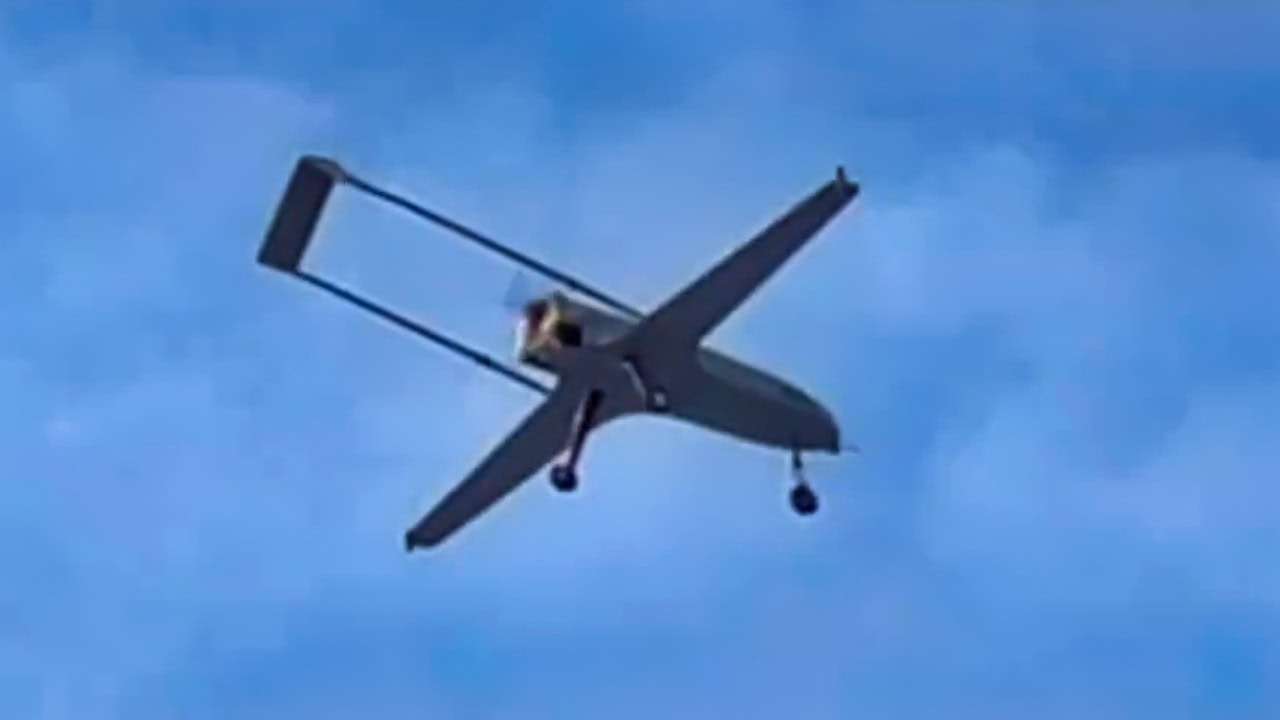
The 4th Motorized Rifle Brigade belongs to Russia’s 3rd Combined Arms Army in the Southern Military District and is described by the Institute for the Study of War as the primary Russian fighting force in Kostiantynivka itself. That makes the reported strike operationally relevant. Grunis was not a ceremonial headquarters figure. He was linked to a formation fighting around one of the most important positions in the Donetsk fortress belt.
ISW assessed that the strike occurred in Donetsk City, roughly 55 kilometres from the frontline. That distance is the point. A drone attack against a senior commander does not require Ukraine to destroy an entire brigade. It requires finding the command node, penetrating its protection, and maintaining enough intelligence coverage to act when the target is present.
The exact Ukrainian drone model has not been publicly confirmed. That restraint matters. Public footage alone cannot establish whether the system was a long-range one-way attack UAV, a modified reconnaissance aircraft, or another platform supported by a separate spotting drone. The equipment lesson is still clear: Ukraine is combining persistent surveillance, geolocation, electronic support, and precision terminal attack. The killing mechanism is only the final link in a longer chain.
Russia’s Command Problem
Russian commanders are not simply being hunted because Ukraine has better drones. They are being exposed because Russian command culture keeps turning operational leaders into political symbols. Putin met Grunis on July 3 in a staged meeting with commanders while making highly inflated claims about advances. Russian Defence Minister Andrey Belousov later awarded Grunis the Hero of Russia title for the brigade’s claimed role in taking Kostiantynivka, according to ISW.
That public profile creates a dangerous trade. Recognition may motivate troops and support the Kremlin’s domestic story, but it also helps Ukrainian intelligence identify the hierarchy, the unit, and the moments when a commander is likely to visit the front or gather subordinates. In a war saturated with commercial satellite imagery, social media, intercepted communications, and drone reconnaissance, the old separation between battlefield command and political messaging is becoming impossible to maintain.
Ukrainian Unmanned Systems Forces commander Major Robert “Magyar” Brovdi said Grunis was the seventh Russian commander at brigade, division, or army level successfully targeted and killed by the force. That number should be treated as a Ukrainian claim, not an independently audited count. But even a smaller tally would indicate a persistent Russian survivability problem.
The NATO Connection
Reuters reported on September 17 that the Ukraine war is raising doubts among military analysts about NATO’s readiness to fight a comparable conflict. The Grunis strike is part of the reason. NATO armies have spent decades protecting senior headquarters through distance, concealment, hardened facilities, and air defence. Those measures still matter, but they were designed around expensive aircraft and missiles. Ukraine is demonstrating that a relatively low-cost unmanned system can impose a disproportionate security burden on every command post.
That does not mean a drone automatically defeats a modern headquarters. Russian forces use camouflage, decoys, electronic warfare, layered air defence, and dispersed command arrangements. A successful strike may also depend on intelligence that NATO cannot assume it would possess in a future war. The uncomfortable point is that the attacker only needs occasional success. The defender must protect every senior meeting, vehicle movement, communications relay, and temporary headquarters.
For NATO, the answer cannot be another exquisite interceptor bought in small numbers. The alliance needs a command architecture that assumes constant observation and cheap mass attack: redundant headquarters, disciplined emissions control, mobile deception, short-range counter-UAS systems, and enough sensors to detect drones before they arrive. Training must also treat the loss of a general as an operational event, not merely a personnel problem. If the replacement commander cannot take over within minutes, the headquarters was never resilient.
What to Watch Next
Three indicators will show whether this was a sharp Ukrainian success or part of a wider degradation of Russian command. First, watch whether Russia changes the public visibility and travel patterns of brigade and army commanders. Second, monitor whether the 4th Motorized Rifle Brigade changes its tempo around Kostiantynivka after losing its commander. Third, look for evidence of new Russian counter-drone measures around rear-area command sites rather than only at the front.
The immediate conclusion is stark. Ukraine did not need to break through Russian lines to impose a strategic cost. It found a commander 55 kilometres from the front and made the Kremlin’s own victory narrative part of the targeting picture. Russia can replace Anton Grunis. It cannot easily replace the assumption that its senior officers are safe behind the line. NATO should stop asking whether its headquarters can survive a missile salvo and start asking whether they can survive an ordinary day in Ukraine.
Ukrainian forces killed Russian Major General Anton Grunis in a drone strike in Donetsk City on September 12. This operation underscores the vulnerabilities of Russian command structures, as Grunis was a prominent figure linked to recent military claims. The incident reflects Ukraine's effective use of drone technology and intelligence to target high-ranking officials far from the front lines.
- Ukrainian forces killed Major General Anton Grunis in a drone strike.
- The strike occurred in Donetsk City on September 12.
- Grunis was the commander of the Russian 4th Motorized Rifle Brigade.
- This incident highlights vulnerabilities in Russian command structures.
- The strike is part of a broader trend of targeting senior Russian commanders.