
Ukraine struck three missile sites in Russia and is changing the logic of long-range strikes in 2026.
 Dmitri Volkov
Ukraine Strikes Three Russian Missile Sites and Changes Long-Range Strike Logic in 2026
Three sites in one night is not the scale that would devastate the Russian missile program. However, it is a scale that forces the General Staff of Russia to consider not only warheads and launchers but also the entire industrial chain from fuel components to the disposal of intercontinental missiles. This is the significance of the Ukrainian attack on October 9, 2026.
Striking the Chain, Not Just One Factory
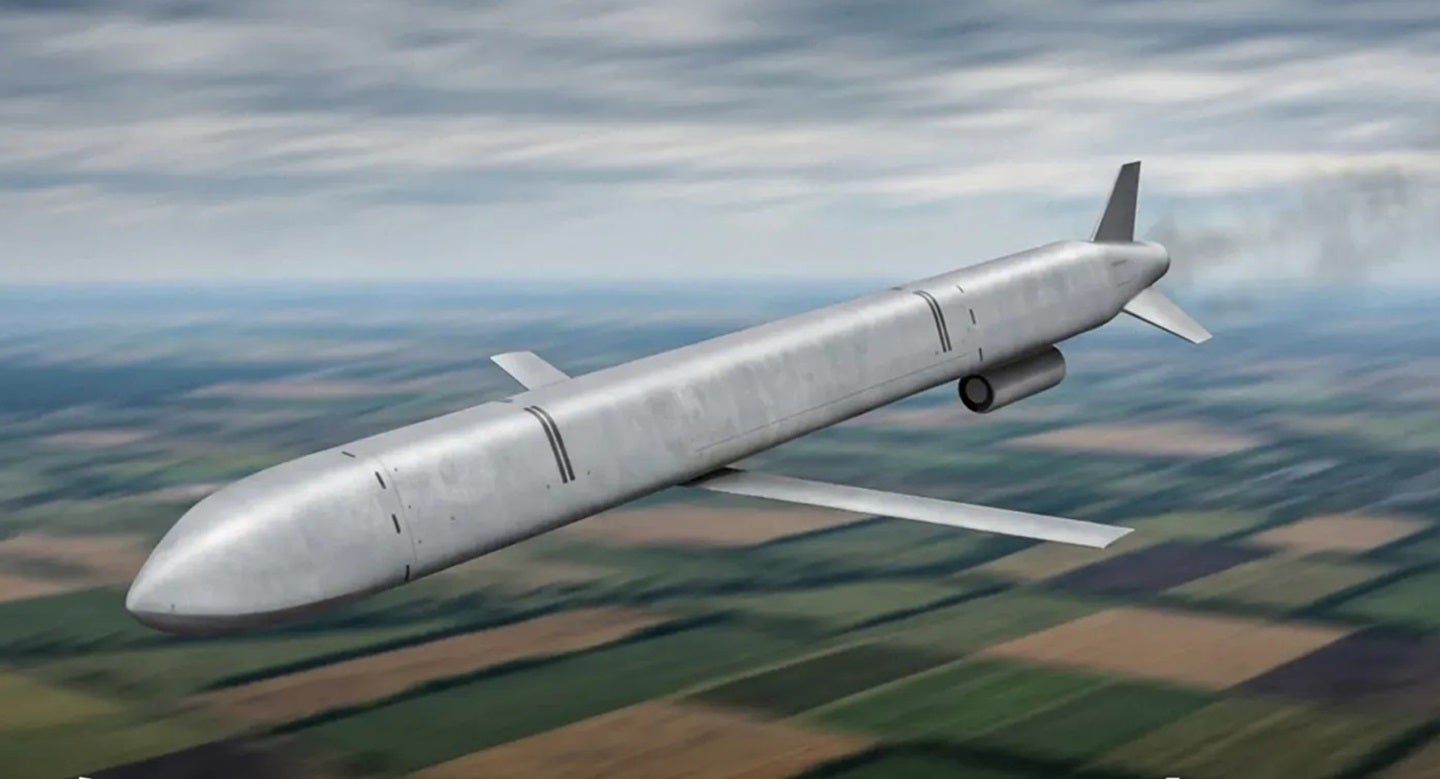
According to the Ukrainian General Staff, three sites were hit during the night. In the Tver region, the Redkino Experimental Plant, associated with the production of fuel components "Decilin-M" for Kh-55 and Kh-101 cruise missiles, was attacked. In the Nizhny Novgorod region, facilities of the branch of TsENKI — the V. P. Barmin Institute, which works with launch complexes, refueling equipment, and missile control systems, as well as the Intercontinental Ballistic Missile Disposal Center in the Surovatikha area, were struck. Reuters confirmed the claims from Kyiv and reported a fire at the Redkino plant; Russian governors mentioned one military casualty and "minimal" damage to infrastructure. There is currently no independent assessment of the scale of the damage.
It is important not to confuse three different levels here. Redkino is an industrial component for operational use. The Barmin Institute is the infrastructure for launching and servicing. Surovatikha is a site related to strategic missile heritage and handling ICBMs. Their simultaneous destruction appears to be an attempt to impact not a symbolic "decision-making center," but rather the vulnerable links that ensure the resilience of the entire missile system.
Why Fuel Specialization is More Important than a Catchy Name
The Russian military industry is accustomed to measuring power by the number of products produced. However, a missile does not come into existence from a single workshop. It requires stable supplies of fuel, additives, electronics, testing equipment, transportation, and scheduled maintenance. If the Ukrainian side's confirmation of the role of the Redkino plant is accurate, then the target was not a warehouse of finished Kh-101s, but a bottleneck that is harder to replace with universal capacities.
This resembles the Soviet mobilization industrial system, but with one significant difference. The USSR maintained excess capacities and a wide network of departmental enterprises because it was preparing for a prolonged large war. Modern Russia has inherited part of this infrastructure but has reduced the number of redundancies over thirty years, and sanctions have complicated the import of equipment and chemical components. Therefore, damage to one specialized enterprise does not necessarily halt production, but it almost inevitably increases costs, timelines, and dependence on supplies.
Response to the Russian Air Campaign
The attack occurred against the backdrop of an ongoing missile and drone campaign by Moscow. According to the Ukrainian Air Force, on the night of October 9, Russia launched 136 drones, including 93 jet devices of the "Shahed," "Geran," and decoy types; 114 targets were destroyed or suppressed, but hits were recorded in eight locations. The Russian Ministry of Defense, in turn, reported a massive and seven-group strike on Ukrainian military, energy, transport, and telecommunications facilities from October 3 to 9 (according to Interfax, October 9).
In this way, Kyiv demonstrates the logic of mutual exhaustion: if Russian strikes are aimed at Ukrainian energy and digital infrastructure, Ukrainian drones will seek not only oil refineries but also production nodes of the missile complex. This does not imply automatic parity. Russia has significantly larger missile stocks and a deeper territory. However, Ukraine's long-range strikes increase the cost of each subsequent salvo because they force the dispersion of production, enhance air defense around rear enterprises, and maintain reserve capacities.
The Strategic Limit of This Tactic
A strike on a site related to ICBMs carries a separate political risk. Moscow may use the very fact of the attack to expand the definition of "military target" and justify new strikes on Ukrainian industry. At the same time, the destruction of the intercontinental missile disposal center should not be interpreted as an attack on Russian nuclear forces: according to available data, it concerns a servicing and disposal facility, not a silo or combat control point. The accuracy of the wording here is more important than emotional headlines.
The effect will depend on the duration of the downtime. If the fire in Redkino was limited to a specific area, Russia will compensate for it with reserves and by reallocating orders. However, if the technological lines for producing fuel components are damaged, the consequences will not manifest in today's report but will appear in a few months — in a slowdown in the production rate of Kh-101s, an increase in the consumption of stockpiles, and the emergence of more expensive substitutes. Moscow will, of course, declare the damage minimal. This is the classic problem of military statistics: the more a system depends on a narrow enterprise, the less it benefits from acknowledging its significance.
Ukraine is currently unable to stop the Russian missile campaign with a single raid. But it is gradually shifting the war of long-range strikes from a competition of quantity to a competition of the resilience of production networks. Russia's missile potential will remain if the Kremlin manages to create redundant chains and accumulate a stock of components. If this does not happen, today's "minimal damage" will become noticeable in winter — not as a dramatic collapse, but as a slow decrease in pace, which in war can sometimes be more important than a single loud explosion.
Ukraine struck three Russian missile facilities on October 9, 2026, targeting the Redkino experimental plant in Tver Oblast and facilities in Nizhny Novgorod. This operation aimed to disrupt the supply chain for missile production, impacting logistics and increasing the cost of Russian missile operations. Reports indicate one Russian soldier was killed, with minimal damage to infrastructure confirmed by multiple sources.
- Ukraine attacked three missile facilities in Russia on October 9, 2026.
- Targets included the Redkino experimental plant and facilities in Nizhny Novgorod.
- The strikes aimed to disrupt the supply chain for missile production.
- One Russian soldier was reported dead, with minimal infrastructure damage.
- The attacks are part of a broader strategy to increase the cost of Russian missile operations.