
Ukraine's €1 Million Freyja Bet Targets the Patriot Shortage
 Alexandra Reeves
Ukraine's €1 Million Freyja Bet Targets the Patriot Shortage
Ukraine is trying to do in two years what Europe normally takes a generation to discuss, fund, tender, contest, redesign and finally procure. That is the blunt meaning of Fire Point's Freyja missile-defense project.
According to a Defense News report carrying Reuters reporting on August 4, Fire Point has secured agreements from 13 European industrial partners to provide radar, guidance, command and other systems for Freyja, a pan-European attempt to build a ballistic-missile interceptor around a Ukrainian missile body. Fire Point CEO Iryna Terekh said the company is now in the hard phase: integrating surveillance radars, tracking radars and seekers into a single weapon system.
The headline figure is the one that should make NATO capitals sit up: Fire Point wants each interceptor to cost less than €1 million, roughly a quarter to a sixth of a Patriot interceptor by Terekh's comparison. If that number survives testing, manufacturing and wartime use, it would not just help Ukraine. It would embarrass a European air-defense market that has spent years acknowledging the missile threat while producing too few missiles at too high a price.
Freyja Is Not a Patriot Replacement Yet
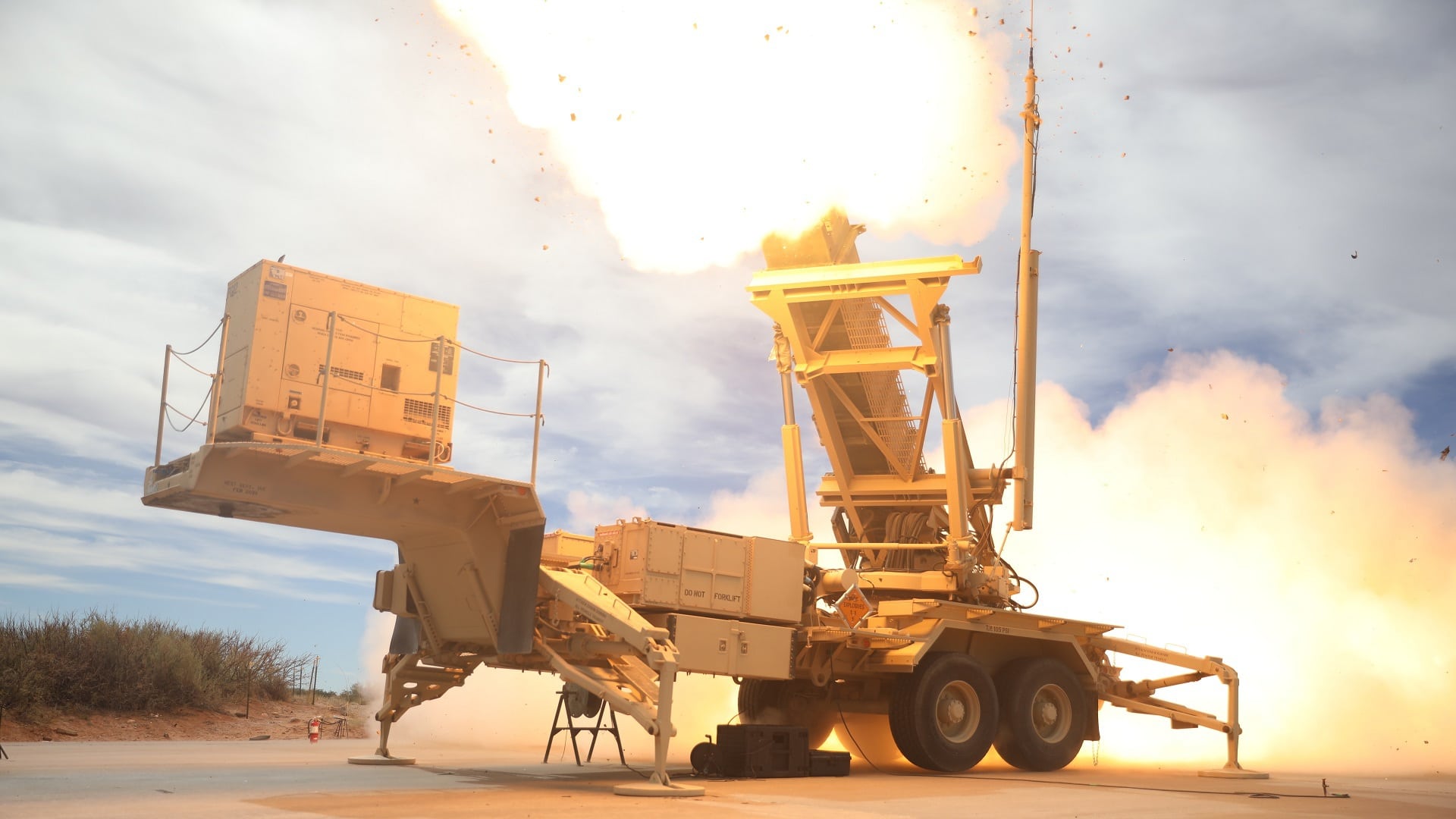
Let's be clear about what Freyja is not. It is not a proven replacement for Patriot. It has not yet intercepted a Russian ballistic missile. Fire Point's own target is a first successful interception by mid-2027, and that is an aggressive schedule for a system meant to defeat missiles traveling at several times the speed of sound.
But the project matters because Ukraine's current anti-ballistic defense is too dependent on U.S.-made Patriot batteries and their scarce interceptors. Defense News notes that the war in Iran has worsened global shortages of Patriot missiles, leaving Ukraine exposed. RUSI's recent assessment of the air war makes the same basic point from another angle: Patriot and SAMP/T provide Ukraine's only effective defense against Russia's heavy ballistic-missile attacks, while PAC-2 GEM-T and PAC-3 MSE interceptors are in short supply globally after large expenditures in the Gulf and by U.S. forces.
That is the strategic hole Freyja is aiming at. Ukraine has learned to build dense, improvised and relatively cheap short-range defenses against drones. It has not solved the ballistic-missile problem. Neither has Europe at a scale that would satisfy a serious war plan.
The Technical Bet
Freyja's interceptor is based on Fire Point's FP7.X, described as a faster version of the company's FP7 ballistic missile. Fire Point is pairing that missile with European sensors, guidance and command architecture. Norway's Kongsberg is working on the command center, according to the Defense News/Reuters report, while Germany's Diehl Defence confirmed talks with Fire Point but would not discuss whether it is supplying the seeker. Industry reporting has linked Diehl to that role because of its IRIS-T air-defense experience.
- Interceptor basis: Fire Point FP7.X, a faster derivative of FP7.
- Target role: ballistic-missile interception, not just drone or cruise-missile defense.
- Industrial base: 13 partners already joined, with Terekh saying the number could rise to around 20.
- Architecture: open-source design allowing radars or other components to be swapped.
- Cost target: below €1 million per interceptor.
- Testing target: first successful ballistic interception by mid-2027.
- Launcher concept: four to six missiles per launcher, according to Terekh.
The architecture is the interesting part. NATO loves to talk about interoperability. Freyja is a wartime attempt to force interoperability under pressure. Ukrainian officials say the system could swap a Weibel radar for one made by Saab. That sounds tidy on paper. In practice, sensor-to-shooter integration is where ambitious air-defense programmes often go to lose money and time.
Still, Ukraine has one advantage that Western procurement offices rarely have: it knows exactly what threat it is building against. Russian mass strikes combine Geran and Gerbera drones, cruise missiles such as Kh-101, and ballistic missiles including Iskander-M and Kinzhal. A Ukrainian interceptor programme does not have the luxury of becoming a beautiful PowerPoint object. It either kills incoming missiles or it fails.
Europe's Industrial Problem
Everyone in Brussels says Ukraine is a laboratory for modern war. The more uncomfortable truth is that Ukraine is also becoming Europe's emergency engineering department.
Freyja was officially launched in Paris last month by 10 governments and 12 defense firms, including Eurosam, Leonardo, Thales and Saab, according to the Defense News report. That is politically useful, but the strategic question is whether European industry is joining the project as a supplier, a partner, or a bystander with a logo on the slide.
The distinction matters. NATO's own Integrated Air and Missile Defence guidance says integration is essential and that Allies are strengthening surveillance, interceptors, and command-and-control in response to Russia's war. But NATO policy language does not intercept missiles. Stocks do. Production lines do. Trained crews and tested command centers do.
If Freyja works, Europe gets a relatively cheap anti-ballistic layer that could sit below Patriot and SAMP/T in both cost and political sensitivity. That would let Ukraine reserve its most expensive interceptors for the hardest targets, while giving European armies a model for defending airbases, ports, command nodes and ammunition depots without spending themselves into paralysis.
If Freyja fails, that also teaches a useful lesson. It would show that Europe cannot shortcut the physics of ballistic defense merely by adding Ukrainian urgency to European components. Failure would still be better than pretending the current inventory problem is manageable.
The Risk Nobody Should Ignore
There is a due-diligence problem here, and it should not be waved away because Ukraine needs missiles. Defense News reported that Fire Point co-founder Denys Shtilierman said Soviet-era S-300 and S-400 design plans were procured as a favor by Timur Mindich, a former business associate of President Volodymyr Zelenskyy who faces corruption charges and is now a fugitive in Israel. Fire Point says it declined Mindich's offer to buy a stake in the company.
That does not invalidate the programme. It does mean European governments should treat governance as part of the weapon system. A cheap interceptor with murky procurement politics can become expensive very quickly, especially once public money and export-control permissions start moving across borders.
What To Watch Next
The first milestone is not a press conference. It is a real interception test. Terekh said research and development financing by participating companies continues until a minimum viable product, meaning a successful ballistic-missile interception. That is the only benchmark that matters.
The second is whether Freyja's open architecture survives contact with industry politics. If Saab, Diehl, Kongsberg and others can plug into a Ukrainian-led system without turning it into a national workshare fight, Europe may learn something useful about wartime procurement.
The third is whether Ukraine can keep attack-missile ambitions from distracting from defense. Fire Point is also certifying an FP7 attack variant and discussing the larger FP9, which it says could reach Moscow. Those weapons have obvious deterrent value. But Ukraine's cities need interceptors even more than Russia's rear needs another target set.
The uncomfortable conclusion is simple: Freyja is not proof that Ukraine has solved the Patriot shortage. It is proof that the Patriot shortage has become intolerable. If Europe wants Ukraine to survive repeated Russian missile campaigns, it cannot keep treating anti-ballistic defense as an American premium product ordered in small batches. Freyja may fail. But the old model has already failed the arithmetic of this war.
Ukraine is developing the Freyja missile-defense project with 13 European partners to address the shortage of Patriot missiles. The project aims to produce interceptors costing less than €1 million each, with a target for the first successful interception by mid-2027. This initiative is crucial for enhancing Ukraine's ballistic missile defense capabilities amid ongoing threats.
- Freyja aims to produce interceptors costing less than €1 million each.
- The project involves 13 European industrial partners and aims for a first successful interception by mid-2027.
- Ukraine's current defense is heavily reliant on U.S.-made Patriot missiles, which are in short supply.