
Ukraine’s 1,100-Drone Strike Exposes Russia’s Air Defence Problem in 2026
 Alexandra Reeves
Ukraine’s 1,100-Drone Strike Exposes Russia’s Air Defence Problem in 2026
Russia spent the final day of its parliamentary election fighting a war it insists is far away. Ukrainian forces launched more than 1,000 drones at targets across Russia overnight on September 20, including hundreds aimed at Moscow. The timing was not incidental. It was a political strike wrapped in an air campaign, designed to show Russian voters that the war can reach the capital even when the Kremlin controls the ballot.
The Numbers Matter More Than the Political Theatre
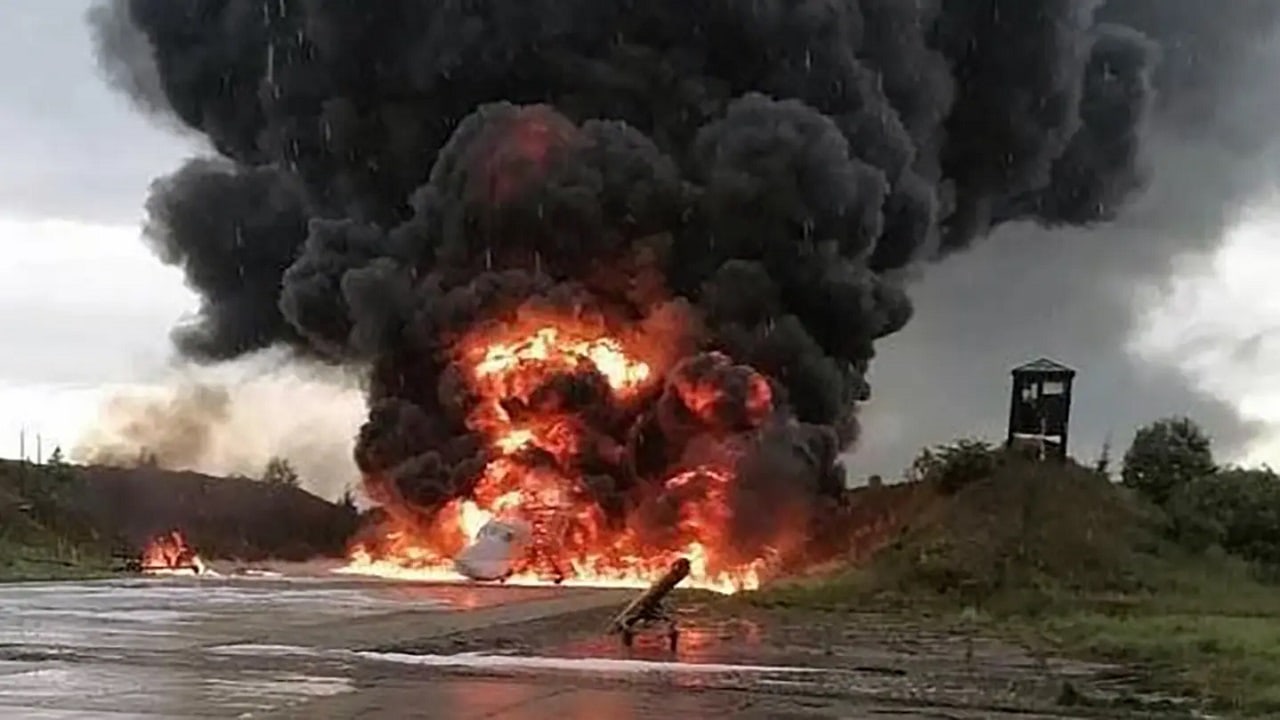
According to NPR’s September 20 report, Moscow Mayor Sergei Sobyanin said 450 drones were destroyed while approaching the capital. Russia’s Defence Ministry claimed that 1,110 Ukrainian drones were shot down across Russia, Crimea and the Black Sea. Those figures are Russian claims, not independently verified kill counts, but they still reveal the scale of the problem: a state with one of the world’s densest air-defence networks had to describe the success of its response in four digits.
The attack killed two people and wounded 20 in the wider Moscow region, according to regional governor Andrei Vorobyov. Sobyanin also acknowledged damage to the Moscow Oil Refinery and a residential building. Ukrainian President Volodymyr Zelenskyy said the strike combined domestically produced drones with Flamingo and Pelican missiles against oil and logistics facilities. The exact weapons mix and damage assessment remain partly unconfirmed, so the important point is not whether every claimed target was hit. It is that Kyiv can now generate a massed, long-range threat against Russia’s political and economic centre.
Why Moscow Is the Real Battlefield
Russia’s parliamentary election was already engineered to produce a predictable result. That did not make the attack militarily pointless. Elections are rituals of state control, and the Kremlin’s message is that normal life continues while Russia fights on its own terms. A refinery fire, air-raid restrictions and videos of interceptions over Moscow puncture that message more effectively than another damaged frontline village.
Sobyanin said the attack was intended to disrupt voting and that the enemy had failed. That is the narrowest possible definition of success. Ballot boxes can remain open while the state still loses control of the narrative. If the public sees that hundreds of drones can approach the capital, then every official claim that Russian territory is secure becomes less credible. Kyiv does not need to stop the election to make the security failure visible.
This is also why the strike should not be reduced to retaliation. Ukraine is trying to impose costs on the fuel, logistics and administrative systems that sustain Russia’s war. Long-range drones are relatively cheap compared with the air-defence missiles used to defeat them. Even when Russia intercepts most of the incoming aircraft, the exchange can still favour Kyiv if the defence burden is expensive, exhausting and impossible to sustain over months.
The Air-Defence Problem Is an Allocation Problem
Russia can protect Moscow, the front, strategic bases, oil infrastructure and military-industrial sites. It cannot fully protect all of them at once. That is the point of saturation: not every drone needs to hit its target. Enough need to force commanders to reveal radar coverage, move scarce interceptors and accept gaps elsewhere.
The Russian response also illustrates the limits of counting interceptions as a strategic verdict. A reported shoot-down is not the same as a clean defence. Drones can divert aircraft, trigger temporary airport closures, expose sensor positions or force the use of costly missiles against inexpensive airframes. The battlefield effect is cumulative. Ukraine is learning where the defensive seams are, while Russia is spending resources to patch them under pressure.
There is a political trade-off as well. Pulling air-defence assets toward Moscow reassures the capital but risks weakening protection for the military economy and the front. Leaving the capital exposed risks public anger and elite anxiety. A war that once consumed distant Ukrainian cities is now competing with the Kremlin for control of Russia’s own airspace.
What This Means for NATO
The lesson for NATO is uncomfortable. The alliance has sophisticated aircraft and missile systems, but it does not possess an unlimited magazine of affordable interceptors for a thousand-drone raid. The central question is not whether Patriot or another high-end system can kill a drone. It is whether a European air-defence architecture can defeat mass attacks without spending a million-dollar solution on a cheap target.
Ukraine’s campaign is effectively a live stress test of layered defence. It mixes slow drones, more capable long-range systems and missiles, forcing the defender to classify threats quickly and choose what deserves the expensive response. NATO planners have spent years discussing integrated air and missile defence in terms of ballistic missiles and aircraft. The Moscow raid reinforces a less glamorous requirement: large stocks of guns, electronic-warfare systems, short-range missiles, passive sensors and resilient command networks.
There is a second lesson. Strategic depth is disappearing. A NATO capital cannot assume that distance protects its fuel depots, ports or election infrastructure. Russia has now been given another reason to expand its own long-range strike campaign, and European governments should expect the same contest over escalation, attribution and civilian resilience if the war continues.
The Next Test Will Be Endurance
One spectacular raid does not prove that Ukraine can permanently paralyse Russia’s air defences. Nor does Russia’s claimed interception total prove that its network is healthy. The meaningful indicator will be repetition: whether Kyiv can sustain large salvos, keep finding economically valuable targets and force Moscow to make visible reallocations of its defensive resources.
That is the uncomfortable conclusion. Russia may have stopped most of the drones, but it could not stop the attack from becoming the election’s defining security image. Ukraine has shifted the contest from striking individual targets to taxing an entire defensive system. The next question is not whether Moscow can survive one thousand drones. It is whether Russia can afford to defend everything the war has made vulnerable.
Sources
Ukrainian forces launched over 1,100 drones targeting various locations in Russia, including Moscow, on September 20, 2026, coinciding with Russia's parliamentary elections. The attack aimed to demonstrate Ukraine's capability to reach the Russian capital, resulting in two deaths and damage to infrastructure. Russia claimed to have intercepted 1,110 drones, highlighting vulnerabilities in its air defense system.
- Ukrainian forces launched over 1,000 drones at targets across Russia on September 20, 2026.
- Russia claimed to have shot down 1,110 drones, with 450 reportedly destroyed near Moscow.
- The attack resulted in two fatalities and 20 injuries in the Moscow region.
- Damage was reported at the Moscow Oil Refinery and a residential building.
- Ukrainian President Zelenskyy stated that the strike utilized domestically produced drones and missiles.