
Ukraine’s Flamingo cruise missiles hit Russian chemical plant
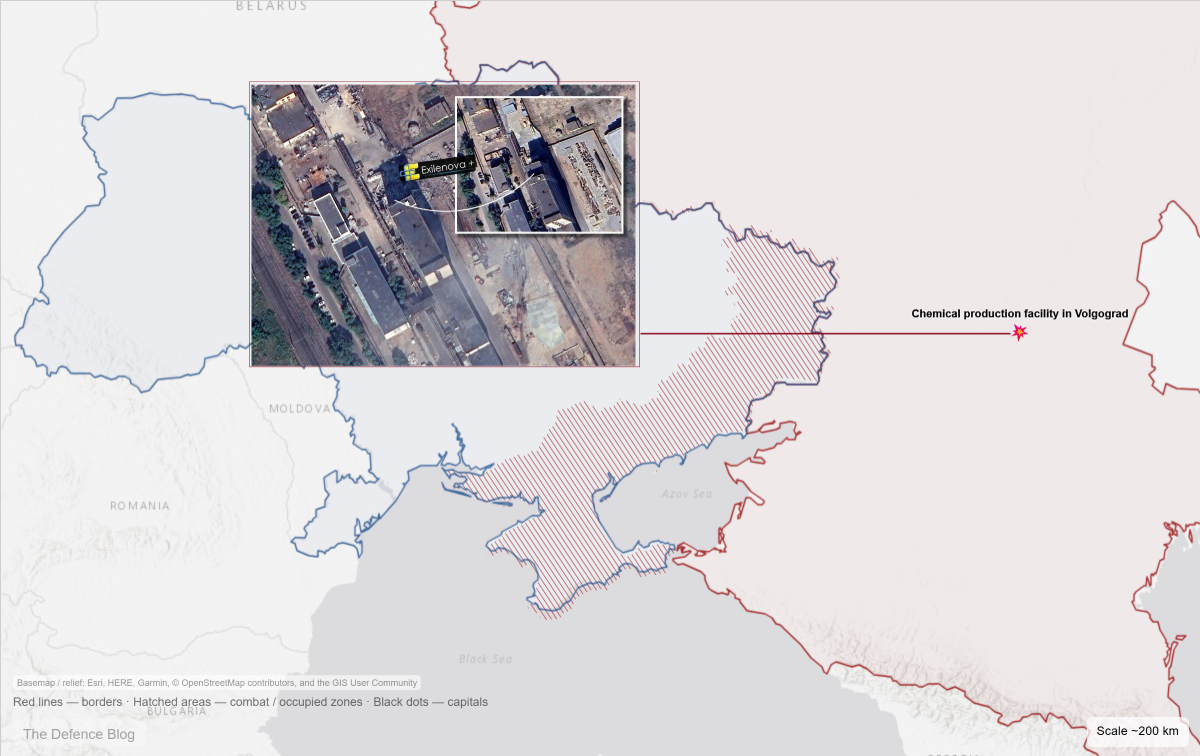
Ukraine’s Defense Forces struck a Russian chemical plant in Volgograd overnight on September 10-11, 2026, using FP-5 “Flamingo” cruise missiles, according to Fire Point, the Ukrainian company that manufactures the weapon. Fire Point said the missiles hit their target directly and sparked a large fire at the facility.
The target, Volgogradpromproekt, is a specialty chemicals producer in Volgograd’s Kirovsky district. The company is under U.S. sanctions for supporting Russia’s military-industrial complex. It manufactures ferrocene-based combustion catalysts along with other chemicals, including organophosphorus compounds, flame retardants and resins, and Ukrainian monitoring groups say its products feed into Russian aviation, shipbuilding and defense manufacturing.
Ukrainian OSINT group Exilenova+ published satellite imagery it said showed one of the missiles had destroyed a roughly 20-by-15-meter section of the plant’s main production building. That damage estimate comes from the group’s own imagery analysis and has not been independently confirmed by other sources.
“Flamingos paid a little visit to Volgograd last night,” Fire Point said in a statement. “Ukrainian sanctions, as always, proved to be the most effective.”
Russian officials offered a more limited account of the strike. Volgograd region Gov. Andrey Bocharov said only that debris from the attack had landed on the grounds of an industrial facility in the southern part of the city, a description that stops short of Fire Point’s claim of confirmed direct hits.
Defense analysts at Defence Express have suggested a reason Ukraine chose a large cruise missile over a cheaper drone for this particular target. The combustion catalysts Volgogradpromproekt produces are used in manufacturing solid rocket propellant, a component needed for missiles including Russia’s Iskander and Zircon systems. An FP-5, carrying roughly a metric ton of explosives, can do far more damage to a hardened industrial target than a drone strike, which may explain the choice of weapon for a plant that had not previously appeared on lists of well-known Russian defense contractors.
The FP-5 Flamingo is a ground-launched cruise missile that entered service in August 2025. Fire Point says it can carry a payload of up to 1,150 kg (2,535 lb) to targets as far as 3,000 km (1,860 miles) away, operating day or night and resisting electronic jamming.
The company describes it as the largest missile in its class while emphasizing that it remains relatively simple and inexpensive to build, with reusable launchers instead of costly dedicated launch platforms.
The strike on Volgogradpromproekt was one of several Ukrainian attacks on Russian territory reported the same night. Fire Point said its FP-1 drones separately struck an oil refinery and an Ozon logistics warehouse in Saratov, with the warehouse covering roughly 85,000 square meters and reportedly capable of storing more than 30 million items. A refinery in Volgograd was also targeted in a separate drone attack that night, according to local reports.
Content preview only. Full article available at source. View Full Article
Ukrainian Defense Forces struck the Volgogradpromproekt chemical plant in Volgograd on September 10-11, 2026, using FP-5 Flamingo cruise missiles, causing significant damage. The attack targeted a facility known for producing components used in Russian missile systems. Fire Point confirmed the direct hit, which ignited a large fire at the site, while Russian officials provided a more limited account of the incident.
- Ukraine's Defense Forces struck a Russian chemical plant in Volgograd using FP-5 cruise missiles.
- The strike occurred overnight on September 10-11, 2026.
- The target was Volgogradpromproekt, a company under U.S. sanctions.
- The missiles caused significant damage, destroying a section of the plant's production building.
- The FP-5 missile is noted for its capability to carry a large payload and operate effectively against hardened targets.