
Ukraine's FPV Drones Are Turning Russia's 2026 Lyman Push Into Targets
 Alexandra Reeves
Ukraine's FPV Drones Are Turning Russia's 2026 Lyman Push Into Targets
Russia is not losing ground around Lyman because Ukraine suddenly found a magic weapon. It is losing the reinforcement race. Ukrainian forces are allowing some Russian infiltration groups to move forward, then attacking the vehicles, drones, electronic-warfare teams and supply routes needed to keep those groups alive.
That is the important development in the latest fighting. According to the Institute for the Study of War's September 26 assessment, Ukraine's Operation Vivaldi has shifted from immediately clearing every infiltrator to systematically cutting the Russian effort to reinforce them. It is a small change in wording, but a large change in battlefield economics. Russia can send men into a gap. It is much harder to feed, command and protect them once Ukrainian drones are hunting the routes behind them.
Ukraine Is Attacking the Reinforcement System
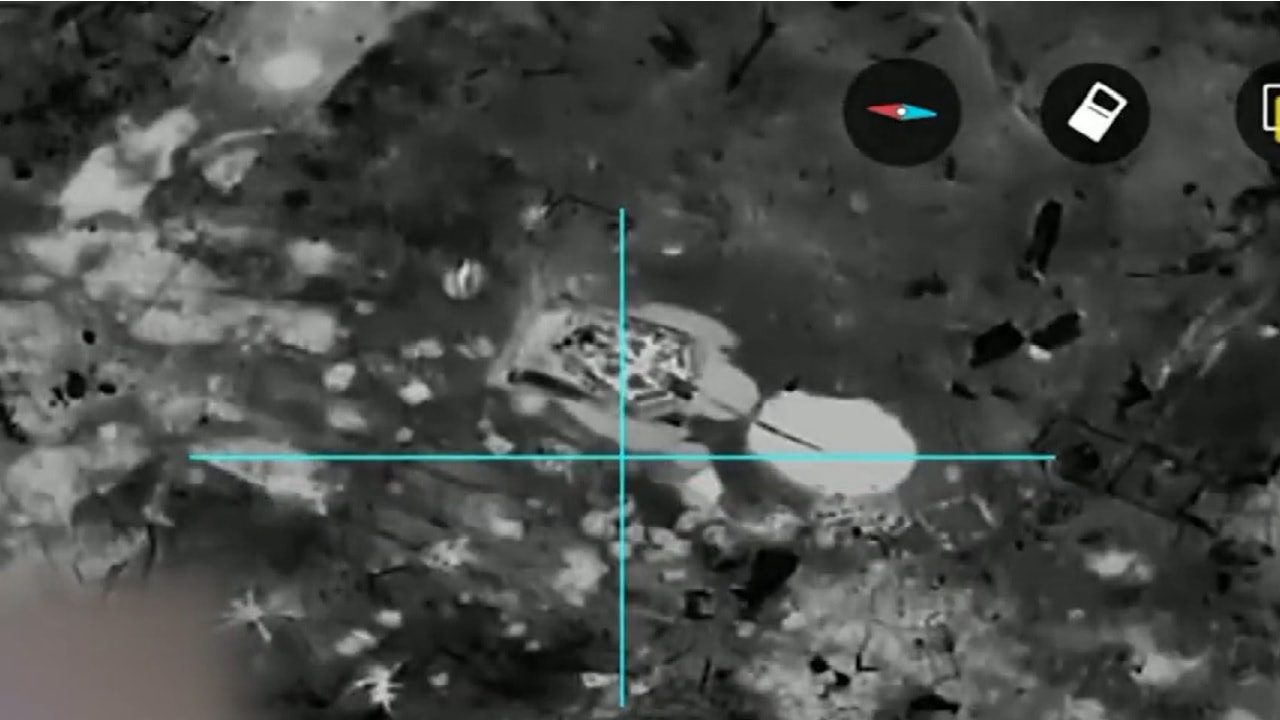
The first phase of Vivaldi reportedly focused on Russian mechanized all-terrain vehicles and motorcycle assaults trying to reinforce isolated infiltration groups. Those platforms are fast and cheap, but they are exposed once Ukrainian reconnaissance drones have mapped the approach routes. FPV drones then turn a road, tree line or improvised staging area into a kill zone.
This is not simply a story about drones destroying tanks. It is about making movement visible and expensive. Russian forces must now choose between sending more vehicles into a watched corridor or leaving forward troops short of ammunition, food and communications. Either choice helps Ukraine.
ISW also reported that Ukrainian strikes on Russian ground lines of communication left infiltration groups without proper supplies. Ukrainian electronic warfare efforts and attacks on Russian control positions further degraded command and control. The result is a battlefield where a small Ukrainian advance can create disproportionate disruption in the Russian rear.
The Real Weapon Is the Kill Chain
Calling this an FPV-drone success undersells what is happening. The drone is only the visible end of a longer kill chain: reconnaissance finds the route, software or human operators classify the target, electronic warfare interferes with Russian responses, and strike teams hit the reinforcement package before it reaches the infantry already forward.
A Ukrainian battalion commander told ISW that operational surprise allowed Ukrainian forces to reach positions associated with Russian drone operators and electronic-warfare specialists. That matters because Russia's tactical advantage depends on seeing Ukrainian movements early and contesting the airspace close to the front. Once those nodes are suppressed, Ukraine can move reconnaissance teams and assault groups with fewer interruptions.
Ukrainian commanders are therefore treating Russian logistics as a tactical target rather than a separate rear-area problem. That approach resembles the logic of deep battle, but compressed into a drone-saturated environment. A motorcycle team, a fuel truck and an EW vehicle may now matter more than a single armoured assault because they determine whether an infiltration becomes a durable position.
Why Lyman Matters Beyond the Map
Lyman is not just another village on a long front. The area links routes toward the Siverskyi Donets River and the wider Donbas battle space. ISW cited reporting that Ukrainian forces are pressuring Russian positions near Zarichne, Yampil and the Serebryanske forest while Russian forces struggle to maintain positions west of the Zherebets River.
The geography makes reinforcement discipline especially important. Forests, rivers and limited road networks can conceal a small group, but they also channel the vehicles and supplies required to sustain it. Ukraine's drones exploit that tension. The more Russia tries to restore a broken line quickly, the more predictable its movement becomes.
There is also a political consequence in Moscow. ISW noted that Russian milbloggers have complained about exaggerated battlefield reporting around Lyman. If commanders report advances that do not exist, senior leaders may delay reinforcement or send it to the wrong place. Ukraine's advantage is not only firepower; it is the opportunity to make Russian information failures produce physical losses.
Russia's Next Choice Is Unpleasant
Russia can answer this problem in several ways: increase drone and electronic-warfare coverage, use more dispersed supply movements, or intensify long-range strikes against Ukrainian infrastructure and production. The first two require training and coordination that Russian commanders have struggled to provide consistently. The third may damage Ukraine, but it does not solve the immediate problem of moving soldiers through a battlefield watched by Ukrainian sensors.
That is why President Vladimir Putin's apparent emphasis on a winter long-range strike campaign matters. ISW assessed that Russia may be relying on jet-powered Geran-type drones and missile packages to compensate for stalled ground gains. Ukrainian President Volodymyr Zelensky has said Russia plans to spend $12 billion on jet-powered drones and loitering munitions, a claim that should be treated as a Ukrainian wartime estimate rather than an independently verified budget figure.
The danger for Ukraine is obvious. A tactical counteroffensive can expose Ukrainian troops to Russian glide bombs, ballistic missiles and massed drones. But the danger for Russia is just as clear: long-range strikes cannot occupy terrain. If Ukrainian forces keep breaking the reinforcement chain, Moscow may be forced to spend more on strategic bombardment precisely because its ground formations cannot reliably convert infiltration into control.
The Signal to Watch Next
The next test is not whether Ukraine can capture another position near Lyman. It is whether Russia can rebuild a functioning support network under constant observation. Watch for changes in Russian use of motorcycles and ATVs, the survival rate of EW teams, and whether Ukrainian intermediate-range strikes continue reaching logistics nodes behind the immediate line of contact.
Ukraine's Lyman operation does not prove that the war has entered a decisive phase. It does show that positional warfare is not static when one side can repeatedly attack the systems behind the trench. Russia may still regain ground with mass, firepower and time. But if every forward move creates a larger reinforcement bill, the map can remain deceptively stable while Moscow's theory of victory quietly deteriorates.
The uncomfortable conclusion is this: Ukraine does not need to destroy every Russian assault to stop it. It needs to make the next assault impossible to sustain. In 2026, that may be the most important job performed by an FPV drone.
Sources
- Institute for the Study of War, Russian Offensive Campaign Assessment, September 26, 2026.
- United24 Media, reporting on President Zelenskyy's September 27 statement on Russian losses.
- HiWars asset library, Ukrainian drone strike imagery, asset key 2da1a3d7-ff57-458e-b53d-e38b6eec0b42.jpg.
Ukrainian forces are actively disrupting Russian reinforcement systems around Lyman in September 2026, utilizing FPV drones to target supply routes and command positions. This strategy has left Russian infiltration groups without adequate supplies and has created significant operational challenges for Russian forces. The geography of the area complicates reinforcement efforts, making it crucial for both sides.
- Ukrainian forces are disrupting Russian supply routes and command structures using FPV drones.
- Operation Vivaldi focuses on degrading Russian reinforcement capabilities.
- Ukrainian attacks have left Russian infiltration groups without proper supplies.
- The geography around Lyman is critical for Russian reinforcement efforts.
- Russian milbloggers have reported exaggerated battlefield claims, affecting command decisions.