
UN Resolution on October 26 Changes the Price of the Energy Truce in Ukraine
 Dmitri Volkov
UN Decision on October 26 Changes the Price of Energy Truce in Ukraine
The most inconvenient fact for negotiators is that the strike on the substation can no longer be considered just another element of military bargaining. On October 26, the Independent International Commission of the UN to Investigate Events in Ukraine concluded that the Russian authorities committed crimes against humanity in connection with systematic attacks on Ukrainian energy infrastructure. On the same day, Volodymyr Zelensky spoke about the resumption of the trilateral format with the USA and Russia. These two pieces of news do not balance each other out. They make a future deal simultaneously more necessary and significantly harder.
What Exactly Did the Commission Establish
It is necessary to carefully separate legal terms from journalistic shorthand. The official statement of the Commission is titled “Russian authorities committed crimes against humanity through attacks on Ukraine’s energy infrastructure and trafficked foreign nationals to fight with their armed forces in Ukraine”; it was published by the UN in New York on October 26. This is the conclusion of the independent investigative mechanism of the UN Human Rights Council, not a court verdict or an individual indictment. Its current composition includes Chair Eric Møse, Pablo de Greiff, and Vrinda Grover. The Commission's mandate covers violations in the context of aggression since February 24, 2022; the energy array in the findings refers to a campaign of systematic strikes that began in the fall of 2022 and continued in subsequent heating seasons.
The Commission did not label these actions as “genocide.” It delineated two grounds: the systematic infliction of severe suffering on the civilian population due to attacks on the energy system was qualified as a crime against humanity; specific intentional attacks on civilian objects also relate to war crimes. A separate finding was recorded regarding the trafficking of foreign nationals for their subsequent use in the Russian armed forces in Ukraine. This precision is important: “crimes against humanity” here refer to the policy established by the Commission and its impact on civilians, rather than being a universal label for any episode of the war. As of the editorial closing, Moscow had not provided a public substantive response specifically to the conclusion of October 26; Russian authorities have consistently rejected the legitimacy and findings of the Commission as a whole.
No Negotiations Yet
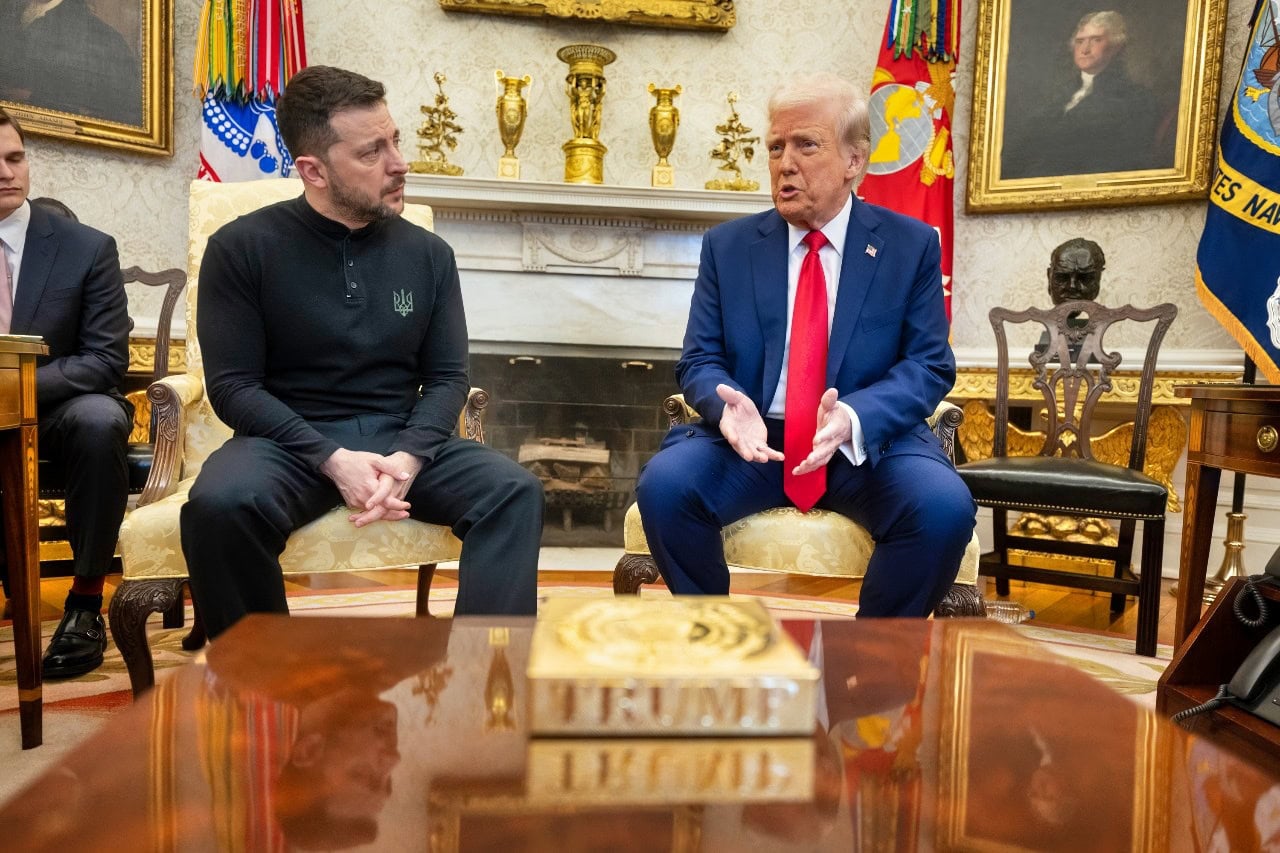
The phrase “negotiations will resume” requires equally rigorous scrutiny. On October 21, AP and Reuters reported that the Kremlin agreed to return to trilateral contacts in November; Abu Dhabi was mentioned as a possible venue. On October 26, Zelensky did not announce a meeting that had taken place: he stated a desire to expedite the planned round, aiming for early or mid-November, and sought an earlier date. The Russian side had previously mentioned readiness after November 4, later — Abu Dhabi after November 10. There is no separately confirmed schedule, delegation composition, or participant level from the White House as of October 26. Therefore, this is a continuation of the same process that began on October 21, rather than a new diplomatic architecture, let alone a ceasefire.
For Moscow, the optimal short-term strategy is clear: agree to the procedure but keep the content in a zone of uncertainty. The mere fact of a future meeting reduces pressure, while the formula “first peace, then accountability” would allow the issue of energy strikes to be set aside. For Kyiv, the strategy is the opposite: to turn the Commission's findings into a negotiating asset — demanding monitoring, repairs, access for investigators, compensation, and no amnesty for documented actions. But this also limits Kyiv's maneuver: the higher the legal price of concession, the harder it is to accept a deal in which the safety of citizens is exchanged for a vague promise of silence.
Why the Energy Truce Became More Expensive
The proposals of October 23-24 regarding an “energy truce” were technically enticing: fewer strikes in winter, more time for repairs, less humanitarian damage. After the UN's findings, this is no longer sufficient. The cessation of future attacks is an obligation, not a payment for territorial concession or easing sanctions. Any working document must now distinguish four things: an immediate ban on strikes against energy and heating supply facilities, verification of violations, protection for repair crews, and a separate track of accountability for already investigated actions. Mixing them into one exchange means granting the violator the right to sell the cessation of what the international mechanism has already qualified as a serious international crime.
This does not render local agreements meaningless. The ceasefire in the occupied Oleshky, which Reuters reported on October 26 as ongoing, shows the opposite: a limited humanitarian agreement can work if the object, timeframe, mediator, and practical goal are narrow. But Oleshky is not the national energy system. There, the parties can dispute compliance over a small territory; the energy campaign affects millions of citizens, thousands of facilities, and a political decision at the center of Russian power. The scale changes not only the price of control but also the legal nature of the issue.
Washington Between Fuel and Law
The US faces its own contradiction. The Trump administration defends the easing of restrictions on Russian diesel fuel as an economically sound choice; on October 26, Reuters reported that Russian refineries were ramping up production for this scheme, while The Week interpreted the political shift as a turn by Washington away from Ukraine towards Russia. This is not evidence of a change in American law or allied commitments, but an important signal regarding negotiating incentives. Bloomberg reported the same day about the war's pressure on food and fuel supplies. Poland, according to Deutsche Welle, is asking India to use its influence on Moscow for peace. All participants want to lower the price of war — but the price is not equivalent to legal indulgence.
The American rational move is not to promise Russia a sanctions premium for the pause itself, but to offer a strictly reversible, phased measure after verified compliance with the regime. The Russian rational move is to insist on symmetry of strikes and the politicization of monitoring. The Ukrainian move is to agree to urgent protection of civilian objects without signing away the right to investigations and future claims for compensation. This is a triangle in which the negotiation procedure is possible, while a large exchange becomes more toxic.
Cold Conclusion
The UN Commission will not stop a missile and will not replace a negotiator. But it has changed the starting point from which energy is discussed: not as a free resource for a deal, but as an object of protection, around which international legal obligations have already formed. In November, a trilateral meeting may take place if confirmed by all three capitals. A sustainable energy agreement will only emerge when the cessation of attacks is separated from amnesty, territorial bargaining, and irreversible lifting of sanctions. Otherwise, negotiations will give Russia time, Ukraine expectations, and civilians yet another winter without a guarantee of light.
Sources
- OHCHR, statement of the Independent International Commission of Inquiry on Ukraine, October 26, 2026.
- UN News, “Ukraine: Investigators find Russia committed war crimes by targeting civilians,” October 26, 2026.
- AP and Reuters, reports from October 21, 2026, on readiness for trilateral contacts in November.
- Guardian, Ukraine war briefing, October 26, 2026.
- Reuters, materials on Oleshky from October 23 and 26, 2026, and on Russian diesel from October 26, 2026.
- Bloomberg, “Russia’s War on Ukraine Is Straining Food and Fuel Supply,” October 26, 2026.
- Deutsche Welle, “Poland wants India to push Russia towards peace in Ukraine,” October 26, 2026.
- The Week, “Trump pivots away from Ukraine and toward Russia,” October 26, 2026.
On October 26, 2026, a UN Commission concluded that Russian authorities committed crimes against humanity through systematic attacks on Ukraine's energy infrastructure. Ukrainian President Zelensky indicated a desire to resume trilateral negotiations with the US and Russia, but the UN findings complicate these discussions. Russia has yet to respond publicly to the Commission's conclusions, leaving the future of negotiations uncertain.
- UN Commission concluded Russian authorities committed crimes against humanity on October 26, 2026.
- The report highlights systematic attacks on Ukraine's energy infrastructure.
- Ukrainian President Zelensky discussed resuming trilateral negotiations with the US and Russia.
- The report indicates that negotiations are complicated by the UN findings.
- Russia has not publicly responded to the UN Commission's conclusions.