
Under Oreshnik Alert, Russia's Hypersonic Retaliation Readiness Pushes Russo-Ukrainian Long-Range Strikes into a New Phase
 Dmitri Volkov
Under Oreshnik Alert, Russia's Hypersonic Retaliation Readiness Pushes Russo-Ukrainian Long-Range Strikes into a New Phase
[Breaking Analysis] The most noteworthy aspect is not the phrase "Russia is going to retaliate again," but rather Kyiv's public connection of this alert to the Oreshnik medium-range ballistic missile. On May 23, Reuters reported that Zelensky stated that Ukrainian intelligence had received data from American and European partners indicating that Russia was preparing to use the Oreshnik to strike Ukraine. He also warned that the Ukrainian side was seeing signs of preparation for a "combined strike," with potential targets including Kyiv and a variety of weapon types.
Why the Alert is Unusual
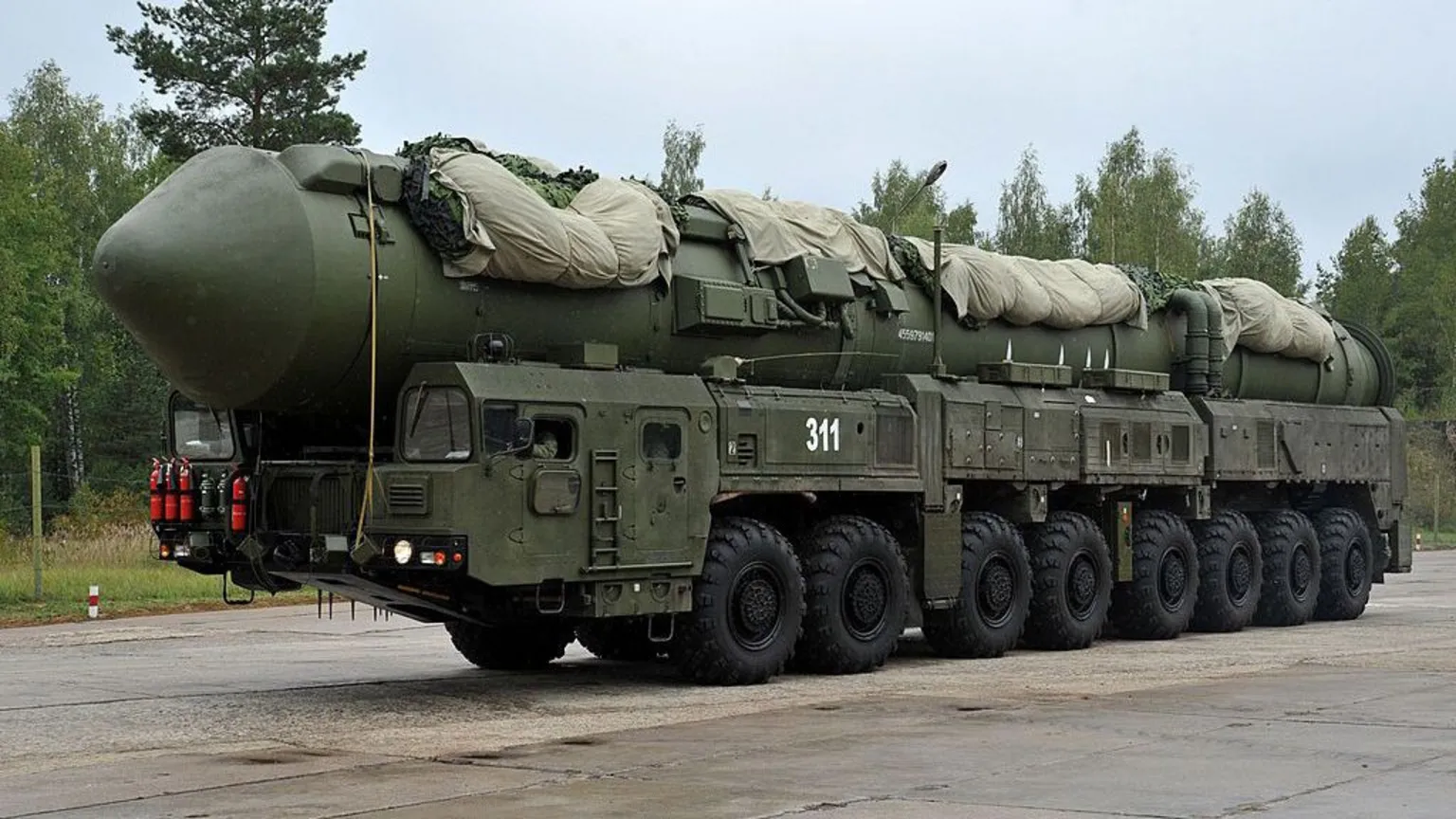
Such public warnings are typically not issued lightly. Ukrainska Pravda quoted Zelensky on X, stating that the relevant intelligence came from Ukrainian, American, and European channels, and that the Ukrainian side was verifying it, but had already urged the public to take air raid alerts seriously starting the evening of May 23. The Moscow Times, citing AFP, also noted that the U.S. Embassy in Kyiv warned the same day that "significant airstrikes" could occur across Ukraine within the next 24 hours. In other words, this is not merely a political statement from Ukraine, but a high-risk signal that coincides with security alerts from diplomatic institutions.
Technically, the Oreshnik is closer to a medium-range ballistic missile, with Russian propaganda emphasizing its hypersonic terminal speed and difficulty to intercept. Putin has claimed its speed exceeds 10 Mach, but this assertion should be viewed with caution; what is certain is that it is not an ordinary cruise missile or a Shahed drone, but rather a long-range ballistic weapon used by Moscow as a strategic signal. Records from Reuters indicate that Russia has previously used the Oreshnik twice in Ukraine: the first time was in November 2024, when Russia claimed the target was a military factory, while Ukrainian sources reported it carried an inert warhead with limited damage; the second time was in January 2026, targeting the Lviv region in western Ukraine.
Retaliation Narrative and Strike Window
The immediate background for this alert is the drone attack on the Russian-occupied student dormitory in Starobilsk, Luhansk, around May 22. AP reported that the Russian emergency services stated the death toll had risen to 18, with 60 injured; Putin condemned the attack as a "crime" and demanded the military submit a retaliation plan. The Ukrainian side denied targeting civilians, with Ukraine's representative to the United Nations stating that the May 22 operation was solely aimed at the Russian war machine. This factual dispute does not alter the military assessment: the Kremlin has already incorporated the Starobilsk incident into its retaliation narrative, and the Oreshnik alert conveniently appears within this political window.
On the same day, AP also reported that Ukrainian drones attacked the Sheskharis oil terminal near the Russian Black Sea port of Novorossiysk, with the Ukrainian General Staff stating that the facility was involved in exporting oil and servicing Russian military needs. This has created a dangerous escalation chain: Ukraine is extending its strike radius towards Russian energy and military logistics nodes; Russia may respond with higher-grade ballistic weapons, redirecting punitive pressure back towards Kyiv, Lviv, or other deep targets.
The Real Issue of Combined Strikes
If the Oreshnik is launched individually, its military impact may not be greater than a large-scale volley of cruise missiles and drones. The issue lies in the "combined strike." Russia may simultaneously use Shahed series drones, decoys, cruise missiles, Iskander-class ballistic missiles, and the Oreshnik to pressure Ukraine's air defense systems' sensors, interceptor missile stockpiles, and command rhythms. Here, the Oreshnik may not merely serve as a tool to destroy a specific target, but rather play a role in psychological deterrence and air defense suppression within the entire strike package.
From the perspective of Russian military doctrine, this aligns well with the tradition of "using limited strategic weapons to create political effects." During the Soviet era, missile forces primarily served strategic deterrence, while today Russia has broken this deterrence down into finer levels: nuclear exercises, deployments in Belarus, conventional warhead test launches, public threats, and real combat use. Each step remains below the nuclear threshold, yet forces the opponent to reconsider air defense, early warning, crisis communication, and NATO's eastern flank protection issues. This is not a crude outburst, but rather dangerous coercive diplomacy.
Impact on NATO and Ukrainian Air Defense
For Ukraine, the third use of the Oreshnik would indicate that Russia is willing to incorporate medium-range ballistic weapons into its conventional warfare toolbox, rather than merely as a one-time demonstration. For NATO, the issue is more complicated. The Moscow Times mentioned that Russia has deployed the Oreshnik to Belarus, which borders Lithuania, Latvia, and Poland. If such weapons become "normalized" on the European battlefield, NATO's discussions will not only revolve around providing Ukraine with more Patriots or SAMP/T systems, but also the complete structure of domestic ballistic missile early warning, interceptor production capacity, and crisis hotlines in Europe.
Two misinterpretations need to be avoided here. First, the Oreshnik will not single-handedly change the outcome of the war; if Russia hopes to force Ukraine to capitulate with one or several missiles, it is indulging in a fantasy of political warfare. Second, it should not be underestimated. Each use lowers the political threshold for the next use and demonstrates to other potential aggressors that medium-range ballistic weapons can be packaged as "retaliation" in conventional warfare without immediately triggering a proportional strategic response.
Calm Judgment
As of now, open sources have not confirmed that Russia has actually launched the Oreshnik; what we can confirm is that multiple intelligence alerts, U.S. Embassy security warnings, Putin's retaliation orders, and the escalation of long-range strikes between Russia and Ukraine overlap at the same time. If Russia conducts large-scale airstrikes within the next 24 to 48 hours and includes the Oreshnik, this will not be an ordinary retaliation, but a sign that Russia is further normalizing hypersonic/medium-range ballistic deterrence. Ukraine can withstand a strike, but discussions on European air defense will find it difficult to return to the previous slow pace. Military history often shows that what truly changes the rules is not the first demonstration of a weapon, but the third time it is used as a routine tool.
Main Sources
- Reuters, May 23, 2026, regarding Zelensky's statement that Russia is preparing to use the Oreshnik to strike Ukraine.
- Associated Press, May 23, 2026, regarding the casualties from the Sheskharis oil port attack and the Starobilsk dormitory attack, as well as Putin's demand for a retaliation plan.
- Moscow Times / AFP, May 23, 2026, regarding significant airstrike warnings from Ukraine and the U.S. Embassy in Kyiv.
- Ukrainska Pravda, May 23, 2026, quoting Zelensky's public statement on the Oreshnik alert and risks to Kyiv.
Russia is preparing to launch Oreshnik hypersonic missiles against Ukraine, with potential targets including Kyiv and Lviv, as part of a combined strike. This warning follows recent drone attacks on Russian positions in Starobilsk, prompting a call for retaliation from President Putin. The U.S. Embassy in Kyiv has also issued alerts about possible significant airstrikes within the next 24 hours, indicating a high-risk situation for Ukraine.
- Ukrainian intelligence indicates Russia is preparing to use Oreshnik missiles against Ukraine.
- U.S. Embassy in Kyiv warns of potential significant airstrikes within 24 hours.
- The Oreshnik missile is categorized as a medium-range ballistic missile with hypersonic capabilities.
- Russia has previously used Oreshnik missiles in Ukraine, targeting military facilities.
- The context of the warning is linked to recent drone attacks on Russian positions in Starobilsk.