
U.S. Air Force joins Navy in funding Castelion hypersonic missile maker
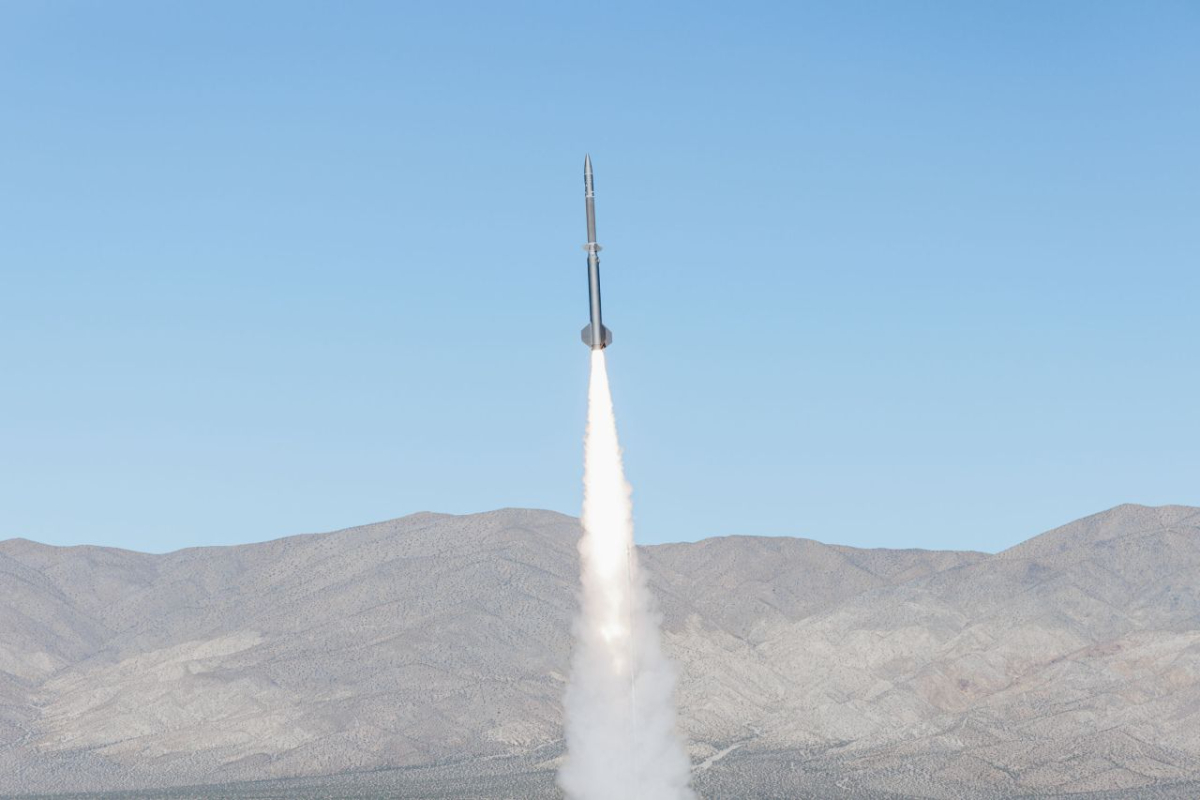
The Air Force Research Laboratory has added $16.4 million to a Castelion Corp. contract for developing a low-cost, mass-producible long-range strike weapon, the latest in a rapid series of government awards backing the company’s Blackbeard hypersonic missile.
The modification brings the total value of this particular contract to $37.2 million, up from $20.9 million. Work will continue at Castelion’s headquarters in Torrance, California, funded by fiscal 2025 research money, and is scheduled to run through June 30, 2028. Wright-Patterson Air Force Base’s research laboratory manages the contract, separate from a parallel string of Navy awards that have funded the same missile.
Blackbeard is designed to fly faster than Mach 5 while maneuvering within the atmosphere, built in both an air-launched version for aircraft such as the F/A-18 and a ground-launched variant compatible with the HIMARS launcher. Castelion, founded in 2022 by three former SpaceX engineers, has pitched the weapon as the first U.S. hypersonic system built from the outset for industrial-scale, commercial-style manufacturing rather than the smaller test batches typical of earlier hypersonic programs.
The Navy has moved unusually fast on the missile. After initial Army and Navy integration awards in October 2025, the Navy selected Blackbeard in February 2026 as its first weapon candidate under the Multi-mission Affordable Capacity Effector program, known as MACE, an effort to field large numbers of cheaper, longer-range strike weapons instead of relying on smaller numbers of expensive ones. That was followed in April by a $105 million contract to integrate the missile onto the F/A-18E/F Super Hornet and run live-fire testing in the Indo-Pacific Command area.
In June, the Navy ordered 50 early operational capability prototypes for $23.4 million, and in August it added nearly $90 million to push the weapon toward becoming a formal program of record, including design changes meant to speed up future sales to allies. Just this month, on Sept. 14, the Navy placed a production order worth up to $200 million, moving Blackbeard out of prototype status entirely.
Congress increased MACE program funding by more than $140 million in the fiscal 2026 defense appropriations act, more than doubling its base funding. Much of Castelion’s production capacity runs through Project Ranger, a 1,000-acre manufacturing campus the company built in Rio Rancho, New Mexico, at a cost it has put above $250 million. Castelion has said its longer-term goal is producing 500 of the weapons a year.
The U.S. Army was one of the first services to back the program, placing an integration award alongside the Navy in October 2025, before the Air Force Research Laboratory and the Navy’s own contracts expanded rapidly through 2026.
Content preview only. Full article available at source. View Full Article
The U.S. Air Force Research Laboratory increased funding for Castelion Corp.'s hypersonic missile development by $16.4 million, raising the total contract value to $37.2 million. The Blackbeard missile, designed to exceed Mach 5, will be developed at Castelion's facilities in Torrance, California, with work scheduled through June 30, 2028. The Navy has also significantly invested in the missile, aiming for large-scale production and integration into various platforms.
- U.S. Air Force added $16.4 million to Castelion Corp. contract.
- Total contract value increased to $37.2 million.
- Blackbeard missile designed to exceed Mach 5 and has air and ground launch variants.
- Navy has rapidly funded the missile under the MACE program.
- Castelion aims to produce 500 missiles annually.