
U.S. Air Force wants 1,000 more ERAM missiles within 15 months
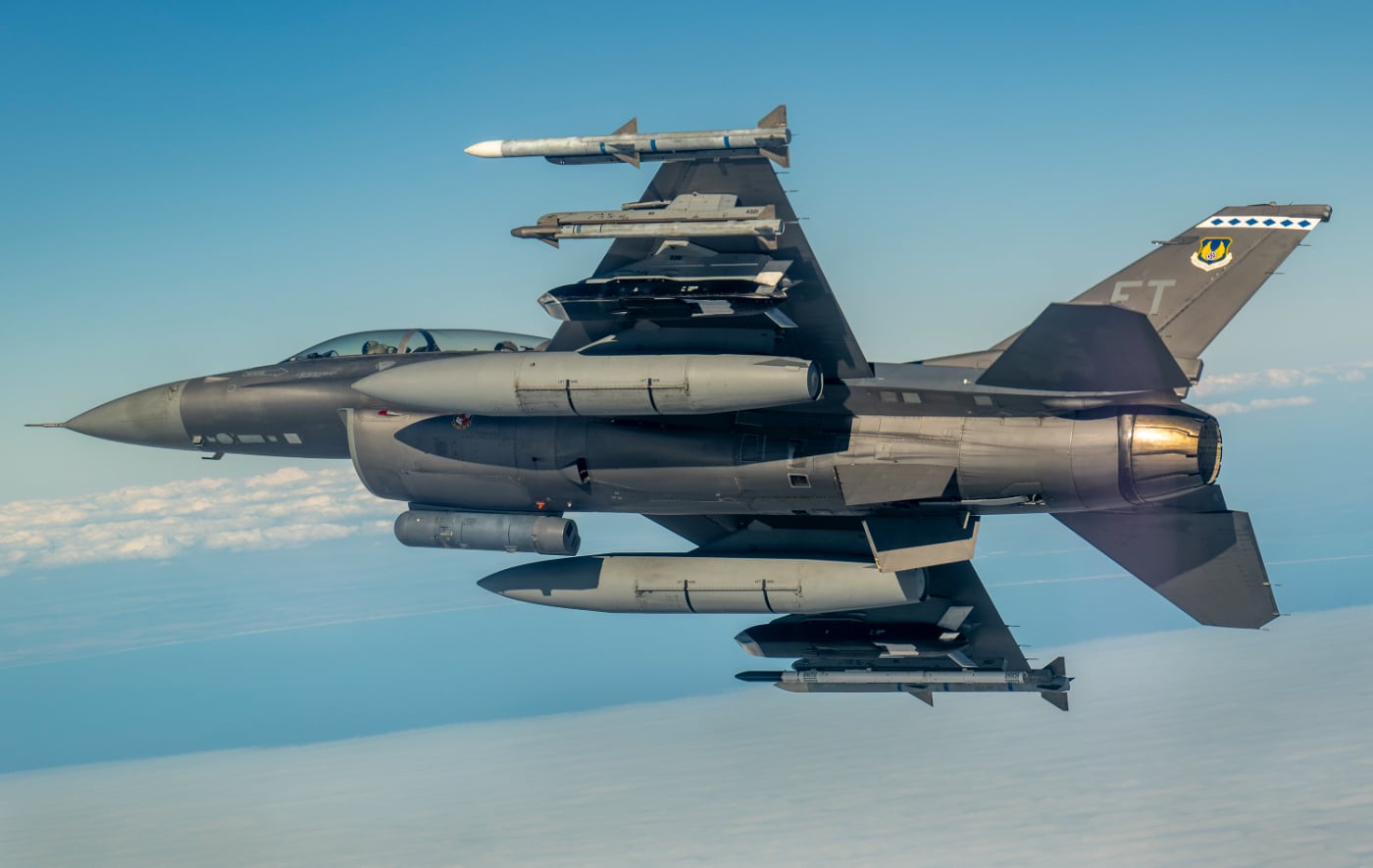
The U.S. Air Force is looking for companies that can build more than 1,000 Extended Range Attack Munitions, the low-cost air-launched cruise missile developed for Ukraine’s F-16s, with deliveries starting no later than three months after a contract is signed and finishing within 15 months, according to a request for information the Air Force Life Cycle Management Center’s armament directorate at Eglin Air Force Base, Florida.
The notice, FA865927W0002, is the first step of a two-step competition under Other Transaction Authority. The U.S. Air Force will review capability papers and invite only the companies it selects to submit Commercial Solutions Proposals in the second step, and a response to this first round is required to stay in the running. The notice gives no contract value and says award would follow once approval and funding are in place.
The notice does not name a customer, but its integration requirement points to one. Bidders must show they can perform transfer alignment with the F-16 Block 10/15/20 Mid-Life Update, the European upgrade standard flown by the F-16s Denmark, the Netherlands, Norway and Belgium have transferred to Ukraine and not used by the U.S. Air Force’s own fleet. Transfer alignment is the process in which a weapon’s inertial navigation system is synchronized with the launch aircraft’s before release, and it has to work with the older avionics of the Mid-Life Update jets for the missile to navigate accurately after launch.
The performance requirements repeat the ones the U.S. Air Force set when it started the program in 2024: a 500-pound-class weapon with blast, fragmentation and limited penetration effects, selectable fuze settings, a range of at least 250 nautical miles (463 km), a speed of at least Mach 0.6 and a navigation system that can operate where GPS is degraded. The notice requires a circular error probable of 10 m (33 feet), meaning half of the weapons must land within that radius of the aim point, both with and without heavy electromagnetic interference, including GPS jamming.
Two requirements are new. Bidders must be able to integrate active seekers for operational use, and the notice names dual-band infrared seekers and anti-radiation seekers as examples. An infrared seeker would let the missile find and hit a target by its heat signature in the final seconds of flight, while an anti-radiation seeker homes on radar emissions, the method used against air defense radars. The notice asks only for the ability to integrate such seekers and does not say whether any of the missiles in this buy would carry them.
The production schedule is the other change. More than 1,000 all-up rounds over the 12 months between the earliest first delivery and the latest completion works out to more than 80 missiles a month. Ukraine’s Kyiv Post, citing a U.S. Air Force Armaments Working Group briefing, reported in February that the existing program expected about 42 a month. Companies also need a Top Secret/Sensitive Compartmented Information facility clearance, and to qualify for the agreement they must be a nontraditional defense contractor or small business, bring a nontraditional company in a significant role, or pay at least a third of the project cost.
ERAM started in 2024, when the U.S. Air Force asked industry for an affordable, mass-producible standoff weapon and told companies the munition was pivotal to Ukraine’s needs. Contracts followed in October 2024, and the program moved from award to a live-warhead test at the Eglin Test and Training Range on Jan. 21, 2026, in less than 16 months. Zone 5 Technologies said its Rusty Dagger design, since designated AGM-188A, was the weapon fired in that test.
The U.S. State Department approved Ukraine’s purchase of up to 3,350 ERAMs and an equal number of jam-resistant embedded GPS/inertial navigation units for an estimated $825 million in August 2025, naming Zone 5 Technologies and CoAspire as principal contractors. Denmark, the Netherlands and Norway are funding the purchase along with U.S. Foreign Military Financing. Aviation Week, citing U.S. Air Force documents, has reported that a first lot of 840 missiles was scheduled for delivery by the end of October 2026; the U.S. Air Force has not said publicly how many have reached Ukraine.
The weapon may already be in combat. On June 22, 2026, a strike hit the Voronezh Semiconductor Devices plant in Russia, which makes electronics used in Russian missiles, and Russian military channels claimed the attackers used Rusty Dagger missiles after debris was traced to a Zone 5 antenna. Naval News reported in July that the missiles had flown more than 200 miles to the target and had been launched from Ukrainian MiG-29s and Su-27s. Neither Washington nor Kyiv has officially confirmed that Ukraine has used the weapon.
The comparison that drives the program is with the weapons Ukraine had before. American JDAM-ER and Small Diameter Bombs and French Hammer guided bombs give Ukrainian aircraft standoff ranges of roughly 64 to 72 km (40 to 45 miles), short enough that launch aircraft operate near the front. Storm Shadow and SCALP-EG cruise missiles reach much farther but are supplied in small numbers at a cost of around $1 million or more each. ERAM sits between them: a smaller warhead and lower speed than a full cruise missile, but enough range to keep aircraft well back from Russian air defenses at a price meant to allow purchases in the thousands.
Content preview only. Full article available at source. View Full Article
The U.S. Air Force is seeking contractors to produce over 1,000 Extended Range Attack Munitions, with deliveries starting within three months and completing within 15 months. This initiative is part of a broader effort to enhance Ukraine's military capabilities, specifically for its F-16 aircraft. Bidders must meet specific integration requirements and demonstrate the ability to produce these missiles at a rate of over 80 per month.
- The U.S. Air Force is seeking over 1,000 Extended Range Attack Munitions.
- Deliveries are expected to start within three months after contract signing.
- Bidders must demonstrate integration capabilities with F-16 aircraft.
- The missiles are intended for use by Ukraine's F-16s.
- The production schedule requires over 80 missiles per month.