
U.S. Army awards contracts for Binocular Night Observation Devices
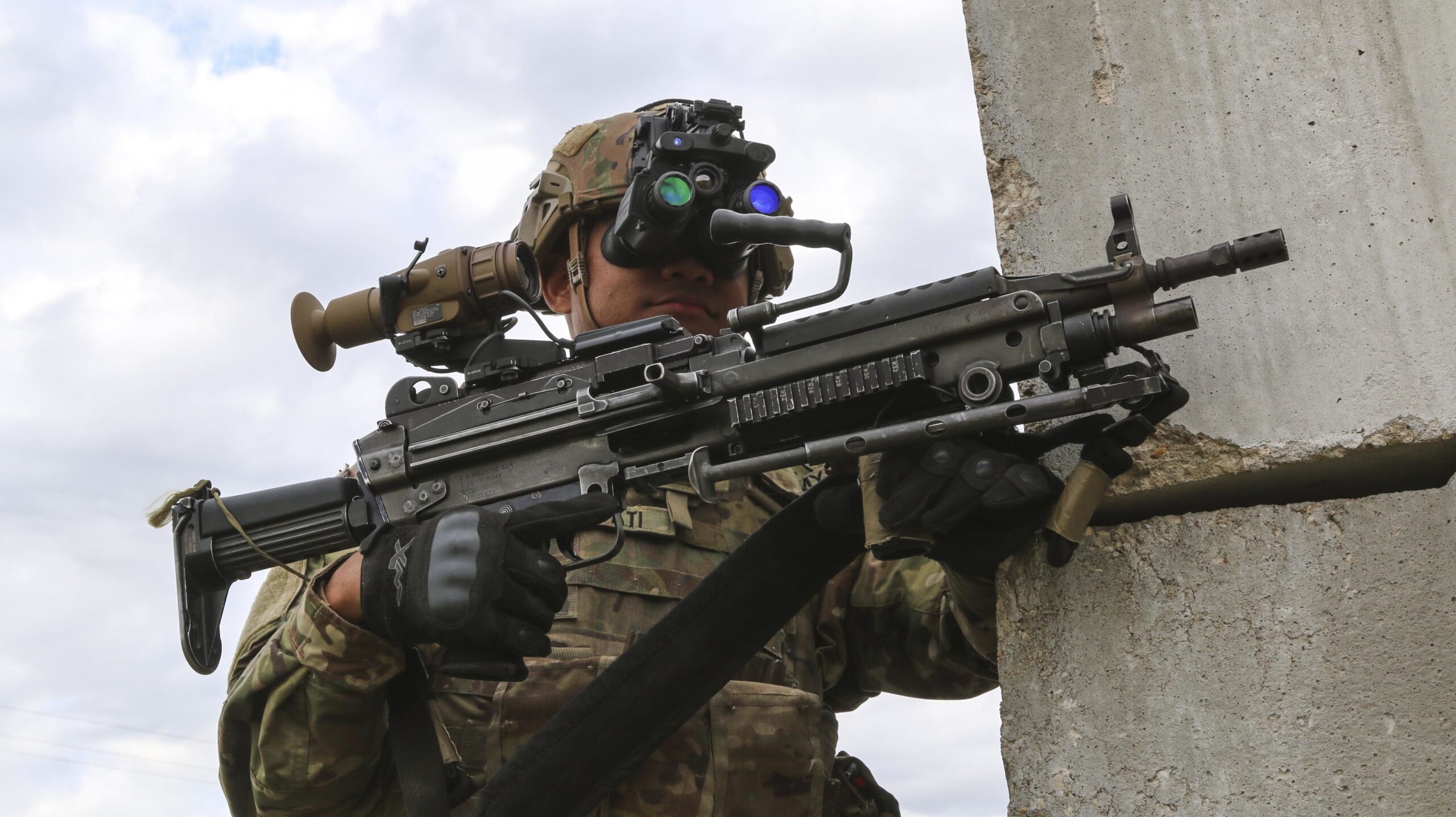
The United States Army has awarded three contracts totaling more than $1.27 billion for the development, production, and testing of the Binocular Night Observation Device (BNOD), according to contract announcements released Feb. 27, 2026.
The awards were issued by Army Contracting Command at Aberdeen Proving Ground, Maryland, following a competitive solicitation process conducted online.
Under the awards, L3 Technologies Inc., based in Londonderry, New Hampshire, received a contract valued at $465,9 million. Elbit Systems of America – Night Vision LLC, located in Roanoke, Virginia, was awarded a separate contract worth $450,6 million. Photonis Defense Inc., headquartered in Lancaster, Pennsylvania, received a third contract valued at $352,6 million.
All three contracts cover the development, production, and testing phases of the Binocular Night Observation Device program. Army officials stated that bids were solicited via the internet, with six offers received during the competition. Work locations and funding allocations will be determined individually with each order placed under the contract vehicles.
According to the contract notices, performance is expected to continue through Feb. 27, 2033, indicating a long-term procurement effort designed to support sustained fielding and lifecycle development of the new optical systems.
Army Contracting Command, Aberdeen Proving Ground, Maryland, serves as the contracting activity for all three awards.
The Binocular Night Observation Device is intended to provide dismounted soldiers with enhanced nighttime vision using dual-tube optical systems, improving depth perception and operational awareness compared with earlier monocular devices. Modern binocular night vision equipment allows users to navigate terrain, identify threats, and coordinate movements more effectively under limited visibility conditions.
Night observation systems typically rely on image intensification technology that amplifies available ambient light, including moonlight and starlight, enabling soldiers to operate without active illumination that could reveal their position. Advanced systems may also integrate improved optics, reduced weight, and compatibility with helmets and targeting equipment.
By distributing contracts across multiple manufacturers, the United States Army maintains production resilience while encouraging technological competition among industry providers. Multiple vendors also help ensure supply continuity and allow incremental improvements to be incorporated during the program’s lifecycle.
Content preview only. Full article available at source. View Full Article
The U.S. Army awarded three contracts exceeding $1.27 billion for the development, production, and testing of Binocular Night Observation Devices on Feb. 27, 2026. Contracts were given to L3 Technologies Inc., Elbit Systems of America, and Photonis Defense Inc., with performance expected to last until Feb. 27, 2033. The new devices aim to improve nighttime vision for soldiers using advanced optical systems.
- U.S. Army awarded three contracts totaling over $1.27 billion for BNOD development.
- Contracts awarded to L3 Technologies Inc., Elbit Systems of America, and Photonis Defense Inc.
- Performance expected to continue through Feb. 27, 2033.
- Contracts cover development, production, and testing phases.
- The BNOD enhances nighttime vision for dismounted soldiers.